A SIMPLE STARTING POINT
Ease, with intention.
No single brand does everything well, so match the name to the garment: Uniqlo and M&S for shirts, knits and chinos, Charles Tyrwhitt when you want a shirting specialist, H&M for jersey and basics you will replace anyway, and J.Crew or Everlane when you are ready to spend up on the two pieces that decide everything — shoes and a blazer. Fit beats brand every time: a budget-friendly shirt that fits well outperforms an invest-price one that does not.
This guide gives you a repeatable way to get dressed. Read the short version of each step here, then follow the deeper guides when you want more detail.
01
Where to grab your smart casual work clothes, by garment
The question that keeps coming up on wardrobe forums — where do you usually grab your smart casual work clothes? — only has a good answer when you split it by garment. The names below are the usual suspects, each with the one job it does best. Where each brand is weakest matters as much as where it wins.
THE SHORT VERSION / 4 STEPS
List the four garment gaps in your wardrobe before shopping, so brand loyalty never decides for you.
For each gap, shortlist the two brands best at that garment from the scorecard below.
Buy one test piece per new brand before building out the category.
Keep what passes the sixty-second checks; return the rest while the returns window is open.
02
Value brands ranked: the honest scorecard
Ranked honestly, the names sort into three tiers. The all-rounders (Uniqlo, M&S) win on price-per-wear for shirts, knits and chinos. The specialists (Charles Tyrwhitt for shirts) earn their slot on fit range, and the elevated tier (J.Crew, Everlane) is worth it for two or three pieces only, never the whole wardrobe. Sizing varies between all of them, which is exactly why the test-piece rule exists.
THE SHORT VERSION / 4 STEPS
Score each candidate brand on fabric, fit consistency and smart casual fit — not on style alone.
Eliminate anything in the fast-fashion tier that fails the see-through test or uses bonded fake leather.
Reserve mid-tier spend for shoes and one structured jacket, the two upgrade priorities.
Re-check your scores seasonally — brand quality drifts as supply chains change.
03
How each brand actually fits
Fit character is the hidden variable in budget shopping: some value chains cut slim, some run roomy through the body, and trouser lengths skew short or long depending on the home market. Learn one line per brand — runs slim, true, or generous — and shopping stops being a lottery. If you sit outside the standard block, the dedicated guides to plus-size men's brands cover the brands that grade their patterns properly.
THE SHORT VERSION / 4 STEPS
Read the size chart and one or two recent reviews for fit character before the first order.
Buy the test piece in your normal size — no vanity sizing guesses.
Check shoulder seam, sleeve length and trouser break in a full-length mirror, not a phone camera.
Note the result per brand so the next purchase skips the guesswork.
04
Building the wardrobe across brands: a sample basket
Mixed-brand beats single-brand because each garment should come from its best value source. A workable starter basket: two oxford shirts from Uniqlo or Charles Tyrwhitt, two merino-blend crew necks from M&S, chinos from Uniqlo, dark indigo jeans from wherever your denim already fits, and brown derbies as the one deliberate spend. Postpone the blazer and coat until the core has proven itself.
THE SHORT VERSION / 4 STEPS
Start with shirts and trousers — the highest-wear, lowest-risk pieces.
Add knitwear in the five-colour base: navy, grey, white, olive, stone.
Buy shoes third, not first: one good pair of brown derbies covers most of the rotation.
Delay the blazer, coat and anything trendy until the basics have survived a season.
SEE THE IDEA AT WORK
The sixty-second quality check, in store
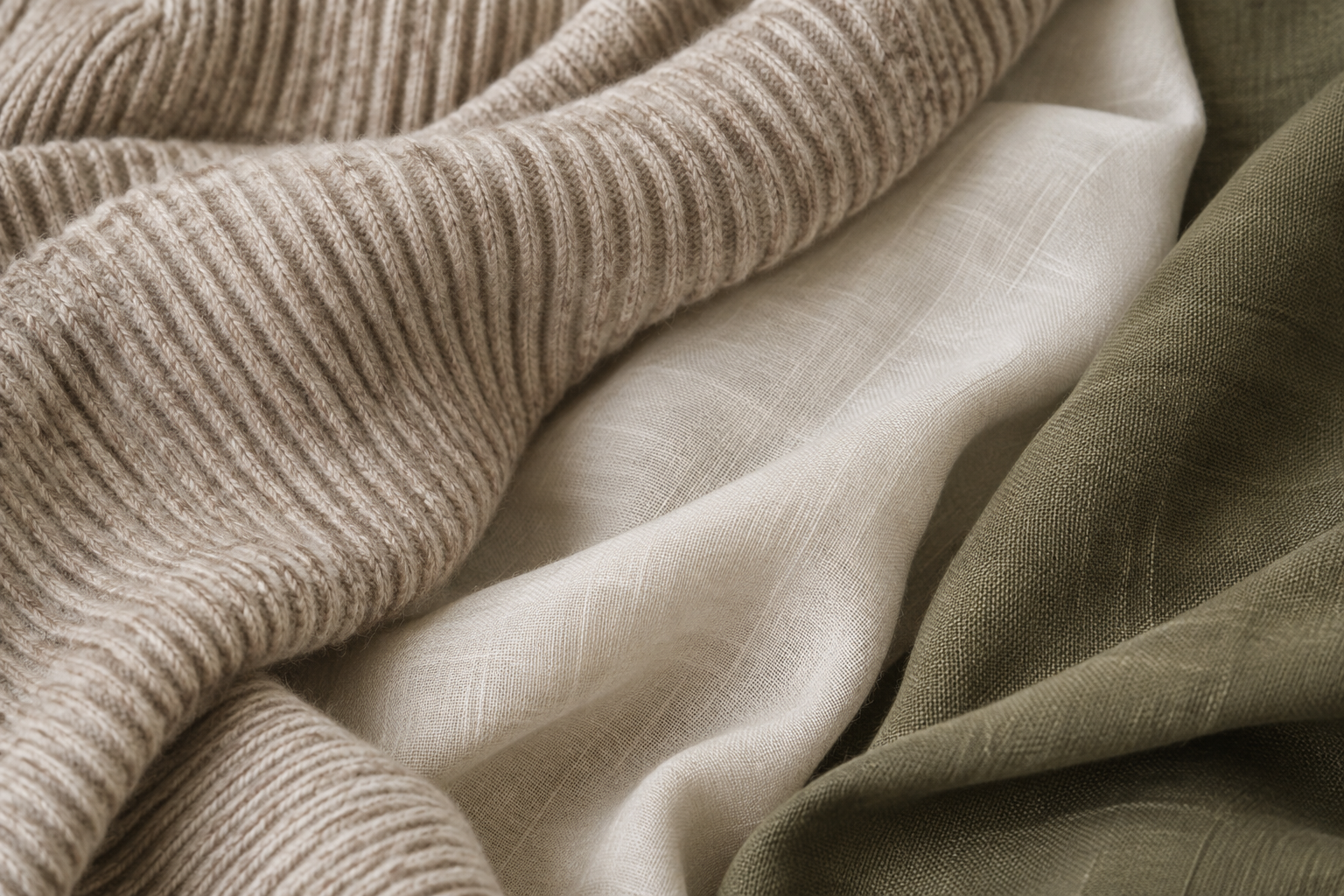
Run these checks on any budget garment before the till — the full checklist is below. Stretch a shirt against the light, tug the chino knees, pinch the belt leather and rub the knitwear between your fingers. Sixty seconds here saves every pound the scorecard might waste.
- One Oxford shirt that passes the light test
- One pair of chinos with recovery in the knee
- One merino-blend knit that does not shed
- One belt with edge-painted, split-free leather
| Brand | Best at | Watch out for | Verdict |
|---|---|---|---|
| Uniqlo | Oxford shirts, merino-blend knits, chinos | Slim cuts; try before buying two | The wardrobe's foundation layer |
| M&S | Shirts, chinos, knitwear, size range | Lines vary; check fabric content | The dependable all-rounder |
| Charles Tyrwhitt | Shirt cuts, collar and sleeve size range | Pricing revolves around multi-buys | Worth it for weekly shirts |
| H&M | Tees, jersey, cheap experiment pieces | Fabric quality varies line to line | Buy the basics, verify the rest |
| John Lewis | Own-brand shirts and chinos, returns | Mid pricing, not budget | The reliable mid-step |
| J.Crew / Everlane | Knits, trousers, unstructured blazers | Overkill for tees and basics | Reserve for the upgrade pieces |
A last look in the mirror.
A MOMENT BEFORE YOU GO
0 of 7 ready
SMALL ADJUSTMENTS
When it feels almost right.
What does cheap menswear usually get wrong?
Four recurring failures: see-through shirting, thin bonded belt leather, baggy-knee chinos and pilling knits. Each has a workaround — hold shirts to the light, replace belts early if needed, choose recovery fabrics, and keep a fabric shaver by the knitwear drawer.
Is buying everything from one affordable brand a mistake?
Yes, usually. No brand is best at every garment, so the all-rounder that nails your shirts probably makes the weakest blazer in your price band. Match brand to garment.
When should I stop buying cheap and pay up?
Shoes and daily-wear trousers. They take the most punishment and fail most visibly; the full reasoning is in the guide to investment pieces.
Still wondering?
What is the cheapest good menswear brand?
There is no single answer — the high-street all-rounders are cheapest per garment for shirts, knits and chinos, but nobody cheap makes great shoes. Judge per garment, not per brand.
Is Uniqlo or M&S good quality?
For the price band, both are dependable for shirts, merino-blend knits and chinos; both are weaker on outerwear and footwear. Verify the fibre content on the specific garment — quality varies line to line.
How can I look smart casual without spending a lot?
Fit, a neutral five-colour palette, and two upgrade pieces: one good pair of shoes and one structured jacket. Everything else can be budget-friendly and still read sharp.
Where do you buy business casual essentials?
High-street chains for shirts and trousers, workwear brands for denim, and a shoe specialist for derbies — then use retailer-level guidance in the where to buy online guide for shipping and returns.