Occasion advice
Aim for the middle: smart casual done respectfully
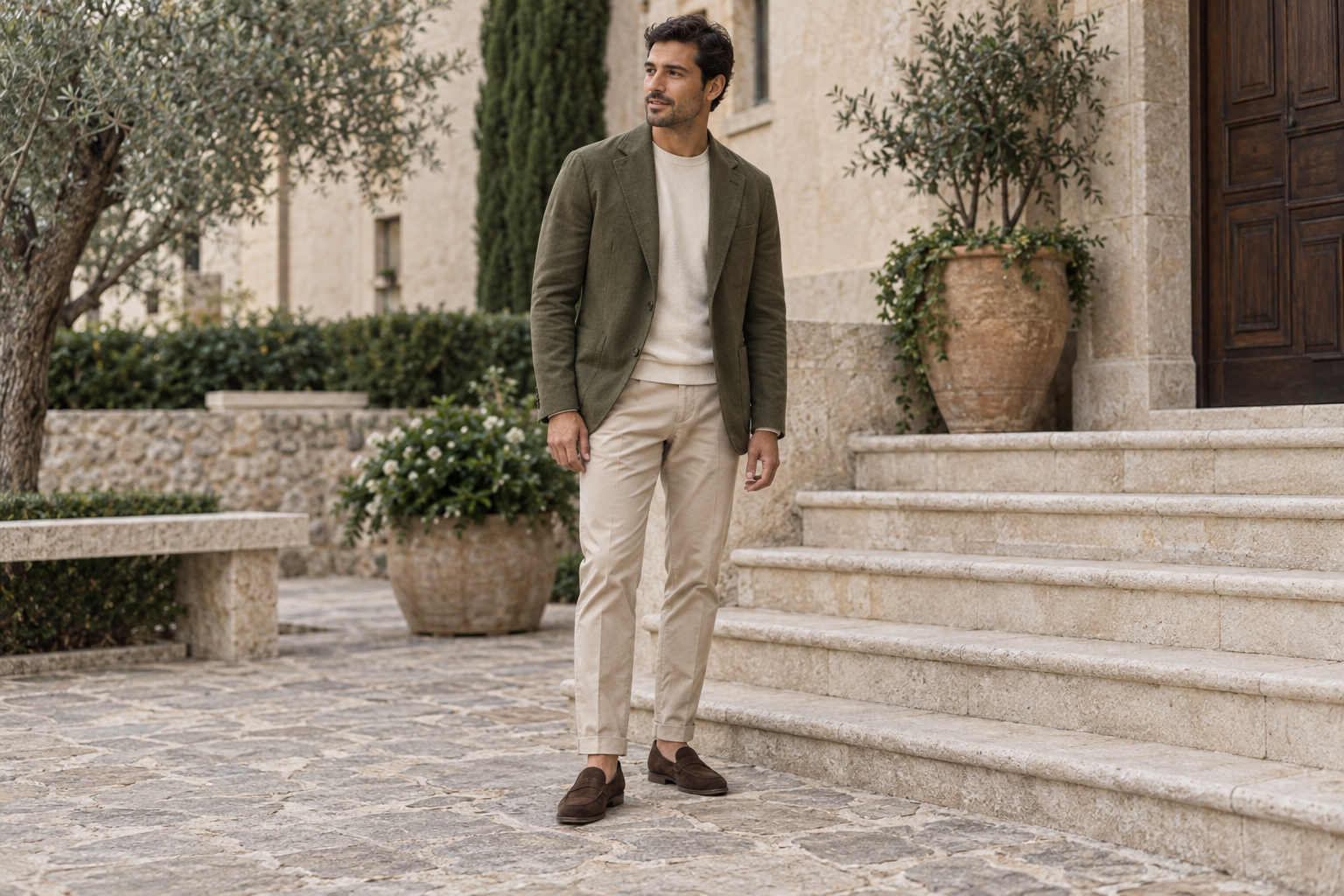
When a funeral has no dress code, the advice that settles every variation of the question is simple: aim for the middle — dark colours, nothing loud, something structured on top. That is smart casual for a funeral, and it works whether you own a suit or not. The one-sentence test: would this outfit disappear respectfully into a photo of mourners? If any piece demands attention, swap it.
What should I wear to a funeral with no dress code?
Aim for the middle and show up in smart casual: dark colours, nothing loud, something structured on top. This single answer resolves the question because it sits between the two ways mourners dress — full formal and plainly casual — without claiming either.
- Do wear dark, muted colours in matte fabrics — charcoal, navy, dark grey, dark green, muted brown.
- Do choose structure — a blazer, or a fine dark knit when the jacket is not available.
- Don't wear bright reds, neons or busy prints — even at celebration-of-life services, keep the base dark.
- Don't worry about owning a suit — the no-suit outfit below is fully respectful at most modern services.
Can you go to a funeral without a suit? Yes. The fallback order, if you have a day or two: borrow a jacket first, buy dark trousers second, a good shirt third, shoes last — one department store solves all four in an hour. If you own a suit at all, its jacket quietly becomes your blazer for the day, a trick covered in the suit jacket as a blazer guide.
The three fallback outfits, ranked
- Fallback 1 — closest to a suit: dark blazer or any dark structured jacket, dark trousers, white or pale-blue shirt, tie optional, dark derbies.
- Fallback 2 — no jacket: dark fine knit or dark shirt, charcoal or grey trousers, dark leather shoes; respectful at most modern services.
- Fallback 3 — what you have tonight: the darkest quiet combination in your wardrobe; dark jeans only at informal services, with the cleanest structured top you own.
Fallback 2 works because structure and darkness carry the signal, not the jacket label. If your dark knit is pilled or stretched, a dark pressed shirt with the collar neat does the same job — the principle is a deliberate top half, which is the same one behind the dark-knit outfits in the men's knitwear guide.
Shoes, coats and weather
Shoes: dark leather, polished and conservative — derbies, oxfords or dark loafers. Trainers are the most common misstep, whatever they cost. For graveside services, wet grass and gravel change the maths: rubber-soled shoes beat thin leather soles, and suede stays home if rain is possible — salt and slush season has its own footwear rules.
The coat problem solves itself in order: a dark overcoat over anything is always correct; if a puffer is all you own, wear it and take it off before the service — arriving warm and removing a practical coat reads fine. Umbrella and gloves: dark and plain, stashed before the service starts. Bright gear has no worse venue than this one.
Adjusting for the setting
- Church or religious venue — the conservative end: jacket or structured knit, covered shoulders, quiet grooming, and any head-covering customs observed.
- Crematorium or modern chapel — slightly relaxed norms, identical logic; capacity seating means a slim profile and a coat you can hold in your lap.
- Graveside — weather-first layering and grass-ready footwear; sunglasses are fine if you are photosensitive, off for the service itself.
- Home or celebration-of-life gathering — the family sets the tone; even genuinely casual means a structured top and no gym wear.
The details that actually signal respect
Grooming carries more than the outfit: trimmed, clean, subtle fragrance or none — you will be standing close to grieving people, some elderly. Phone silenced and away. Sunglasses, gloves, hat and earbuds come off at the door, unless a head covering is required by custom.
And comfort is respect too: services run long and emotional. Clothes that do not demand adjustment — no stiff new shoes, no tight collars — keep your attention where it belongs.
Common worries, answered
- Is a navy suit OK? Yes — navy is arguably better than black at smart casual level, and nobody will read it as a choice about the family.
- Are brown shoes OK? Dark brown, yes, with navy or charcoal especially.
- Do I need a tie? No — at smart casual funerals the tie is genuinely optional.
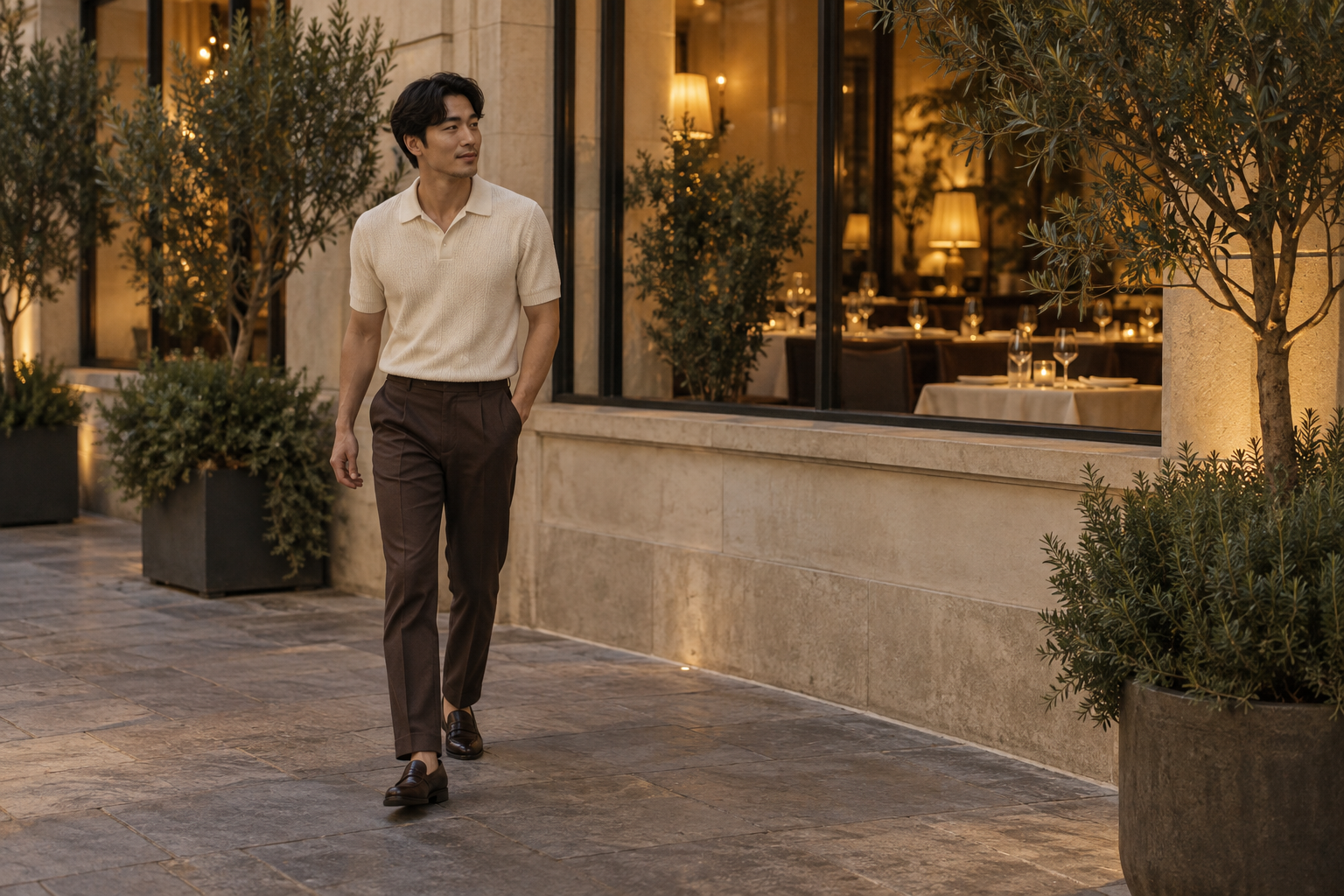
Is a polo shirt OK? Only at explicitly casual, warm-weather services, and then the smartest polo you own with dark trousers. What if you cannot afford anything new? The borrow-and-dark-colours answer stands: dark, quiet, structured — and nobody at a funeral is assessing your outfit's price.
The kill list and its fixes. Each row is a piece that fails, why it fails, and the nearest respectful swap.| Don't wear | Why it fails | Wear instead |
|---|
| Shorts or sandals | Reads leisure at a solemn occasion | Dark trousers, dark loafers or derbies |
| Graphic tees | Loud message where quiet is due | Dark plain shirt or fine knit |
| Bright trainers | The most common misstep, at any price | Dark polished leather, rubber sole if graveside |
| Busy prints and bold checks | Demand attention from across the room | Fine texture — herringbone, merino, flannel |
| Novelty ties | Humour the occasion does not carry | No tie, top button open, clean collar |
| Gym or beach-worn clothing | Signals you did not prepare at all | The darkest quiet combination you own |
Funeral outfit questions
What should I wear to a funeral with no dress code? Aim for the middle — dark colours, nothing loud, something structured on top. That is the whole answer, and smart casual done quietly meets it exactly.
Can you go to a funeral without a suit? Yes — a dark fine knit or dark shirt with charcoal trousers and dark leather shoes is fully respectful at most modern services.
What colours are appropriate for men at a funeral? Charcoal, navy, dark grey, dark green and muted brown; black is optional rather than obligatory, and brights appear only when the family asks.
Are jeans OK for a funeral? Only at informal or celebration-of-life services — dark, clean denim with the most structured top you own, never at a traditional service.