Winter date night
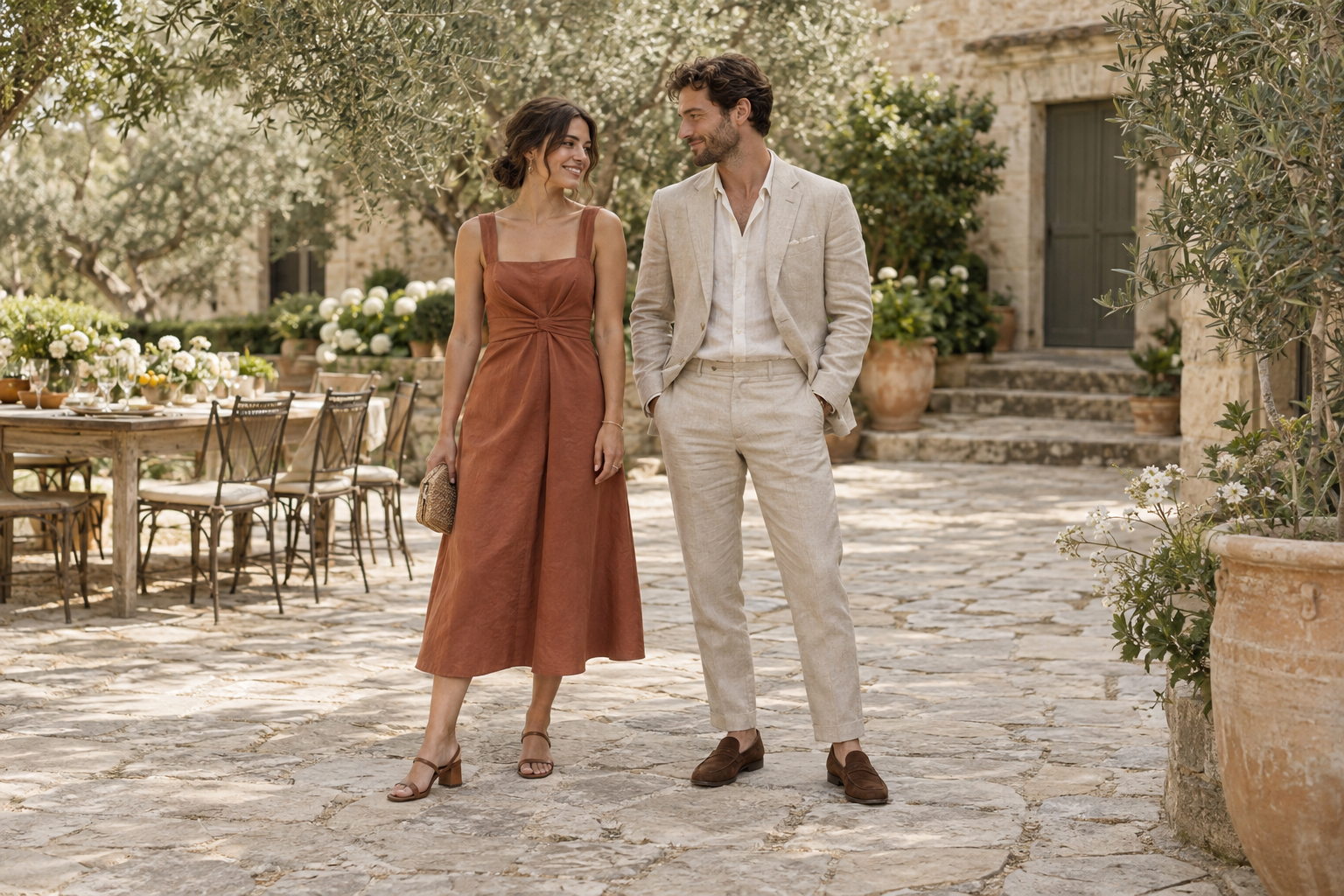
Roll-neck or shirt with a crew knit, dark trousers, boots, and a proper coat — the coat is part of the first impression and photographs with the outfit. Gloves and scarf live in the pockets, not on the outfit.
Occasion guide
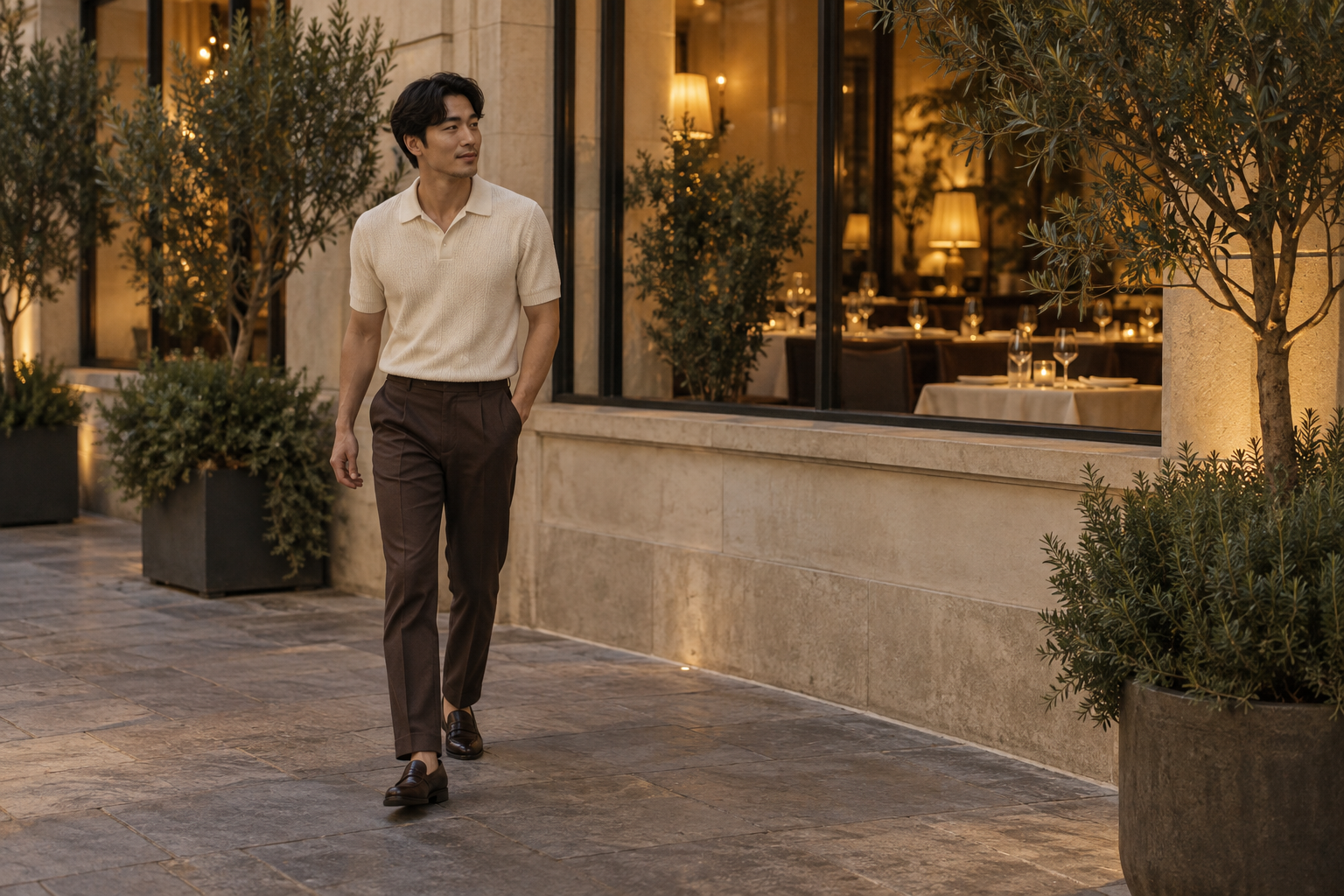
The formula is one line: dress to the venue's standard, then add exactly one considered piece. Here is how that plays out for first dates, dinner reservations and day dates — including the honest answer on blazers.
Begin hereOccasion advice
Dress to the venue's standard, then add exactly one thing that signals intent — a jacket, a good watch, a textured shirt. That is the whole formula. The safe band between trying too hard and not caring is narrow, and this page maps it so you can pick an outfit inside it.
The default: dark clean jeans or chinos, a shirt or fine knit, suede boots or minimal leather sneakers, and one considered piece — usually an overshirt. It fits, it is clean, and it signals you tried without signalling you tried hard.
The overdressing asymmetry is why the formula matters: arriving slightly under-dressed reads comfortable and confident, arriving clearly over-dressed reads as trying, but arriving grossly under-dressed reads as not caring. The band between comfortable and careless is about one garment wide, which is what the considered piece occupies.
| Date type | Trousers | Top | Shoes | Jacket |
|---|---|---|---|---|
| First date, drinks | Dark clean jeans | Knit shirt or oxford | Minimal leather sneakers or suede boots | Overshirt, optional |
| Dinner reservation | Charcoal trousers or dark jeans | Shirt plus fine merino | Suede loafers or Chelsea boots | Knit blazer or overshirt |
| Day date | Dark jeans or chinos | Quality tee or henley | Clean minimal sneakers | Overshirt |
| Established date night | Dark trousers | Roll-neck or shirt and crew knit | Polished boots or loafers | Blazer or proper coat |
The pattern across rows: jeans carry the casual end, trousers carry the considered end, and shoes move up before jackets do. If you upgrade only one thing between a first date and a dinner reservation, upgrade the shoes.
At a bar or casual first date, usually yes — a blazer among t-shirts reads misjudged, so save it for booked restaurants, theatre-then-dinner, and meeting-her-parents-adjacent events. Context beats feeling every time.
The substitute that keeps the signal without the risk: an unstructured overshirt, a chore jacket, or a knit blazer — all removable, all casual-capable, all still deliberate. And remember the remove option: a jacket you take off twenty minutes in is the perfect effort dial, sharp on arrival and relaxed once it is going well.
Jeans carry more first dates than any other trouser, under conditions: dark indigo or black, slim-straight or tailored cut, no distressing, and a hem that lands right on the shoe. Anything else drifts from deliberate to default.
The pairing rule: jeans need one structured element — a knit shirt, an overshirt, an oxford — to avoid drifting into everyday-casual. Do the pre-departure check too: no gapping at the waist, no bagging at the knee, and the phone-and-wallet bulge test, which is a slim-wallet problem more than a jeans problem. When jeans fail — fine dining, theatre, anywhere with a dress code note — the fallback is chinos, and the trade-offs live in the trousers comparison.
Which sneakers survive, and which trousers they pair with, is covered in the minimal sneakers guide.
The last ten percent is close-range work: hair fresh-ish (day-two is fine, greasy is not), beard edged or deliberately maintained, nails short, breath handled with mints in the pocket, and one spray of fragrance — this is a close-range occasion, not a signature-scent event.
The outfit-adjacent signals matter as much as the outfit: a coat at the outfit's level, notifications cleared, minimal wallet, umbrella if the forecast says so. And fit beats fashion one final time — a well-fitting basic outperforms a trendy ill-fitting piece, which is worth verifying against the fit-check guide before the outfit's first outing. Wear something you already feel good in: your best-reviewed outfit, not a new experiment.
The one-considered-piece rule is the entire answer: a jacket, a good watch or a textured shirt — exactly one. Everything else stays at the venue's level, and the single deliberate piece reads as intent rather than effort.
If it goes wrong anyway — rain, a spill, a venue fancier than expected — the rescue moves are in the last-minute fixes guide, and the full outfit-building logic behind these looks is in the men's outfit formulas hub. For the dinner-specific version of this dressing problem, the men's dinner outfit guide takes the restaurant end further.
Are jeans OK for a date? Dark, clean, straight jeans with one structured element on top — yes, at bars, casual dinners and day dates. Fine dining and dress-coded venues want chinos or trousers.
What shoes for a first date? Suede loafers or Chelsea boots at the top, clean minimal leather sneakers at the floor — cleaned beforehand either way.
What about winter dates? Roll-neck or shirt under a crew knit, dark trousers, boots, and a proper coat — the coat arrives before you do, so it sets the first impression.
BEFORE YOU CHOOSE
Dark straight jeans, a knit shirt or oxford, minimal leather sneakers or suede boots, and an overshirt as the considered piece. This is the default first-date outfit: it says his life is together without saying he consulted a forum.
Charcoal trousers or dark jeans, a shirt under a fine merino, suede loafers or Chelsea boots, and a knit blazer or structured overshirt. The blazer is correct here — a booked table is the venue justifying the extra rung.
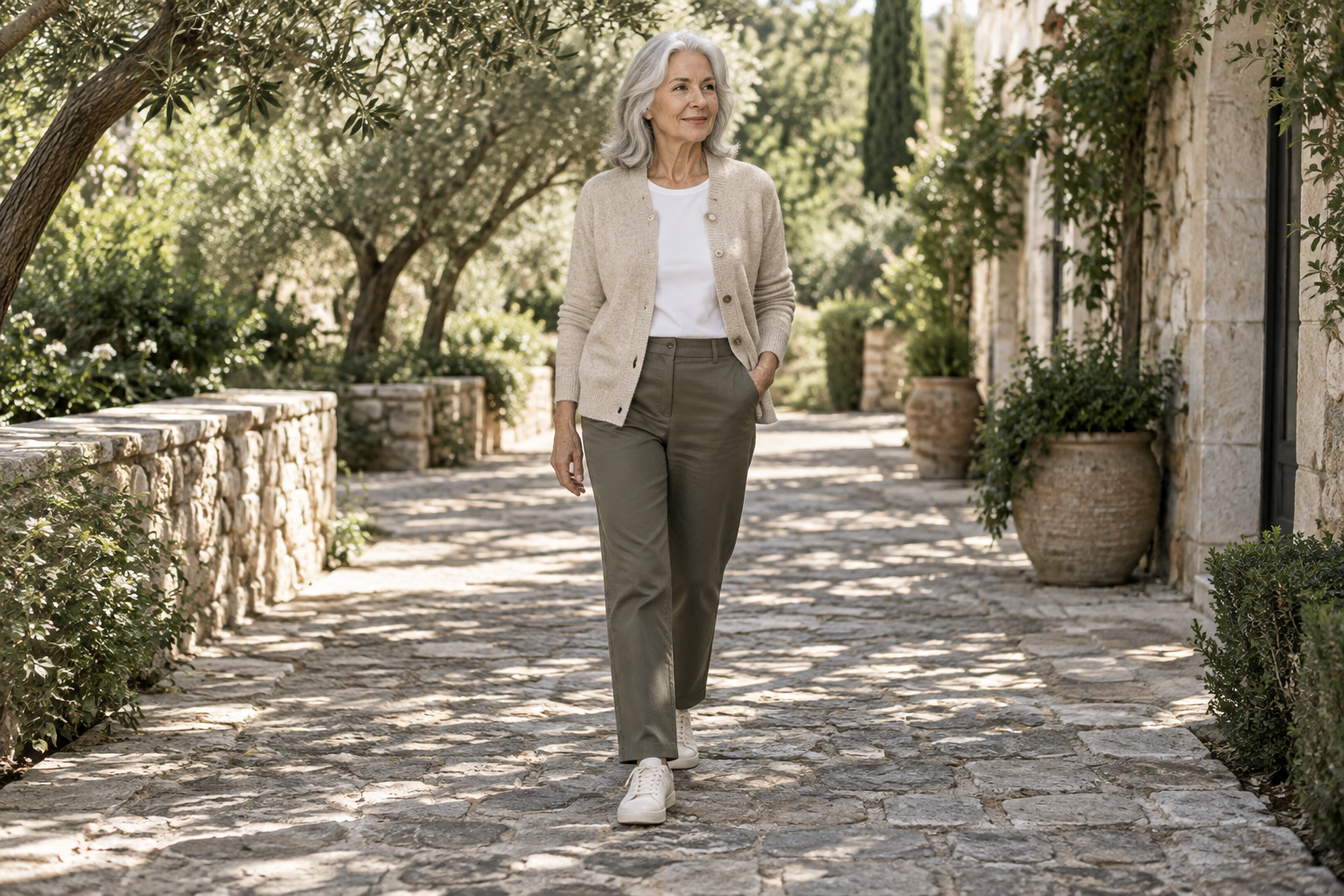
Dark jeans or chinos, a quality tee or henley under an overshirt, clean minimal sneakers. The smart-casual daytime translation: everything quiet except the shoes, which do the impression's heavy lifting.
Roll-neck or shirt with a crew knit, dark trousers, boots, and a proper coat — the coat is part of the first impression and photographs with the outfit. Gloves and scarf live in the pockets, not on the outfit.
A jacket you can take off after twenty minutes is the perfect effort dial: start sharp, relax once the date is going well. Carry-able layers beat committed ones for exactly this reason.
Walking, markets, bowling — shoes are the whole question. Clean minimal sneakers with everything else quiet is the smart-casual version of activewear-adjacent dressing.
Context beats feeling: even at a casual venue, this is blazer territory, because the audience reads effort as respect. Take the extra rung without being asked.
What to Wear
Engagement party outfit men can trust: the one-notch-below-the-wedding rule, formulas by party type, the jeans question, and what the groom wears.
What to Wear
Theatre outfit rules for men: no dress code but a smart casual consensus. Jeans yes, sneakers sometimes, the venue table, and one complete outfit.
What to Wear
The golf club dress code for men, decoded: collared shirt rules, clubhouse footwear, and what country club smart casual really means for guests.