Men's Theatre Outfits: West End Shows, Opera and Everything Between
You have tickets and one question: does the old dress-up-for-the-theatre rule still apply? No theatre enforces a code, but there is a modern consensus — and one outfit you can assemble from what you already own.
What to wear, by venue, performance and seat width
No major West End or regional theatre enforces a dress code, and the de facto standard at evening performances is smart casual — dark jeans and clean sneakers are normal at most shows now. The decisions left are about venue and performance type: opera still dresses up, matinees dress down, and the whole thing has to survive three hours in a narrow seat.
What do I wear to a West End show? The honest answer
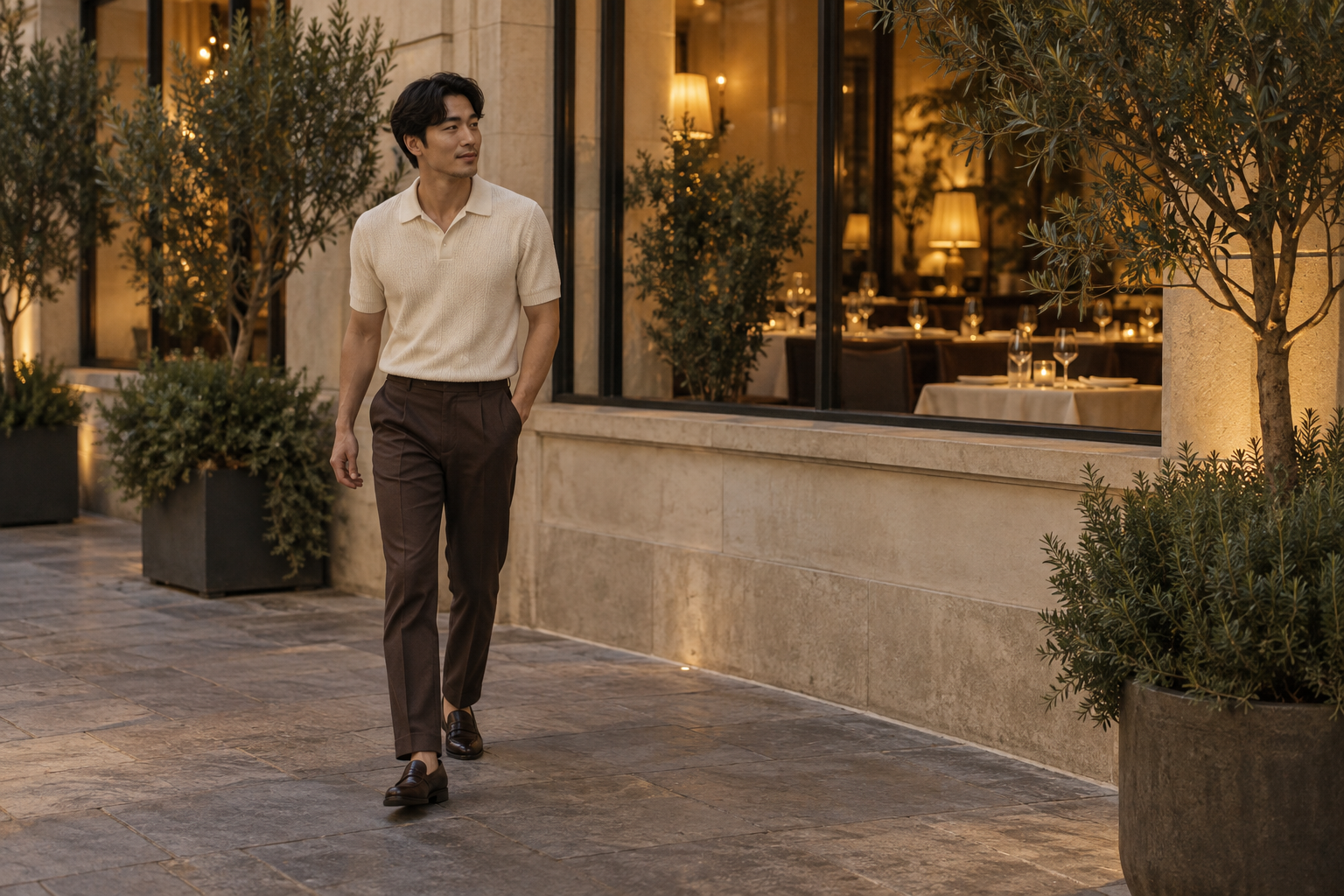
There is no dress code, but there is a consensus, and the consensus is smart casual. The one-line outfit: dark jeans or trousers, a shirt or fine knit, loafers, boots or clean minimal sneakers, jacket optional. You will be in a crowded bar at interval and photographed zero times, so comfort and quiet smartness beat formality every time.
Smart jeans at the theatre: yes, here is the bar
The conditions: dark indigo or black, no distressing, a tailored fit, a structured top half — shirt, fine knit or overshirt — and proper footwear. Meet those and jeans pass at every ordinary theatre performance in the country. Miss the conditions and the jeans read like you came from the sofa.
Where jeans are weaker: opera houses, gala nights, and rooms where the average attendee is sixty-plus — in those, chinos or trousers are the safe swap. On the sneakers question: clean, leather, low-profile pairs pass at contemporary venues and most evening shows now; running trainers never do, at any venue, at any time.
The complete evening outfit
The default: dark jeans or charcoal trousers, an oxford shirt or merino crew, suede Chelsea boots or loafers, and an unstructured blazer or overshirt if there is a dinner before or after. This is deliberately the same skeleton as the men's outfit formulas hub, because theatre night does not need a special wardrobe — it needs the right three pieces from the one you own.
Layers you can shed — full houses run warm, so merino and cotton beat heavy knitwear you cannot take off.
Nothing that crinkles — nylon shells and stiff fabrics announce themselves in a silent auditorium.
Coat logistics — cloakroom queues at interval are long; bring a coat you can hold over your arm, or arrive thirty minutes early. It still needs to look right in the bar.
A secure pocket or a small bag — wallet and phone at the bar, hands free for the interval drink.
Three hours seated: the comfort rules
Seat width is the constraint nobody budgets for: slim-cut but not restrictive, jackets that do not crush across the back, nothing with bulky detailing at the collar because that is exactly where your head rests. Tailored but not tight is the literal instruction — you will stand at interval and sit for the rest.
Dinner-and-show nights add one more test: you will stand at a small high table, then walk briskly from restaurant to curtain. Dress to the restaurant standard and you pass both — the dinner-outfit logic and the theatre logic converge almost perfectly. The full restaurant side of it is in the men's dinner outfit guide.
Opera night and gala performances
Opera houses split into two kinds of night. Ordinary performances at most modern houses are smart casual, same as theatre. Premieres and galas are the last real dress-up territory — black tie invitations happen, and the invite is literal. Rent or borrow for the one-off; buying a tuxedo for a single gala is a decision for people who attend them annually. Classical concert halls skew slightly more traditional in audience dress than theatres, so a jacket earns its keep there.
Theatre outfit questions
What do men wear to a West End show? Smart casual: dark jeans or trousers, a shirt or fine knit, boots, loafers or clean minimal sneakers, jacket optional. No theatre enforces anything.
Can you wear jeans to the theatre? Yes — dark, undistressed, tailored, with a structured top half and proper shoes. That is the whole bar.
Are trainers allowed in theatres? Clean leather low-profile ones, yes, at contemporary venues and most evening shows. Running trainers, no.
Do you have to dress up for the opera? For ordinary performances, smart casual passes at modern houses; premieres and galas can be black tie, so read the invitation. What do men wear to a matinee? Daytime-smart and noticeably more relaxed than evening — chinos, knit, sneakers, no jacket.
BEFORE YOU CHOOSE
Read the room. And the invitation.
An evening show at a West End flagship, a regional theatre, a touring production or an opera house.
A crowded bar at interval, a cloakroom queue, and a seat you will sit in for two to three hours.
Often a pre-theatre dinner before curtain-up, at a restaurant with its own expectations.
Zero photographs of you, and a room where comfort and quiet smartness beat formality.
A useful outfit formula.
Trousers: dark indigo jeans or charcoal trousers — tailored, not tight, because the seat is narrower than your sofa.
Top: oxford shirt or fine merino crew; add an unstructured blazer or overshirt if dinner bookends the show.
Shoes: suede Chelsea boots or loafers; clean minimal leather sneakers pass at contemporary venues.
Jacket: optional at ordinary shows, expected at opera and gala nights.
Coat: one that looks right in the bar, because cloakroom queues at interval are real.
Bag: as small as the night allows — theatres run bag-size checks at the door.
Two starting points.
The evening standard
Dark indigo jeans, white oxford shirt, unstructured navy blazer, suede Chelsea boots. Works at any London or regional theatre, doubles as the pre-theatre dinner outfit, and every piece is sheddable when the auditorium heats up.
The matinee version
Charcoal chinos, merino crew over a collared shirt, clean minimal sneakers, no jacket. Daytime shows skew relaxed — tourists attend in full day-clothes and nobody blinks, so this is comfortable without slipping into gym wear.
The opera night
Charcoal trousers, white shirt, dark tie or roll-neck, polished derbies or black boots, wool overcoat. For ordinary performances this is already a notch above the room; for galas and premieres it is the base layer under a full suit.
Adjust for the day.
The dinner-and-show combined outfit
Many theatre nights start with an early dinner, so dress for the smarter venue of the two — a dinner outfit is always theatre-safe, and the reverse is not always true. The full logic is in the men's dinner outfit guide.
The winter show
Roll-neck or shirt plus fine knit, dark trousers, boots, overcoat. Layers matter more than warmth ratings: full houses run warm, so everything you wear should be removable and foldable into a seat pocket or lap.
The tourist evening
Visiting a West End show on holiday: the same dark-jeans-and-shirt formula works and needs zero packing gymnastics. Evening performances skew smarter than matinees — that is the only adjustment worth making in a foreign city.
The gala or premiere
Special performances step everything up one notch, and the invitation wording tells you. If it says black tie, the tuxedo is a rent-or-borrow decision for a one-timer — the rental question is the same one wedding guests face.
Leave these assumptions behind.
Reading no dress code as licence for gym wear. You are seated among strangers for three hours; the bar at interval is a small room, and everyone sees everything.
Wearing running trainers to an evening show. Clean leather sneakers pass at contemporary venues now; gym trainers never do.
Ignoring the quiet-clothing test. Jangling bracelets, crinkly nylon shells and squeaky soles are audible in a silent auditorium.
Overdressing for a matinee. Daytime performances run visibly relaxed — a full suit at a 2pm touring production reads like you went to a different event.