Occasion advice
One notch above the room, never two
When is it okay to go smart casual for an interview? When one clear notch above that company's daily best still lands short of a suit — and the fastest way to find that notch is to look at how the team you are meeting actually dresses. This guide turns the judgement call into a rule, a table, and three outfit builds that work anywhere the rule says no suit.
The one-notch rule, stated once
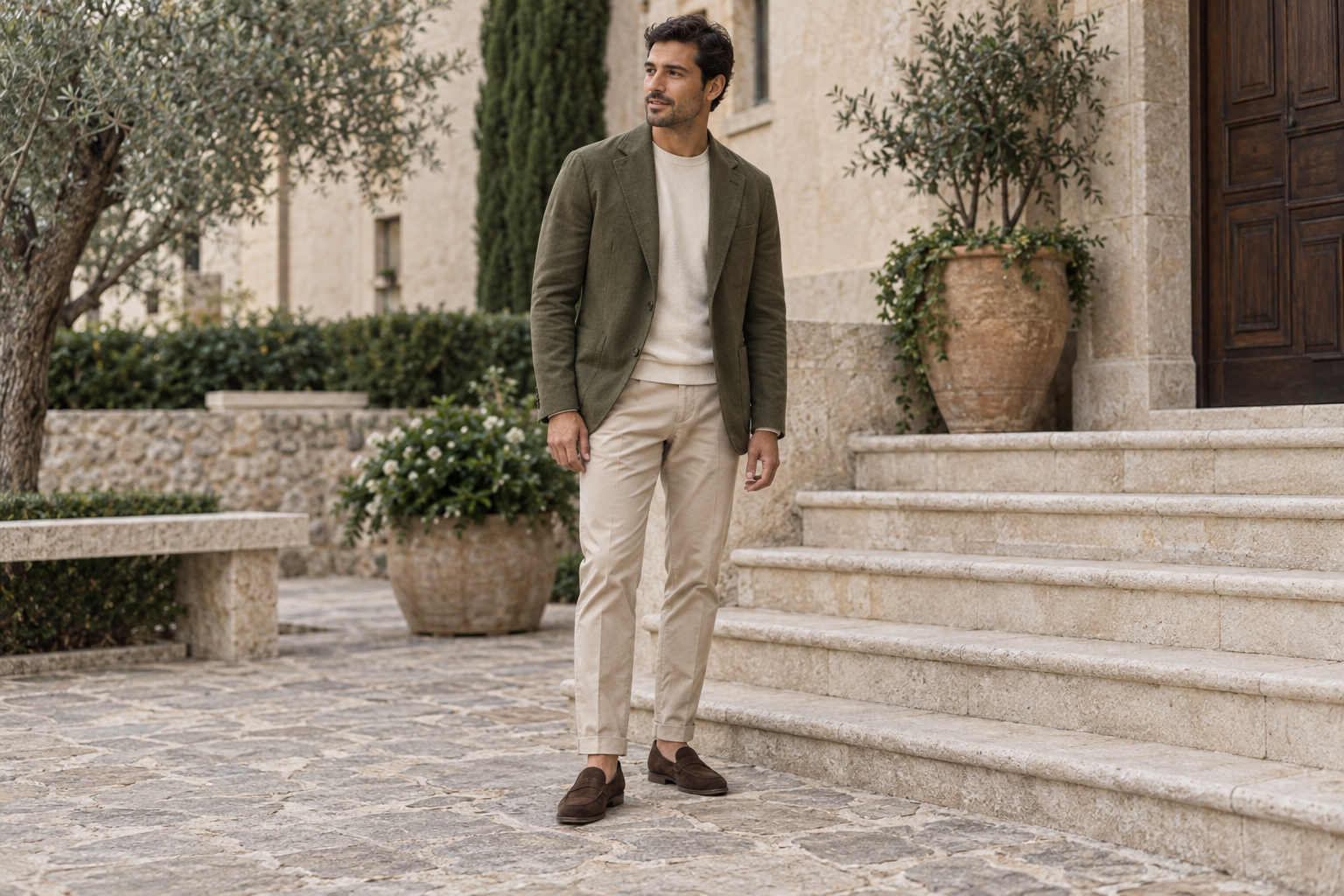
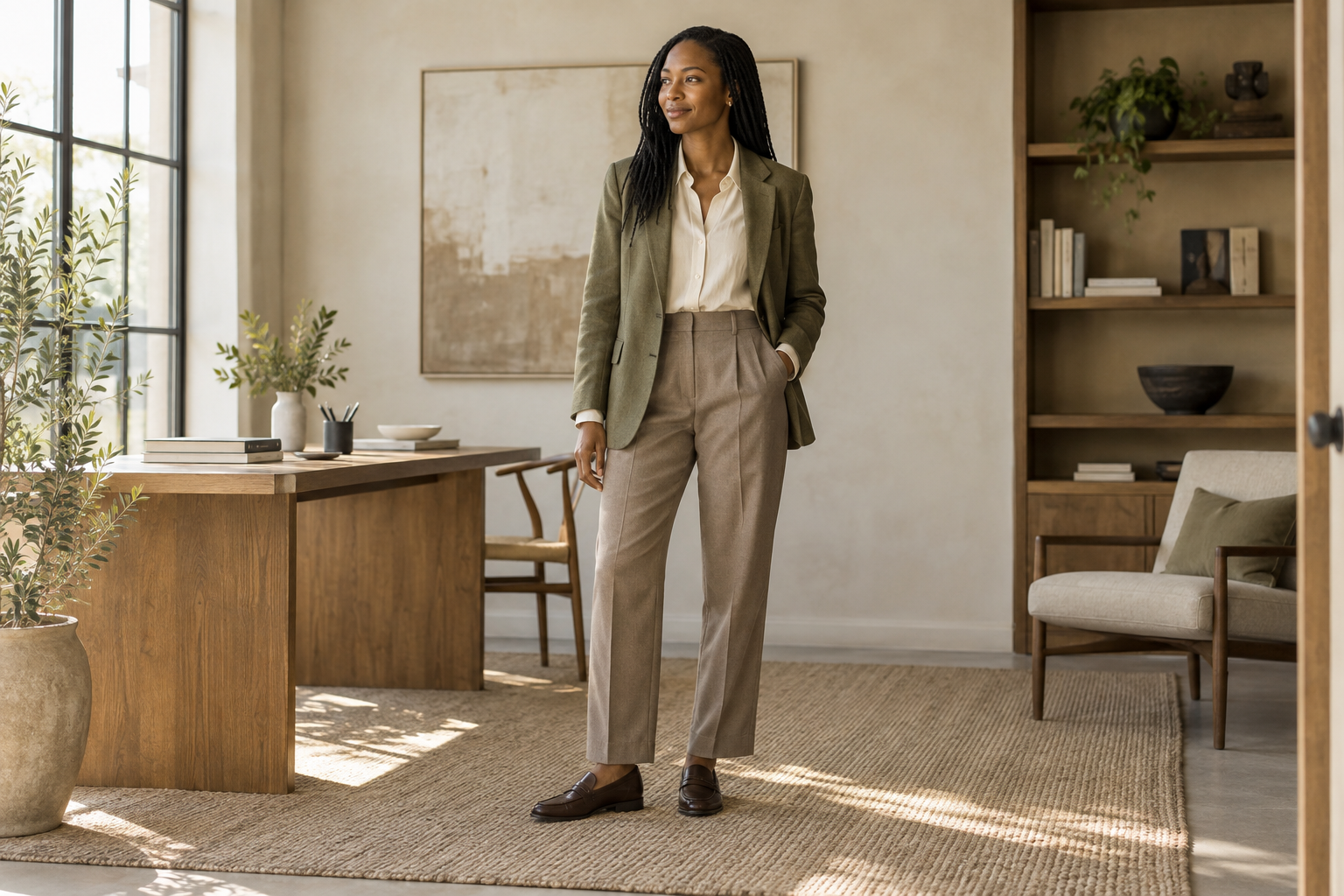
Wear one clear notch above what the best-dressed person in the role you are interviewing for wears on a normal day. At a bank that is still a suit; at a tech company it is blazer-no-tie or shirt-and-trousers; at a studio it may be dark jeans with an overshirt. The rule needs one piece of research to run: look at the team on LinkedIn or the company's own photos and find their daily best — that is your floor, plus one.
Industry by industry: what one notch above the room looks like, and which risk each setting carries.| Setting | One notch up looks like | Risk of a suit | Risk of casual |
|---|
| Banking, law, consulting | Full suit, tie included | None | Fatal |
| Corporate office | Tieless suit or blazer build | Small — reads formal, survivable | High |
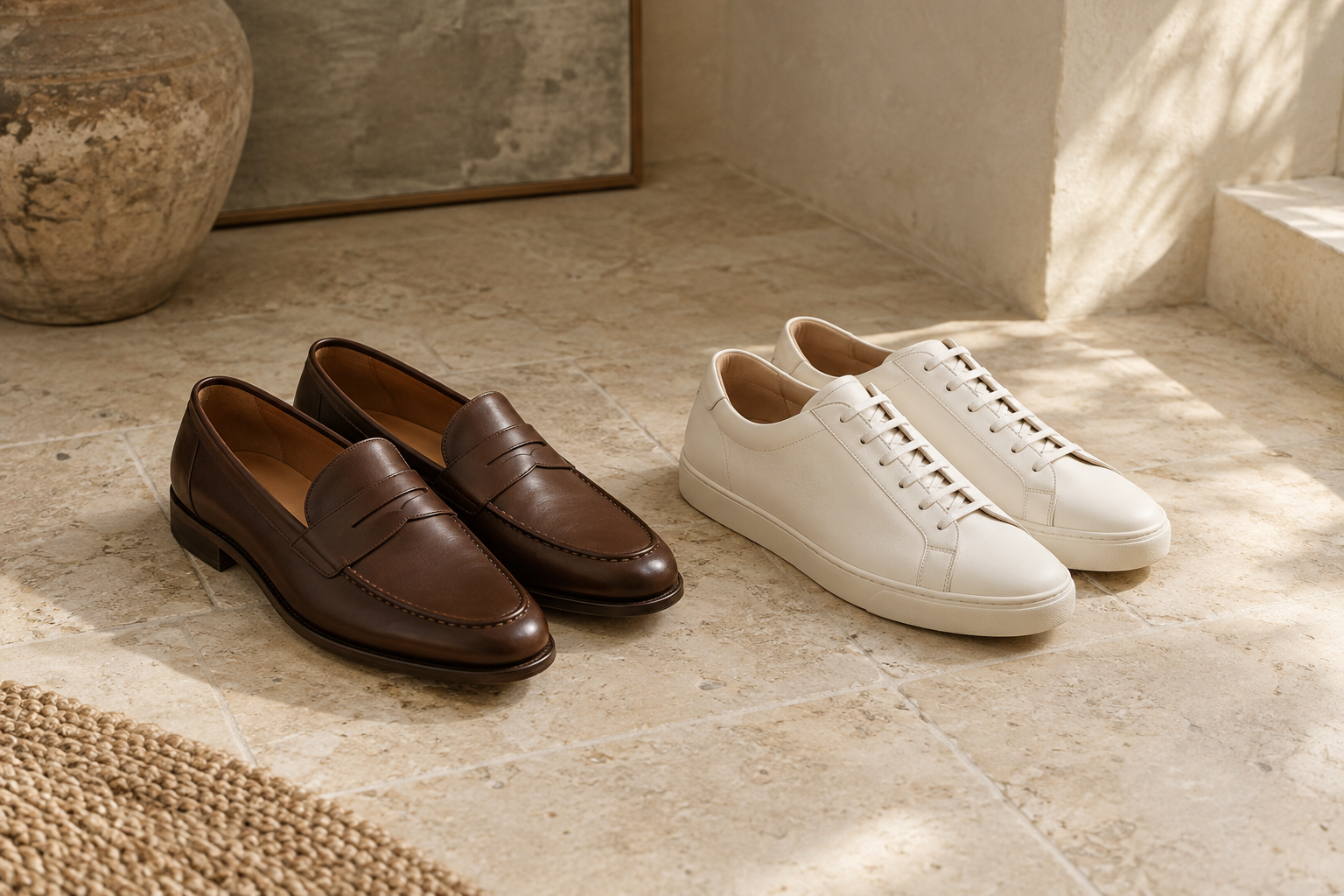
| Tech or startup | Blazer no tie, clean sneakers fine | Moderate — reads as Hasn't-Interviewed-Recently | High if under the blazer |
| Agency or creative | Structured top half, one expressive piece | Moderate | High without structure |
| Retail or hospitality management | Shirt and trousers, leather shoes | Moderate | Fatal — you meet customers |
How to verify a specific company: check the LinkedIn photos of the people you will actually meet, or just ask the recruiter what people wear — they expect the question, and asking it signals care rather than ignorance. The smart casual interview overview expands this research step for mixed or unknown workplaces.
The night-before checklist
- Try the whole outfit on — every piece, shoes included, in one mirror session
- Iron the shirt and lint-roll the jacket; condition reads louder than brand
- Wipe the shoes and their soles; match the belt to them
- Grooming minimums: recent haircut, edged or clean-shaven per your normal, nails, one fragrance spray maximum
- Carry a folio or slim folder rather than a backpack if you can
- Pack the emergency tie and check the weather plan — a coat that does not wreck the look, umbrella if any cloud
What not to wear, in one list
- Shorts, sandals, graphic tees, gym trainers — hard nos at any interview
- Busy patterns head-to-toe or novelty accessories — memorable for the wrong reason
- All-black with no texture — reads severe in person and worse on video
- Visible logos and a smartwatch on a bright sport band — swap the band or leave it off
- Sunglasses on the head, earbud around the neck — the small signals that say casual everywhere
After the offer: the first week
The interview notch is a ceiling, not a uniform — the first week recalibrates you to the office's real daily level, and the first week at a new smart casual office guide walks that landing. For the longer game, the men's outfit formulas hub turns one blazer and three trousers into a month of no-repeat days.
Interview outfit questions
Should I wear a tie to a smart casual interview? Almost never — a tie activates the suit formality you are deliberately stepping down from. The exceptions are finance, law and any room where the interviewers themselves wear ties.
Is overdressing really survivable? Yes, and it is the reversible risk: a suit reads as preparation, maybe slightly out of practice, never as disrespect. The tieless suit is the middle path that removes even that reading.
What about the flight or commute — do I wear the outfit there? Travel in it if you can keep it crease-free; otherwise change nearby, and never fold the blazer into a bag. A rumpled jacket undoes the notch in the lobby.
Adjust for the day.
When in doubt, suit minus tie
The asymmetry principle decides this: nobody rejects a strong candidate for wearing a suit, but a badly judged too-casual is unrecoverable. If the notch is genuinely ambiguous, take the tieless suit — it reads as considered at every level of formality from corporate to startup.
The second-round downgrade
It is acceptable — often smart — to dress slightly less formally in round two once you have seen the office. Mirror roughly what the hiring manager wore in your first meeting; that is the truest signal of the local notch you will ever get.
The video interview
Waist-up rules: blazer on, collared shirt, groomed as if in person, and a plain background with light on your face. Wear the trousers anyway — you will stand up, and knowing you are fully dressed changes how you sit.
The hot-day and travel version
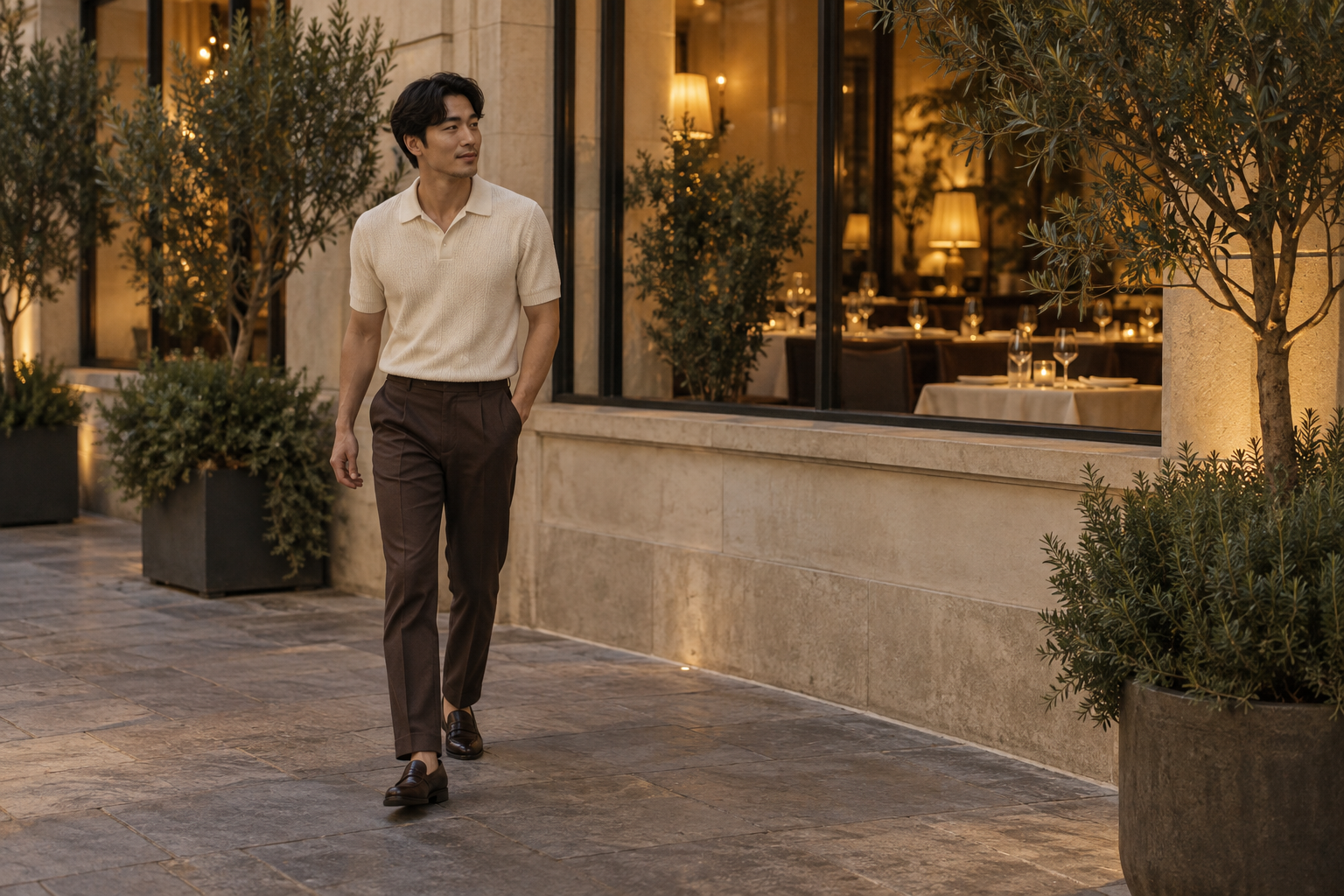
Where heat or a same-day commute makes the blazer a burden, the fallback is the shirt-and-trousers build: crisp light shirt, darkest trousers you own, leather loafers, no jacket. It sits half a notch below the blazer builds — right for startup and creative rooms, half a notch short for corporate ones.