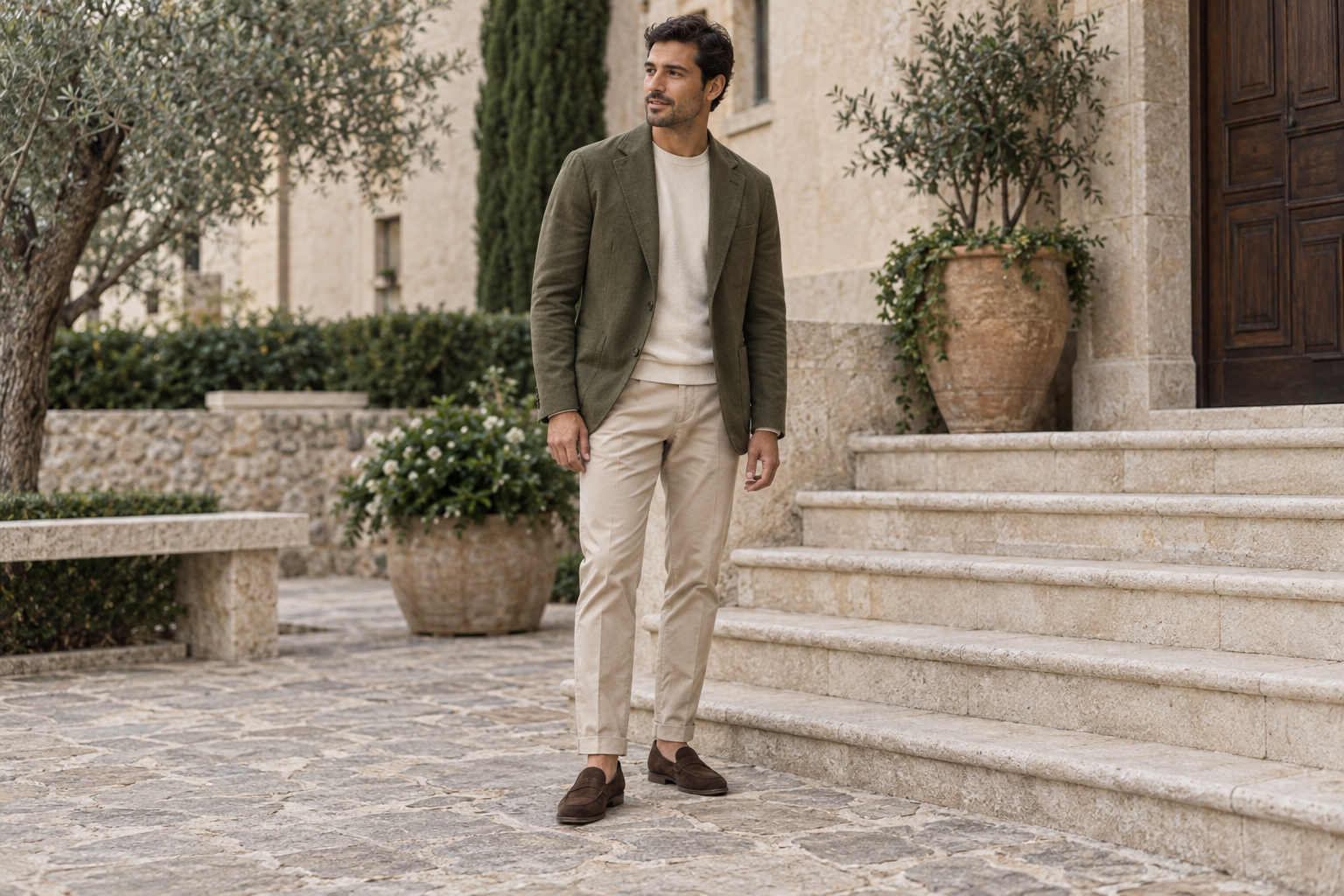
A SIMPLE STARTING POINT
Ease, with intention.
Smart casual in your 20s is a subtraction job first: keep the fit and energy of what you wear, retire the five teen markers (logo tees, skater or fake sneakers, baggy gym-cut everything, graphic hoodies, beat everyday shoes), and replace them with plain tees and polos, clean minimal sneakers or loafers, straight-fit trousers, one knitted layer and one real jacket. Done in the right order — shoes, trousers, tops — the whole transition costs less than a month of impulsive clothes spending, and the <a class="ilink" href="/what-to-wear/budget/smart-casual-on-a-budget/" title="Smart Casual on a Budget: The Full-Build Starter Wardrobe">starter budget guide</a> keeps each step affordable.
This guide gives you a repeatable way to get dressed. Read the short version of each step here, then follow the deeper guides when you want more detail.
01
Retire five teen markers, add five adult equivalents
The gap between dressing like a teen and dressing like a young professional is five garments, not a personality transplant. Each marker below has a direct replacement at similar comfort and similar money — you are upgrading signals, not cosplaying an older man. The fedora-and-odd-menswear route fails because costume reads louder than any logo ever did.
THE SHORT VERSION / 4 STEPS
Pull every tee you own and separate logos from plains — the plains are already your new rotation.
Look at your everyday shoes honestly: if they would survive a meeting, keep them; if not, they are the first replacement to buy.
Try on your baggiest trousers next to any straight pair — the mirror decides, not the size tag.
Retire one marker this week and buy only its replacement, in that order.
02
The starter salary capsule: about ten pieces, in buy order
Shoes come first because they appear in every outfit and they are the signal adults read before you speak. Trousers come second because they frame everything above them. Tops third, one knit or overshirt fourth, and one unstructured blazer last — it earns its cost the moment weddings and client visits start appearing on your calendar.
THE SHORT VERSION / 5 STEPS
Buy shoes this month — one good pair beats three cheap ones you replace twice.
Add the dark chino and dark jean next; fit standards over brands.
Fill the tops in the following month, plain colours only.
Delay the blazer until an occasion actually demands it, then buy unstructured.
Skip, for now: suits you have no use for, tie collections, and statement pieces without a foundation underneath them.
03
Fit is the free upgrade; 70/30 keeps it from becoming costume
Shoulder seams on the shoulder point, trouser hems kissing the shoe, shirt hems that survive a raised arm — those three checks outperform any brand label, and the full fit-check takes two minutes. The thrift-plus-tailor combo is the starter-salary cheat code: a five-dollar shirt with a ten-dollar take-in beats a full-price one that almost fits. And buy for the body you have now; the bulk-you-later rack does not exist.
THE SHORT VERSION / 3 STEPS
Run the five-point mirror check before you leave: shoulders, hem, shoe cleanliness, collar, overall colour count.
Visit a secondhand shop, buy on measurements, and price a hem or take-in into the purchase.
Choose your one edge — the sneaker, the watch or the colour — and let the rest stay basic.
04
Occasions and the twelve-month plan
The casual office runs on one repeatable uniform — trousers, plain top, clean sneaker — varied by colour and layer, and it looks deliberate because it is the same formula every day. Interviews do not require a suit; the no-suit interview outfit outperforms an ill-fitting one. For weddings, one outfit in a mid-weight fabric and a re-wearable colour covers three invitations without anyone noticing.
THE SHORT VERSION / 4 STEPS
Buy one category per month and let the plan run twelve months — sales rack first for basics.
Triage the teen clothes: donate the worn, store the sentimental, keep only what passes the new fit standard.
Track cost-per-wear loosely — a notes-app tally is enough to reveal what never gets worn.
Maintain what you own: clean shoes weekly, wash knitwear properly, and the capsule outlives its price tag.
SEE THE IDEA AT WORK
The if-you-only-own-five-things floor
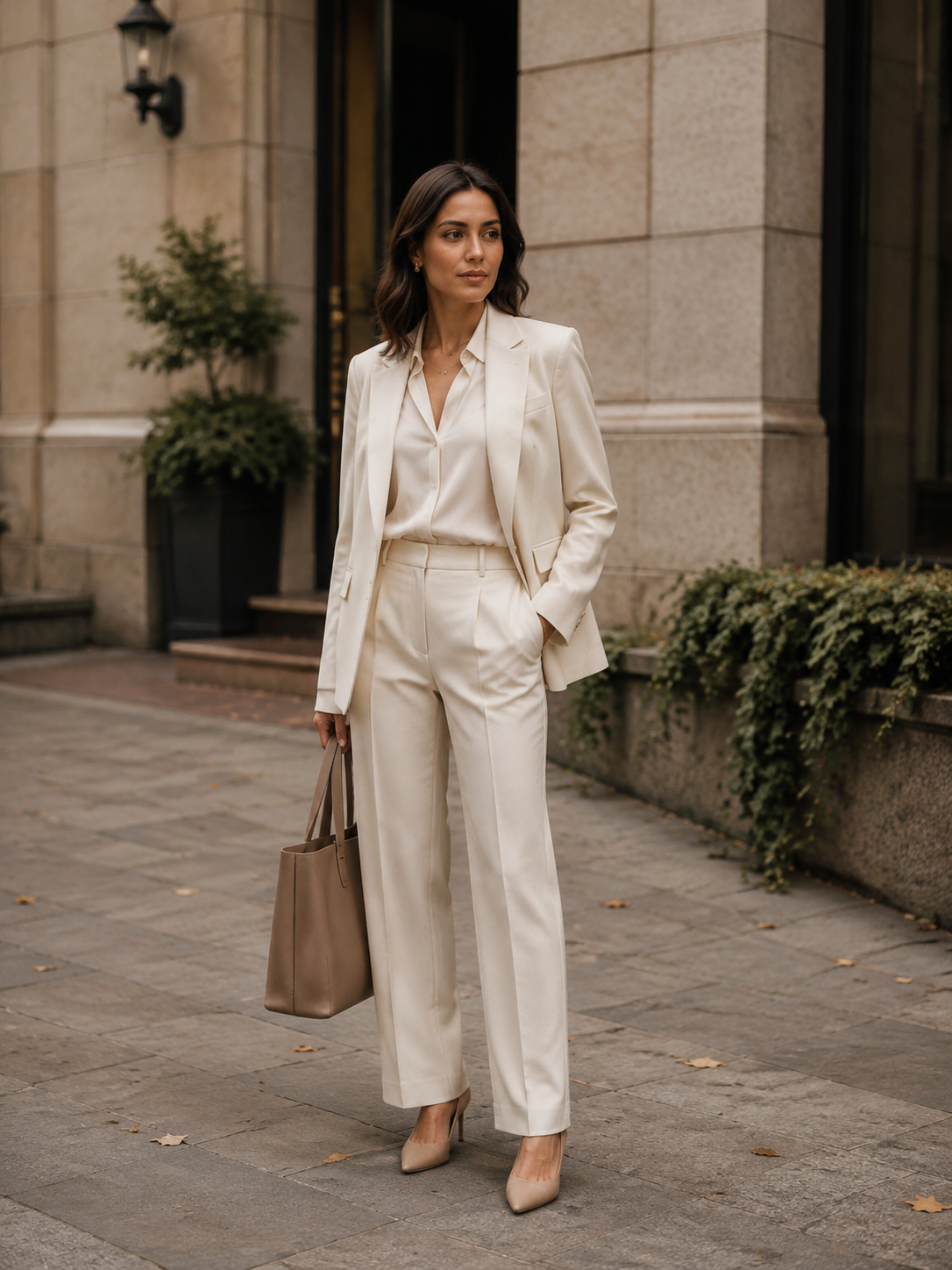
Clean minimal sneakers, dark straight trousers, a plain white heavyweight tee, an oxford shirt and one overshirt. That five-piece floor passes every smart casual check a 24-year-old actually faces — the office, the interview, the dinner, the wedding that snuck up on you — and every piece costs starter-salary money.
- Clean minimal sneakers, white or off-white
- Dark straight trousers (chino or wool-blend)
- Plain white heavyweight tee
- Oxford shirt in white or light blue
- One overshirt or knit layer in a neutral
| Teen marker | Adult replacement | Why the swap works |
|---|---|---|
| Logo and graphic tees | Plain heavyweight tees and polos | Same comfort; the signal changes from fandom to deliberate |
| Skater or replica sneakers | Clean minimal sneakers or loafers | Adults read shoes first; clean and simple passes every room |
| Baggy gym-cut everything | Straight or slim-straight trousers | Fit reads effort; volume reads default |
| Graphic hoodies | Knit layers and an overshirt | Same warmth, structured enough for offices and dinners |
| Beat everyday shoes | One maintained smart pair | Rotation keeps it alive; maintenance is ten minutes a week |
A last look in the mirror.
A MOMENT BEFORE YOU GO
0 of 7 ready
SMALL ADJUSTMENTS
When it feels almost right.
Buying the costume instead of the signals?
Fedora, waistcoat, pocket watch — dressing older as cosplay reads as trying. Upgrade the five signals (shoes, trousers, plain tops, knit, jacket) and stay yourself in colour and fit.
Buying everything at once, broke by week three?
One category per month in buy order. The capsule still assembles — and each purchase gets worn immediately instead of waiting for the rest.
Buying for a future body?
Clothes for the bulk-you-later hang unworn and wreck the budget. Buy for today; tailoring later costs less than a wrong wardrobe now.
Still wondering?
How do I actually stop dressing like a teen?
Retire the five markers — logo tees, skater sneakers, baggy gym cuts, graphic hoodies, beaten shoes — and replace each with its plain equivalent. The swap list in chapter one is the whole answer.
Do I need a blazer at 24?
Eventually, and unstructured. Buy it when weddings, client visits or smarter dinners start appearing — a casual blazer earns its cost from roughly the second such event onward.
How much should I spend starting out?
Less than you fear: shoes first at the top of the budget, basics from sales and the secondhand guide, and one category per month. Cost-per-wear, not price tag, is the number that matters.
What if my wardrobe is still 80 percent university clothes?
That is normal — run the retire-and-replace swap for five weeks and the ratio flips without a shopping spree. The first-job wardrobe guide maps the same plan onto a smaller salary, and juggling study too? The student guide covers assessment centres and internships.