Problem-solving
Dress-coded events, a student wardrobe, one budget
The problem is never one outfit — it is four dress-coded moments in a single term, owned by someone whose closet is built for the library. The fix is a small capsule that works at every level of formality careers season throws at you, bought in the right priority order.
The event-to-outfit map at a glance
Same six pieces, four different calibrations. One notch above the room, never two.| Event | Calibration | The combination |
|---|
| Careers fair | Approachable-professional | Dark chino, collared top or structured tee, clean shoes, bag for flyers |
| Interview | Polished, not corporate | Dark trousers, oxford or blouse, knit layer, leather shoes |
| Assessment centre | Interview outfit built to survive eight hours | Crease-resistant fabrics, removable layer, broken-in shoes |
| Internship day one | One notch above the office's photos | Capsule plus the layer that comes off if you overshot |
Careers fairs: approachable beats impressive
You will talk for three minutes, stand for two hours and carry a bag of flyers, so comfort and approachability beat impressiveness. A full suit reads stiff at most fairs; heels you cannot stand in for hours read worse. Pockets or a proper bag for the material you collect — juggling is not a look.
Interviews: the no-suit standard
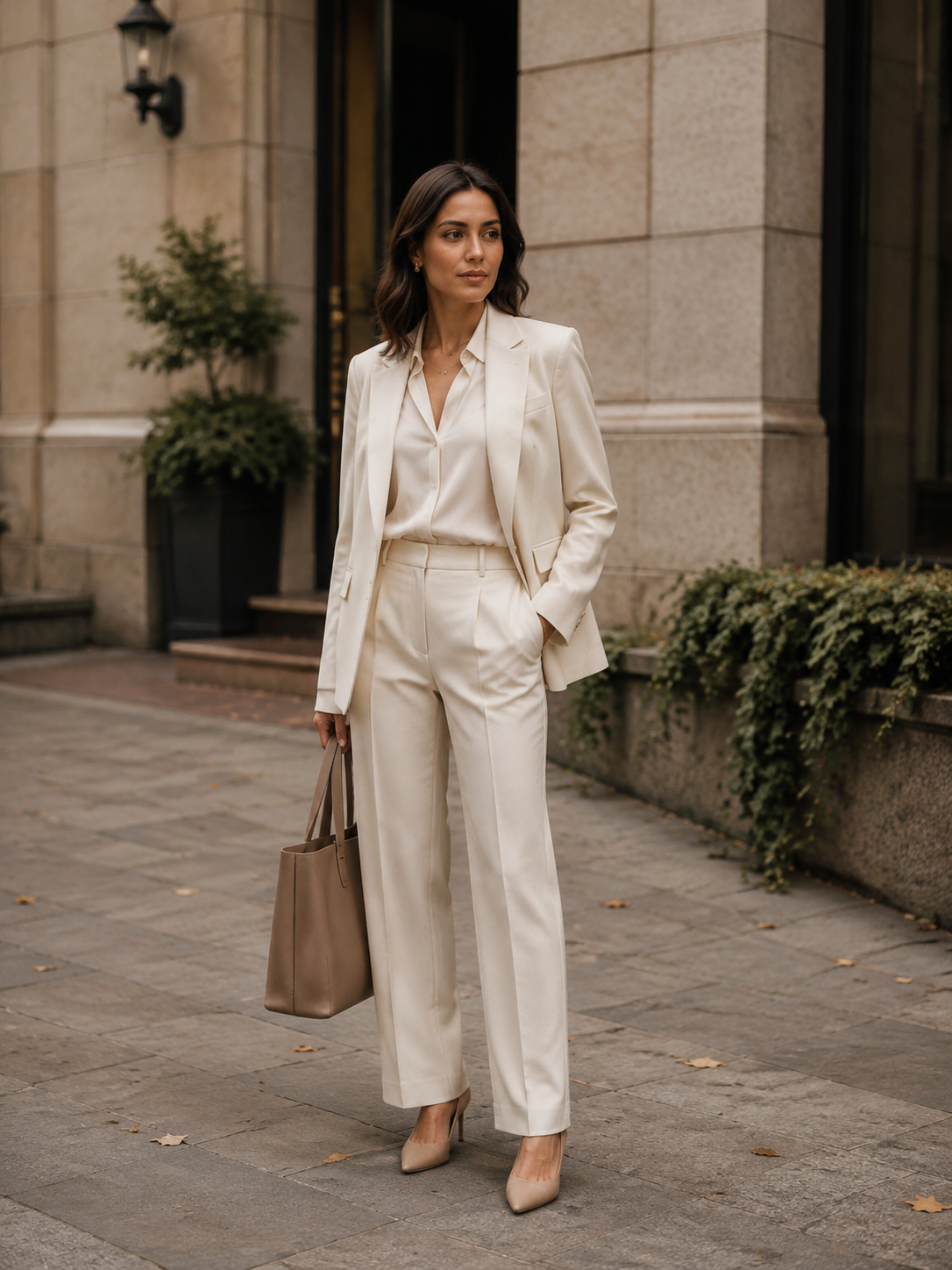
Yes, you can interview without a suit for most industries. What replaces it is structure: a collar, one tailored piece and clean leather shoes signal effort just as clearly as tailoring did a decade ago. The exceptions are the suit-required industries, and you can spot them in ten minutes from the job ad, the company site and the team's LinkedIn photos.
For virtual interviews, the camera sees the top half only — but wear real trousers anyway, because the surprise stand-up is a real genre of disaster. Check the webcam frame and lighting the night before, alongside the ironing, the lint roll and the shoe wipe.
Assessment centres: the endurance event
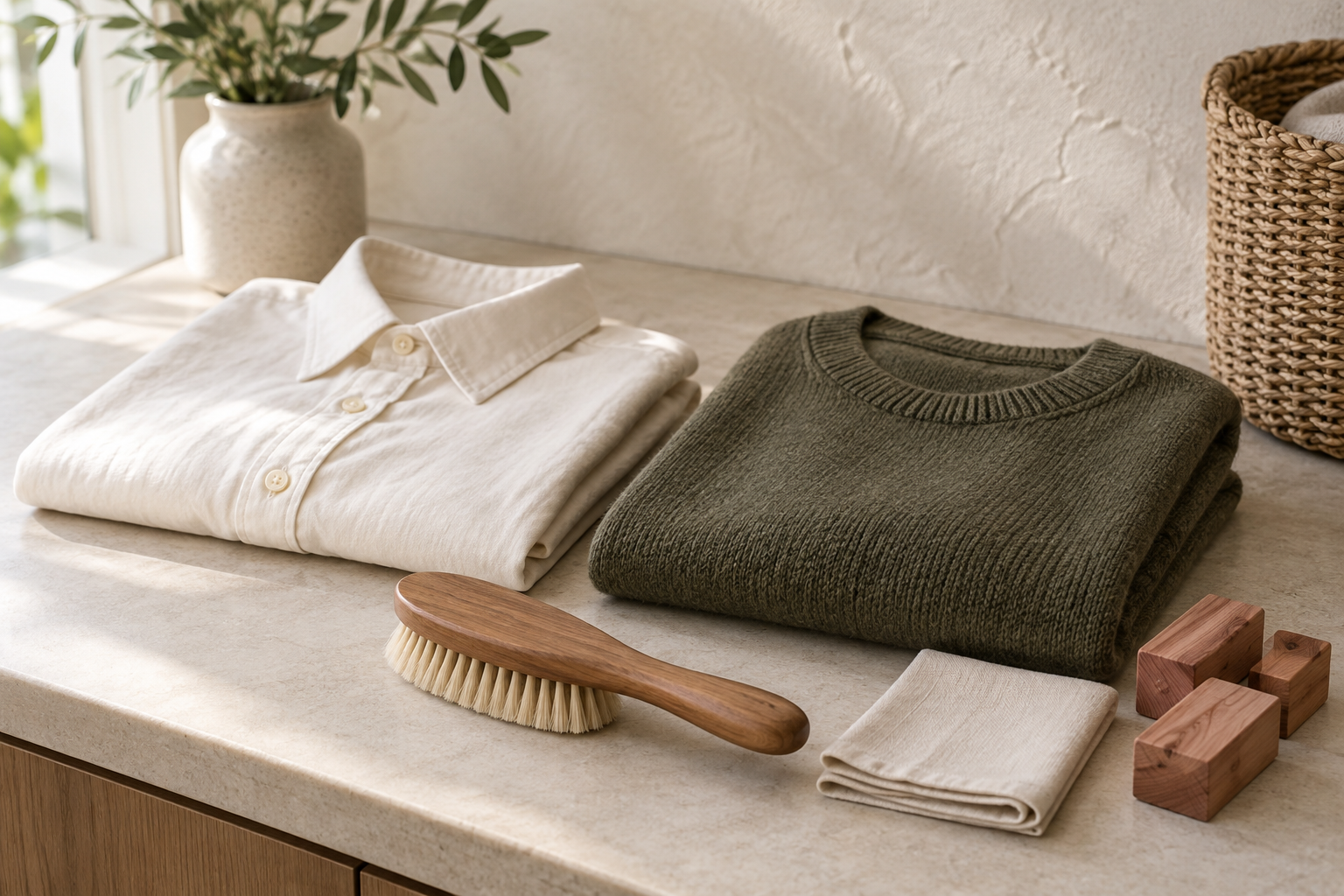
The day mixes group exercises, presentations and lunch with assessors, so the outfit must survive sitting, standing and whiteboards. Choose the capsule's most crease-resistant fabrics — the fabric guide for smart casual explains which ones recover from a chair. Rooms swing between arctic and tropical, so the removable layer is essential.
- No brand-new shoes — blisters by hour three are the classic student mistake.
- Skip heavy fragrance; you are in close quarters all day.
- A proper bag, not a gym bag, for the handouts and the water bottle.
Internships: decoding day one
Decode the offer email's smart casual from the office's own LinkedIn photos, start one notch above, and adjust after day one. The six-piece capsule rotates into a first week of outfits on its own; for what comes next, the first job wardrobe on a budget takes over from there. In a remote or hybrid role, buy for office days and keep a rotation of call-ready tops.
Unsure whether to ask? Messaging a recruiter or buddy is the standard move — the same logic as asking the host about a dress code. A short, specific question reads as preparation, not cluelessness.
Your student interview outfit questions
Can I go to an interview without a suit? Yes for most industries — the collar-plus-tailored-piece formula replaces it, and only finance, law and consulting final rounds reliably demand the suit.
What is the assessment centre dress code? The interview outfit, chosen for crease resistance and comfort, with a removable layer — worn from registration to the final group exercise.
What do I wear to a careers fair? Dark trousers, a collared top and clean shoes — approachable-professional, because a suit reads stiff at most fairs.
What is smart casual for students? The six-piece capsule: dark trousers or dark jeans, two collared tops, a knit layer, clean shoes and a dark plain tee, combined up or down per event.
What is the internship dress code when the offer email just says smart casual? Read the office's own photos, start one notch above, and adjust after your first day.
Open the symptom that matches. Start there.
You own nothing dress-coded and the fair is this week
Possible cause: Student wardrobes run on loungewear and gym clothes, so a collared shirt or dark trousers simply are not in the closet yet.
Try first: Buy in priority order: shoes, dark trousers, one collared top. Those three cover a careers fair this week; everything else can wait or come from what you already own.
You do not know if the interview needs a suit
Possible cause: The invite says smart casual or business casual, and the industry norms range from hoodies to full tailoring.
Try first: Run the ten-minute research routine: the job ad, the company site, and LinkedIn photos of the team. Finance, law and consulting final rounds want the suit; most other interviews accept the no-suit standard below.
The assessment centre is eight hours and your outfit is not
Possible cause: Group exercises, presentations and lunch with assessors punish stiff fabrics, new shoes and layers you cannot remove.
Try first: Wear the interview capsule in its most crease-resistant version, add a removable layer for temperature swings, and break in the shoes beforehand.
Day one of the internship and the code is a guess
Possible cause: The offer email said smart casual, which means something different at every company on earth.
Try first: Start one notch above what the office's own photos show, then adjust on day one. Message your recruiter or buddy — asking is normal and expected.