What to Wear
Smart Casual for Men Over 40: Dress Cool Without Looking Frumpy
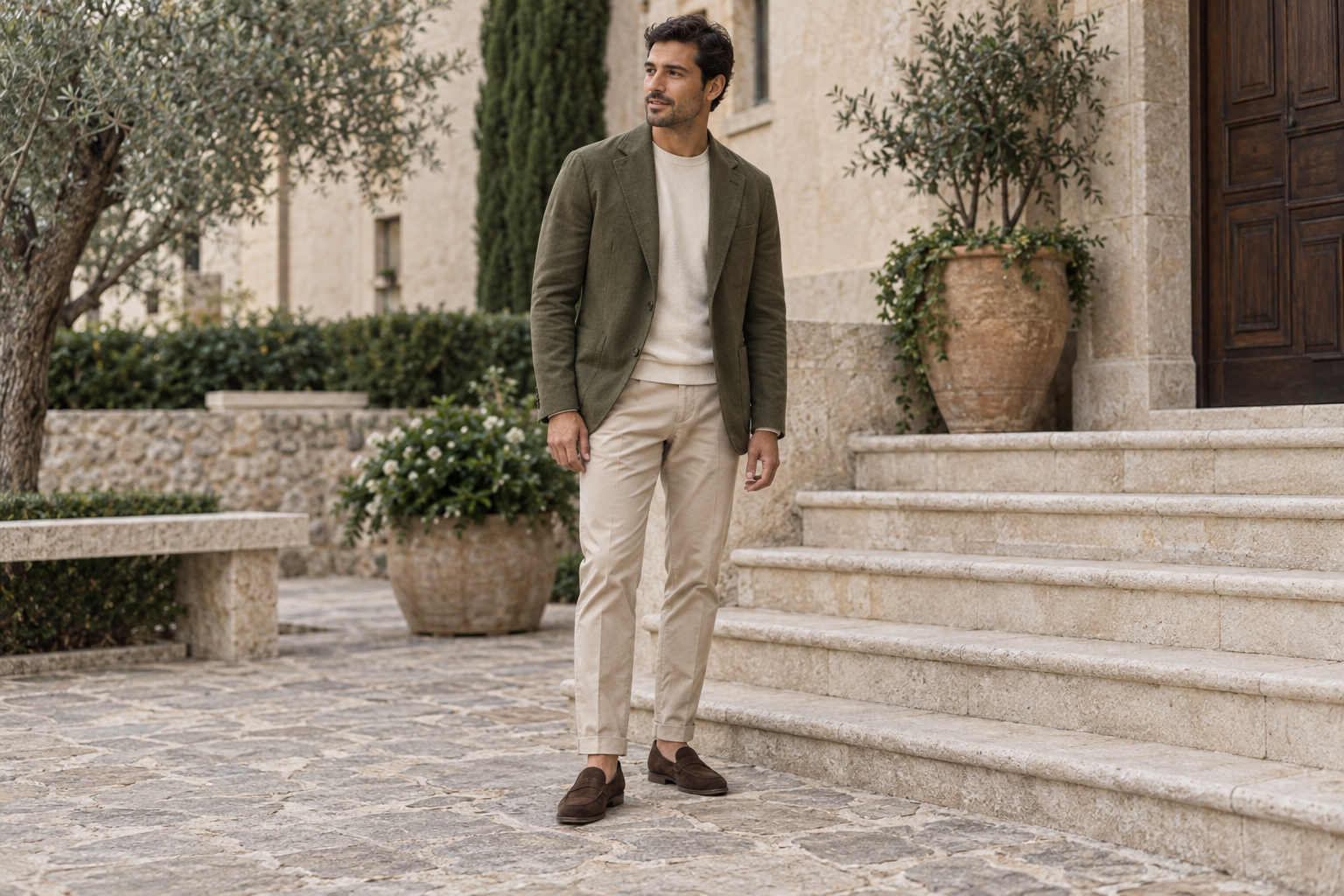
Smart casual for men over 40: the frumpy list to retire, trends to skip, a 12-piece staple core, and outfit formulas that read current, not costume.
Life-stage guide
The 30s wardrobe problem is two-sided: keep dressing like 24 and you read under-dressed at work events; over-correct and you read like costume. The smart casual 30s answer is fewer, better pieces, one weekday uniform, and shoes that tell the truth.
Begin hereDefinition / explainer
Your 30s smart casual is the same wardrobe with better fabric, better fit and one deliberate signature. Below: the pieces that change, the uniform formula, and the one-step-up rule for events.
Three things change in this decade: fabric shows its age (acrylic pills, PU peels), fit skews as bodies shift, and your calendar fills with occasions your 20s capsule never planned for — work dinners, weddings, kids-adjacent events. The pieces still work individually; they no longer work as a system.
So the audit comes first. Run the fit-check guide on what you own, retire the pilled and the beaten, then buy deliberately against the priority list below — the investment pieces guide explains why the pricier replacements earn their keep.
You will attend two to four weddings a year now — build one excellent reusable guest outfit and vary it by season. Work dinners want the blazer-without-formality formula, and date nights want an evening version that reads confident rather than clubbing.
| Priority | Buy | Why it leads | Retire first |
|---|---|---|---|
| 1 | Maintained leather shoes — loafers, chelseas or minimal leather sneakers | Shoes are the age tell in every room | The beat canvas pair |
| 2 | One unstructured blazer | Unlocks work dinners and events over what you own | The shiny-suited jacket |
| 3 | Merino knit rotation (light and dark) | Replaces pilling acrylics; the uniform's engine | Pilled knits |
| 4 | Wool-blend or heavy cotton trousers | Holds a crease and a fit through the day | Trousers that fit the old waist |
| 5 | A proper coat | The layer every winter room sees first | The puffer worn everywhere |
The one-step-up rule keeps you between under-dressed and costume: read the room's average, then one notch above it. What that means in practice is neutrals with one accent — the colour at work guide covers the palette — plus the senior details and none of the novelty pieces.
Industry calibration matters more at 30 than at 24, because expectations rise with seniority: the smart casual by industry guide breaks down what one step up means in tech, finance and creative rooms.
Buying better only pays off if the pieces stay good. Thirty minutes a month covers it, and none of it is complicated — it is a habit set, not a chore list.
How should a man in his 30s dress? Smarter than his 20s wardrobe, not older than his age: better fabric, exact fit, one uniform, one step above the room.
Do you need a blazer now? One unstructured blazer earns its keep at work dinners, weddings and dates — it is the highest-leverage second purchase after shoes.
How do you look mature without looking old? Upgrade materials and maintenance, keep the silhouettes current, and skip logos — maturity signals live in fit and finish, not in dressing like your father.
Where do the 20s pieces fit? Clean minimal sneakers, dark denim and the plain tee all stay — the smart casual in your 20s guide capsule survives, executed in better fabric. The next rung is covered in the men over 40 smart casual guide.
Smart casual for a man in his 30s means the same dress code as any decade — blazer-or-knit over proper trousers with leather or clean minimal shoes — executed in better fabric and better fit than your 20s version, locked into a weekday uniform you never have to think about. Wardrobe maturity at this stage is fabric, fit and consistency, not new categories of clothing and not trend-chasing; the goal is to read intentional, one notch above the room, without looking like you are playing a character ten years older.
What to Wear
Smart casual for men over 40: the frumpy list to retire, trends to skip, a 12-piece staple core, and outfit formulas that read current, not costume.
What to Wear
Smart casual for men over 50 and 60: the seven-piece staple core, the frumpy list to retire, and a one-trip rebuild plan for starting over.
What to Wear
How to stop dressing like a teen in your 20s: retire five markers, build a starter capsule on a first salary, and read young-professional.