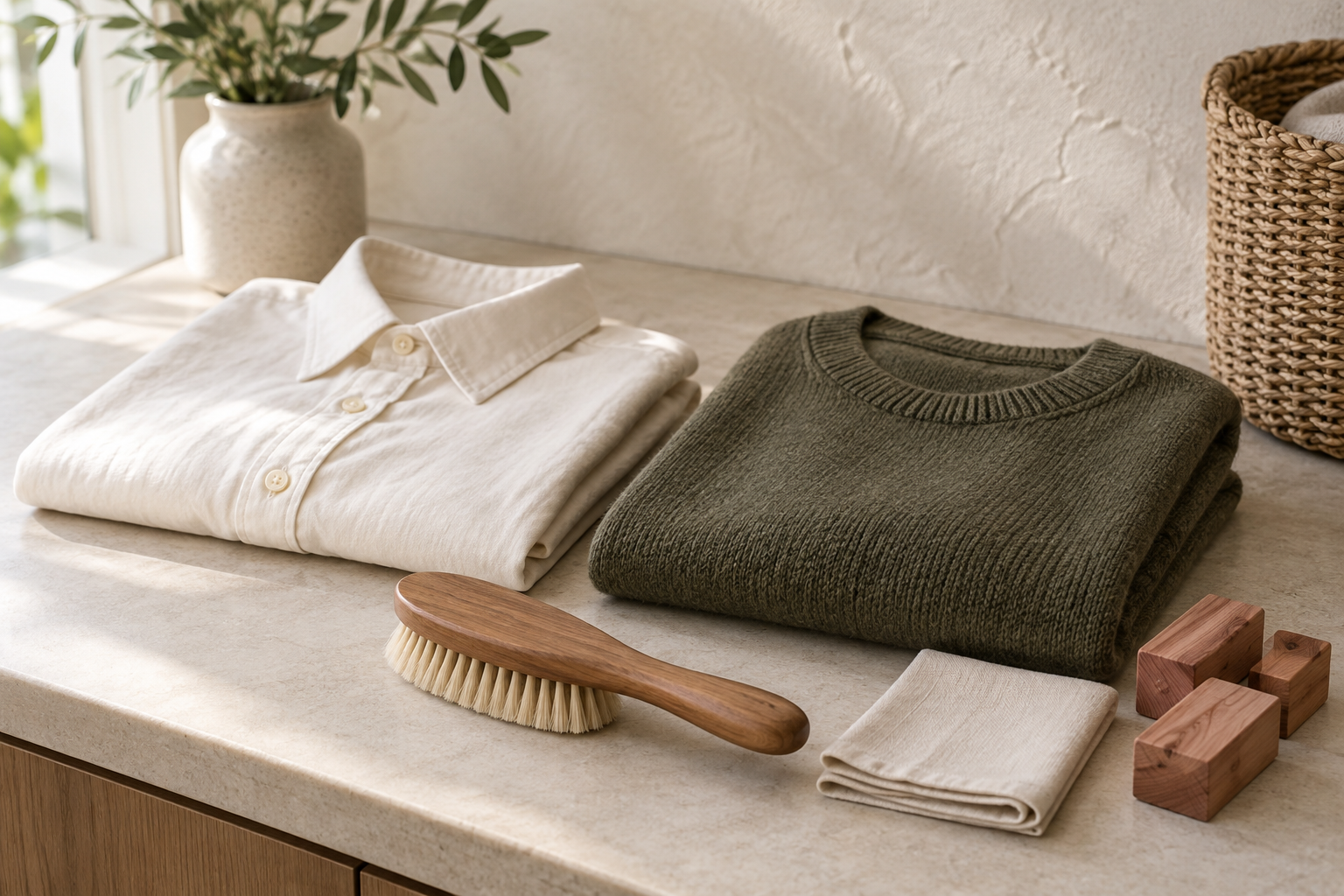
Smart Casual With What You Already Own: The Closet-First Method
The event is days away and the plan is to buy nothing. Good: almost every closet already contains a smart casual outfit — the gap is assembly, not ownership, and this method finds it in under an hour.
Audit, combine, upgrade — then find the one real gap
Most people who say they have nothing to wear actually have no system for combining what they own. Smart casual needs only three things at once: one structured layer, one collar-or-knit top, and one non-athletic trouser with clean shoes — and most closets pass that test on the first look. Run the four steps below in one evening and you will have three wearable combos before bedtime.
You already own smart casual — the proof test
Here is the claim, stated so you can check it against your own rails in one minute. Smart casual asks for a structured layer, a collar-or-knit top, and a non-athletic trouser with clean shoes. Search your closet for any one of each and the ownership question is settled — nearly everyone finds at least one of every piece. The shortfall is assembly, and assembly is a skill with steps, which is what the rest of this page teaches.
Step 1 — The 20-minute audit: what comes out
Decision load is the enemy, so the audit is subtraction first. Everything pulled must be solid-coloured, non-athletic and in good condition — those three filters do most of the work before fit or style even comes up.
The dinner question: if you would hesitate to wear it to a nice casual dinner, it does not make the pile. Hesitation is data.
The condition check: no holes, no stains, no pilling. Anything borderline goes to the repair box, out of sight for this exercise — not thrown away, just out of the decision.
The fit check: it must fit you today. Aspirational sizes are the quietest closet killers because they waste an hour of trying-on every single time.
Three piles, always: tops, bottoms, layers and outer. The piles force combinations instead of single-item judgements.
Step 2 — The 3-layer formula and the pairing rule
Base, structure, finish. The formula works because smart casual is a balance, not a garment list: every outfit needs one relaxed element to stay casual and enough polish to stay smart. That is why the pairing rule — one relaxed piece plus two polished pieces — is the fastest formality calculator you own.
Worked combos from a typical casual closet. Relaxed count in each: exactly one.
Base
Structure
Finish
Why it passes
Dark, undistressed jeans
Oxford shirt under a bomber
Clean leather sneakers or boots
The shirt and leather carry the smart; the jeans are the one relaxed piece
Chinos
Polo under an unstructured blazer
Loafers plus a simple belt
Three polished pieces with soft shoulders — comfortably smart casual
Casual dress
Denim jacket
Flat shoes plus one accessory
The dress does the work; the denim keeps it from tipping formal
Fine-gauge knit
Open overshirt as structure
Dark trousers and clean shoes
The honest fallback when no jacket exists — the layer trick in action
Step 3 — Technique upgrades that cost nothing
This is where a casual outfit gains a full formality notch without a single purchase. Fit illusions and grooming beat shopping every time the event is close.
The French tuck: front hem tucked, back out. It defines the waist and reads deliberate in two seconds.
Sleeve rolls done properly: pushed up once, neat, forearm showing. Rolled sleeves soften a jacket and make a shirt look styled rather than slept in.
One cuff on the jeans, not a stacked hem. A clean single turn looks finished; bunching looks accidental.
Shoe and belt discipline: clean leather over canvas, and the belt matching the shoe. This is the highest-return free upgrade in the whole method.
The 10-minute press: iron or steam the top layer and run a lint roller over everything. Pressed beats purchased — every time.
Step 4 — The 10-combo matrix
Four tops, three bottoms and two layers multiply into twenty-four theoretical outfits. Most closets therefore hold ten or more real ones — you just have never seen them listed. Pick the ten that actually work, and photograph each.
The phone album is the point of the entire method. Two days before the next event you scroll, tap one photo, and pull the pieces — no panic, no restarting from zero. Swap one layer seasonally and the same matrix holds year-round; the full swap logic is in the layering system guide.
Closet-first questions
Can I look smart casual without buying anything? Yes. One relaxed piece plus two polished pieces — a structured layer, a collar-or-knit top, non-athletic trousers, clean shoes — passes, and pressing plus shoe-cleaning lifts it another notch.
What if my closet is genuinely all casual? Then your minimum-viable additions are two items: a structured layer and clean leather shoes. Everything else combines with what you already own.
How do I make jeans look smart casual? Dark wash, no distressing, a clean single cuff, and pair them with two polished pieces — the pairing rule doing its job.
How far in advance should I plan? Two days for the audit and combos, then a 10-minute check on the day: press, shoes, lint roller, done.
Possible cause: The closet is full of casual singles with nothing structured between them, so every combination lands at weekend-casual.
Try first: Buy exactly two rescue items — a structured layer (unstructured blazer, chore jacket or structured cardigan) and clean leather shoes — then lean on the layer trick: a plain tee under an open shirt under that jacket reads structured, not slouchy.
Nothing fits since my weight changed
Possible cause: The good pieces are real but sit wrong now, so every outfit feels off and the whole closet gets written off.
Try first: Tailor the one anchor piece you would actually wear to the event instead of replacing anything. A trouser hem, waist take-in or sleeve shorten is routine work — check what can be tailored and what it costs before you decide anything is unwearable.
My one good outfit is a full suit
Possible cause: The suit reads too formal on its own, so it sits untouched while less suitable clothes get worn.
Try first: Deconstruct it. Wear the jacket with dark jeans and a plain knit, or the trousers with a polo or crew-neck and casual shoes. Separates drop the formality a full notch and give you two outfits from one suit.
I keep panicking two days out
Possible cause: There is no record of what works, so every event restarts the scramble from zero.
Try first: Photograph your ten winning combos once and the panic becomes a phone scroll. That is the whole fix — the matrix step below builds the album.
Different causes need different fixes.
The nothing-to-wear feeling almost never comes from a lack of clothes. It comes from three habits: buying casual singles that were never chosen to combine, keeping repair cases and gym wear mixed in with the real options so every look starts with clutter, and relying on memory instead of photos to remember what worked. Remove those three and a normal closet passes the smart casual test easily.
Make one small change.
Pull three piles tonight — tops, bottoms, layers — of anything solid-coloured, non-athletic and in good condition. You are twenty minutes from seeing the outfit that was already there.
Work on the part that needs it.
The 20-minute closet audit
Empty the rails and pull everything that is solid-coloured, non-athletic and in good condition into three piles: tops, bottoms, layers and outer. Keep a piece only if it passes three tests — you would wear it to dinner, it has no holes, stains or pilling, and it fits you today. Gym wear, novelty prints and anything awaiting repair go out of sight, not in the bin; they are just removed from this decision.
Build combos with the 3-layer formula
Every smart casual outfit is base plus structure plus finish: a shirt, knit or dress; a blazer, chore jacket or structured cardigan; then shoes and one accessory. From a typical casual closet that makes dark jeans plus an oxford shirt plus a bomber, chinos plus a polo plus an unstructured blazer, or a casual dress plus a denim jacket plus flats. The pairing rule that keeps each combo honest: one relaxed piece with two polished pieces is smart casual — two relaxed with one polished is just casual.
The gap test: one purchase, chosen last
Only after three viable combos exist do you look for the single highest-leverage purchase — usually a structured blazer or proper leather shoes — and research it properly rather than panic-buying the night before. Skip anything bought for one event, trend pieces and someday sizes. If the event is days away, secondhand shops and rental fill a one-off gap for a fraction of the spend.
When to stop adjusting.
Stop auditing when three combos pass and the photos are taken — more sorting adds no outfits, just fatigue. If nothing passes the keep tests, or the only candidate needs tailoring you cannot get in time, that is the moment to buy the two rescue items or rent, not to keep re-combining clothes that genuinely cannot make the dress code.
Remove deodorant marks, coffee drips and wine spills in minutes with household items — scenario-by-scenario fixes, fast drying tricks and what to do later.