Occasion advice
Buy for the most formal life, dress down from it
The rule that makes a work weekend capsule possible: a piece that passes your most formal context can always be dressed down, but casual-first pieces cannot be dressed up. Anchor the wardrobe at the smart end and the same dark trousers, blazer and shirts run all three lives — only the shoes and layers change. This page gives the selection test, the bridge pieces, and the transition mechanics between contexts.
The five-question piece test
Hold every candidate piece to the same five questions: does it pass work? Can it relax with a swap of shoes or layers? Can it lift with a swap? Is its colour locked into your palette? Will it survive a full day into an evening? A piece answering yes to all five is a bridge; the dark jeans that pass all three contexts and the joggers that fail at the first are the canonical pair of outcomes.
The working rule that follows is the two-of-three rule: a piece serving at least two of work, weekend and events earns its rail space. Single-context pieces need a justification — a dinner suit, hiking boots — and anything without one is an orphan in waiting. The counting logic behind this is the pairing-width method in our outfit-combination math guide, applied across contexts instead of within one.
Calibrate to your actual office first
The three-context system only works if the work anchor is set correctly, and that means your industry's band, not a generic standard — the spread from finance-formal to startup-casual is mapped in our smart casual by industry guide. If you are new to a workplace, spend the first week observing before buying anything, per our first week in the office plan.
Itemised cores for each gender hang off this same skeleton — the piece lists live in the men's capsule wardrobe guide and women's capsule wardrobe guide — and the denim question has its own footwear rules in our shoes to wear with jeans guide.
From three closets to one: the consolidation plan
- Audit: tally every current piece by how many contexts it serves — most people find far more single-context clothes than they expected.
- Prune: retire the single-context orphans by selling, donating or altering them; the full process lives in our wardrobe audit guide.
- Bridge: buy two or three connectors — the topper, the universal shirt, the second shoe register — rather than replacing volume with volume.
- Re-test: run every piece through the five questions again, then keep the system honest with a one-outfit diary noting which contexts each day's clothes actually served.
The ninety-day diary is the proof that usually settles the argument: a quarter of outfits logged by context shows which pieces genuinely multitask and which were costume. Consolidation almost always saves money too — the total spend on one anchored wardrobe plus a few bridges comes in well under three parallel closets, and every morning gets easier as the rail gets smaller.
One wardrobe questions
Can one wardrobe work for both work and weekends? Yes — anchor it at the top of your work band and treat weekends as a dress-down of the same pieces; the shoe register does most of the context switching.
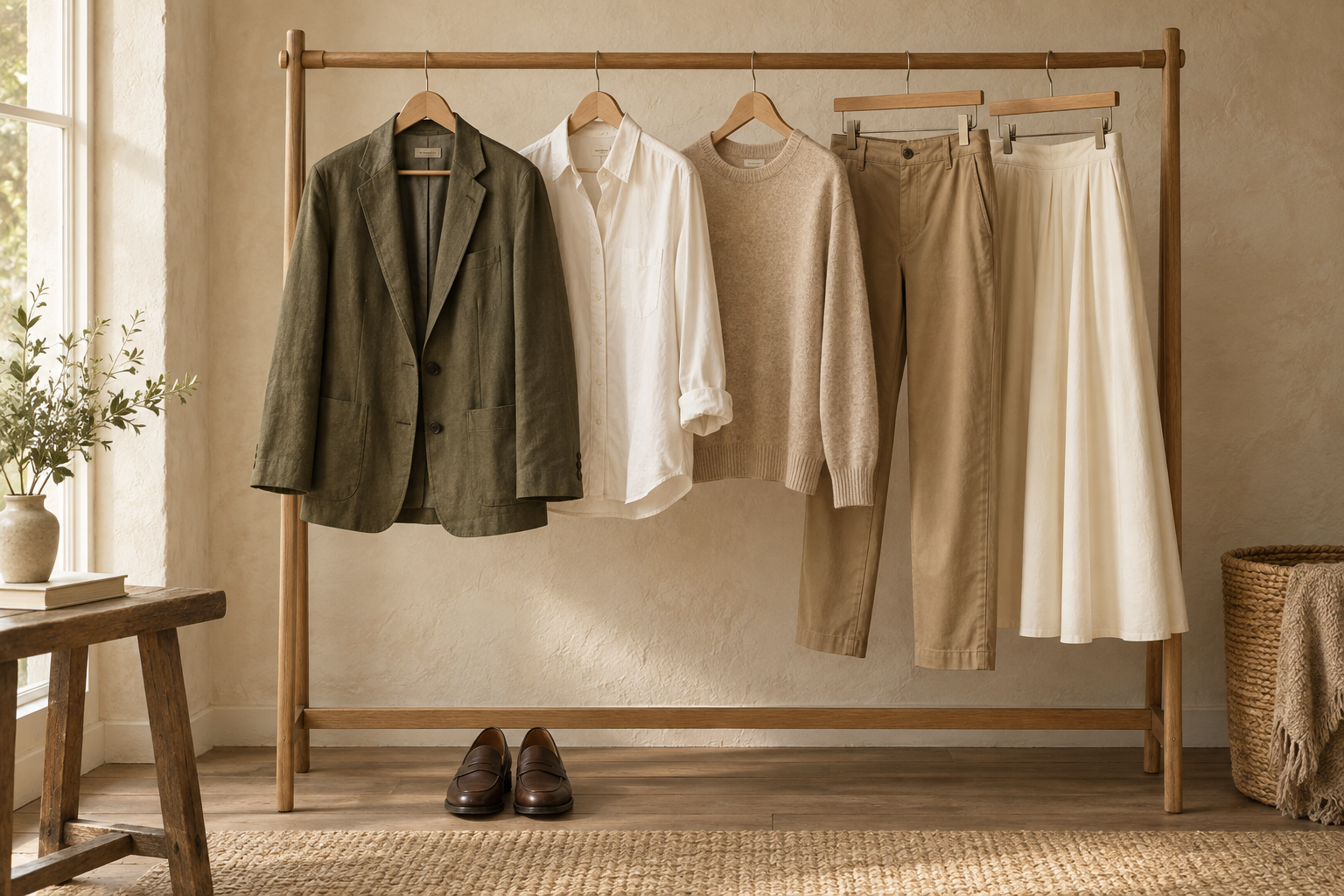
What are the most versatile clothes to own? Dark tailored trousers, an unstructured blazer or fine knit, a white shirt or blouse, dark chinos or denim, and one pair each of minimal sneakers and leather shoes — the bridge list that covers all three lives.
How do I transition an outfit from day to night? Remove the casual layer, sharpen the shoe, open or restyle the collar, and add one accessory upgrade — the removal-and-swap mechanics read deliberate because the base was anchored smart.
How many clothes do I need for work, weekends and events? A core of roughly fifteen to twenty pieces that pass the five-question test, plus one event-grade layer per season, covers all three contexts without a separate events wardrobe.