What to Wear
Men's Knitwear for Smart Casual: Crew, V-Neck, Roll-Neck and Cardigan
Men's knitwear for smart casual: the merino crew as default, the roll-neck for winter dinners, the cardigan as blazer substitute, and the v-neck verdict.
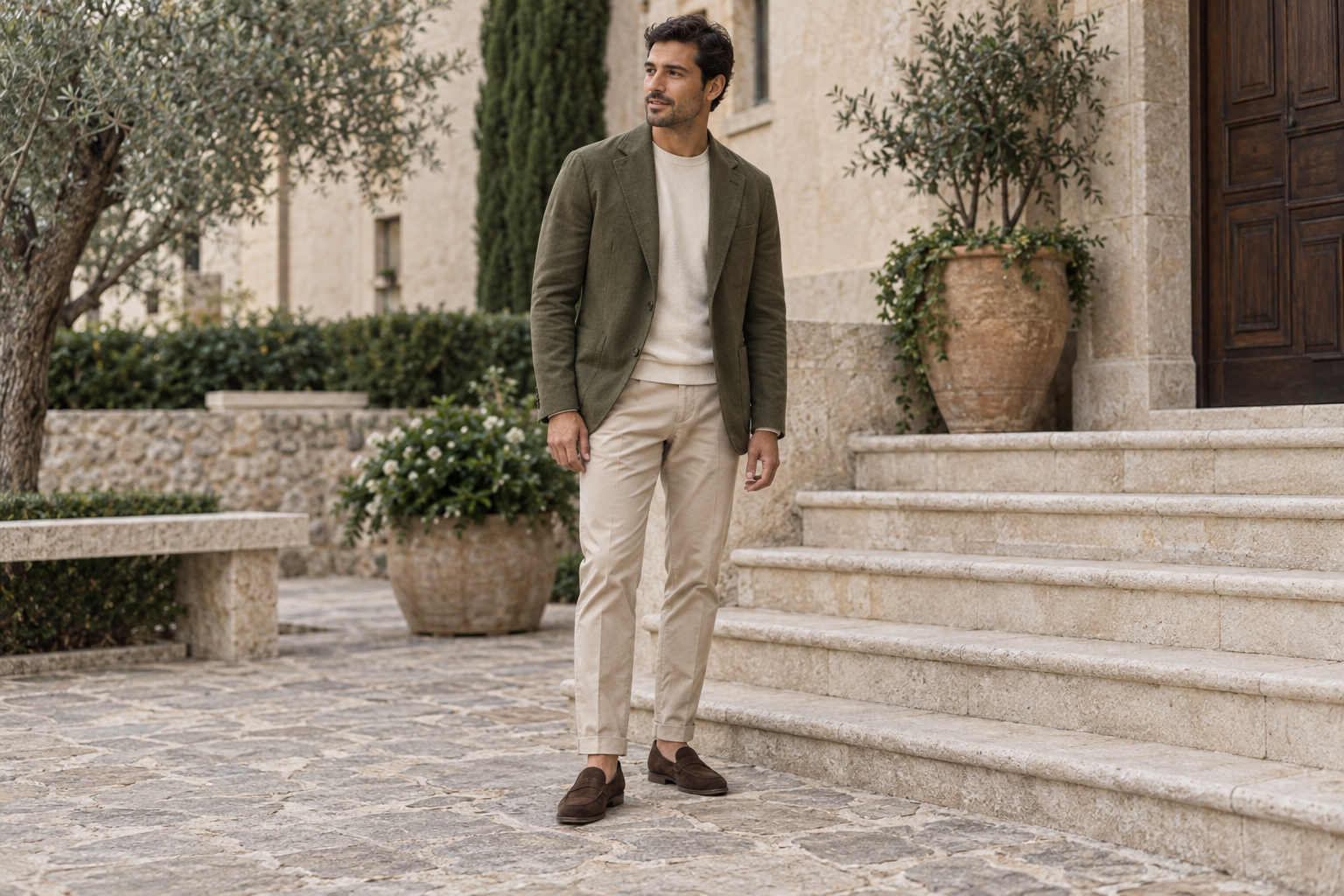
Shirt guide
Five shirt types cover every smart casual setting you will face. This guide ranks them by formality, shows each one worn well, and tells you which four to buy first.
Begin hereInspiration
Collar and fabric weight decide whether a shirt reads smart casual — more than brand or price. The five types below run from a plain tee to an oxford button-down, and together they cover the office, dinners, weddings and weekends without overlap. Pick your setting in the filters, see the shirt worn as a full outfit, then build your starter set.
Rank any shirt in seconds with this ladder. The sweet spot for smart casual is the middle: polo through oxford. The formal dress shirt at the top — crisp poplin, spread collar, the one you wear with a suit — is usually too much without a tie and sharp tailoring.
| Shirt | Formality | Best use |
|---|---|---|
| Plain t-shirt | Lowest | Under a blazer or overshirt only |
| Polo | Low | Summer events, casual offices, golf-adjacent weekends |
| Knit shirt | Mid | Dinner, dates, smart office without a jacket |
| Popover | Mid | Warm weather, smart-creative workplaces |
| Oxford button-down | High | The default: office, weddings, everything unclear |
| Formal dress shirt | Highest | With a suit — often too stiff for smart casual |
Seasonal variants slot into the same positions: a flannel shirt sits where the oxford sits in winter, and a linen shirt takes the popover's summer slot. Change the cloth, keep the rung.
When you do not know what to wear, wear the oxford. The rolled button-down collar and basketweave fabric are the smart casual look — textured enough to look relaxed, structured enough to look deliberate. Start with white and light blue, add a muted stripe second. Skip high-shine poplin and wide spread collars; those are boardroom shirts wearing a weekend disguise.
Tuck or untuck? Tuck it if the hem is long and evenly curved, if your trousers sit at the natural waist, or if you are wearing a jacket. Leave it untucked only when the hem ends around mid-fly — longer hems billow and shorten your legs in proportion.
Yes — if it is knitted or has a tipped collar, fits cleanly, and carries no large logo. The difference between a sports polo and a smart polo is the collar: ribbed jersey collapses, a knitted or tipped collar stands. Fit the sleeve at mid-bicep with no billow at the waist, then pair it with chinos and loafers, or layer it under an unstructured blazer when the evening cools.
A popover is a pull-on shirt with no full button placket, so it sits between a polo and an oxford in formality. Textures and muted patterns suit it, it is designed to be worn untucked, and it shines in warm weather and smart-creative offices.
The knit shirt — a shirt cut in merino or cotton knit with a knit collar — is the one that reads intentional with no jacket at all. The collar holds its shape where a woven shirt collapses under a blazer-less ceiling. It is strongest with tailored trousers or dark jeans — see the chino fit guide for trouser fit — and it is the dinner-and-date specialist of the five.
Three quality markers: midweight fabric, a clean neckline that has not stretched, and no print. With all three, a tee passes under a blazer or an overshirt. Without a layer on top, it fails with smart trousers — that combination reads gym-plus-effort, not smart casual. The full layering logic lives in the t-shirt under a blazer guide.
Wash cotton shirts cool, hang to dry, and iron while barely damp. For travel, knit shirts and merino-blend poplars shake out wrinkles overnight — the no-iron travel shirts guide covers the options. Collars and cuffs show age first; when they fray or the collar points curl permanently, retire the shirt.
White oxford, light blue oxford, navy knit polo, midweight white tee. Oxfords first because they pair with the most outfit formulas, the polo covers summer and no-jacket settings, and the tee serves the blazer days. That is under four shirts covering every setting on this site — then check them against the smart casual for men framework.
Are button-down collars less formal? Slightly — and that is exactly the point for smart casual. The button holding the collar down keeps it neat without a tie, which is why the oxford is the genre's default.
Can I wear a dress shirt without a tie? You can, but it usually reads half-dressed with smart casual bottoms. An oxford with its buttons done reads better in the same slot — see how to wear a blazer casually for the pairing rules.
Which shirt under a blazer? The oxford for structured blazers, the knit polo or plain tee for unstructured ones — the pairing rules are in the blazer link above.
6 looks to explore

Light blue oxford button-down, mid-grey chinos, dark brown loafers, matching brown belt. The rolled collar and matte basketweave fabric are the smart casual signature — dressed enough for meetings, never boardroom-stiff.
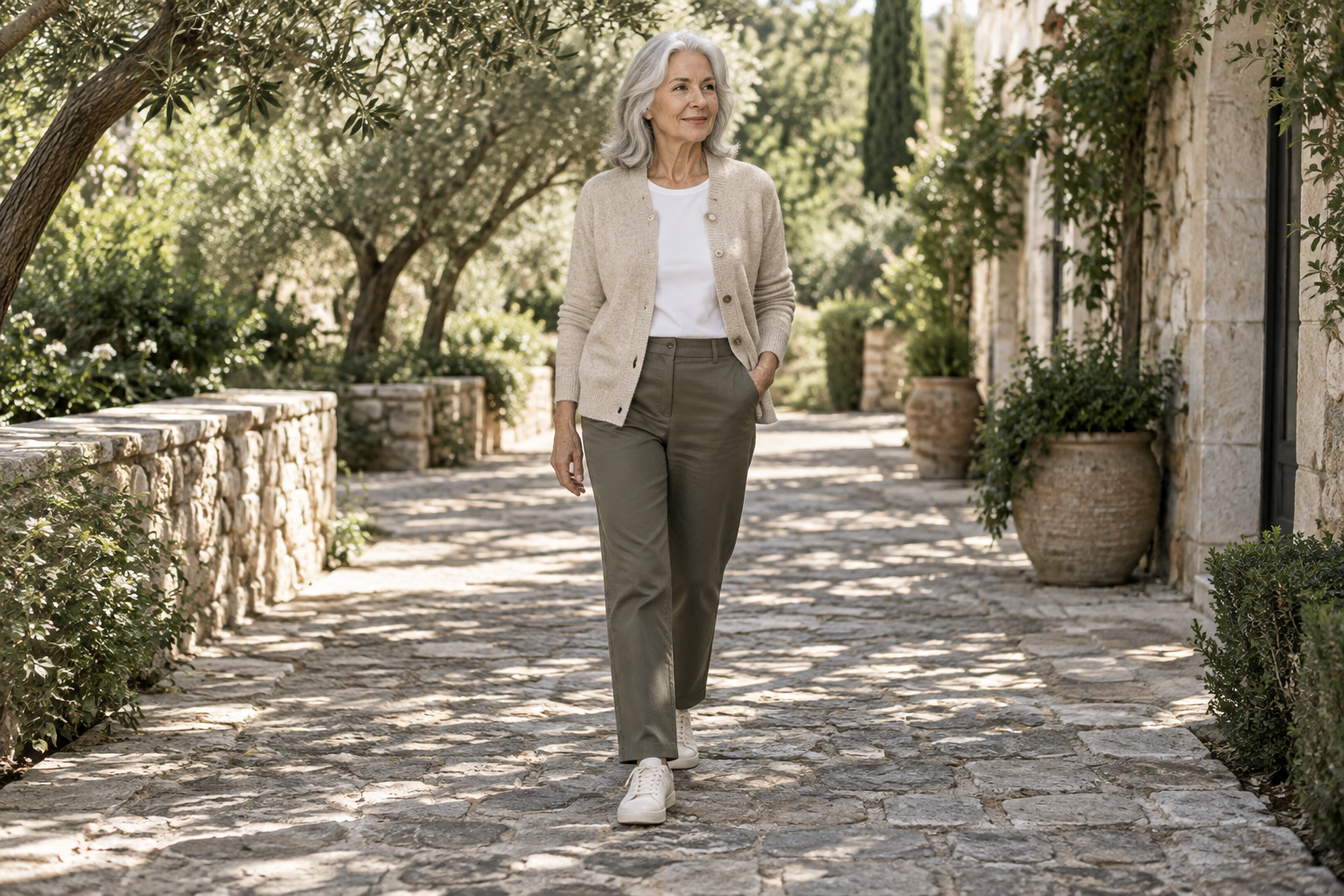
White oxford worn untucked over the hem curve, dark straight jeans, white leather sneakers. The same shirt that works Monday also anchors Saturday — swap trousers and shoes, keep the shirt.
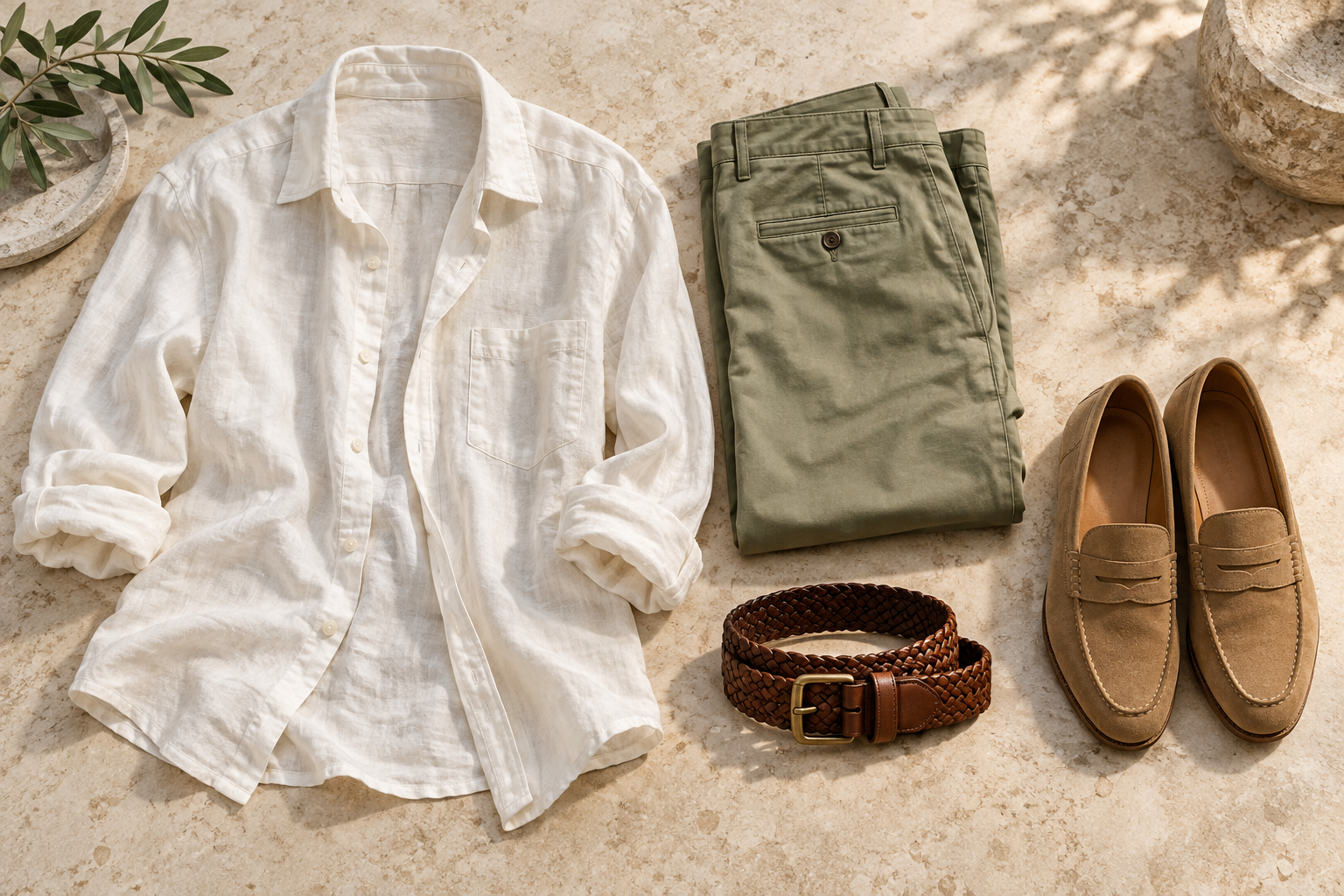
Muted striped popover in cotton-linen, stone tailored shorts, suede desert boots. Pull-on with no full placket, designed to be worn untucked — the half-step between polo and oxford for heat.
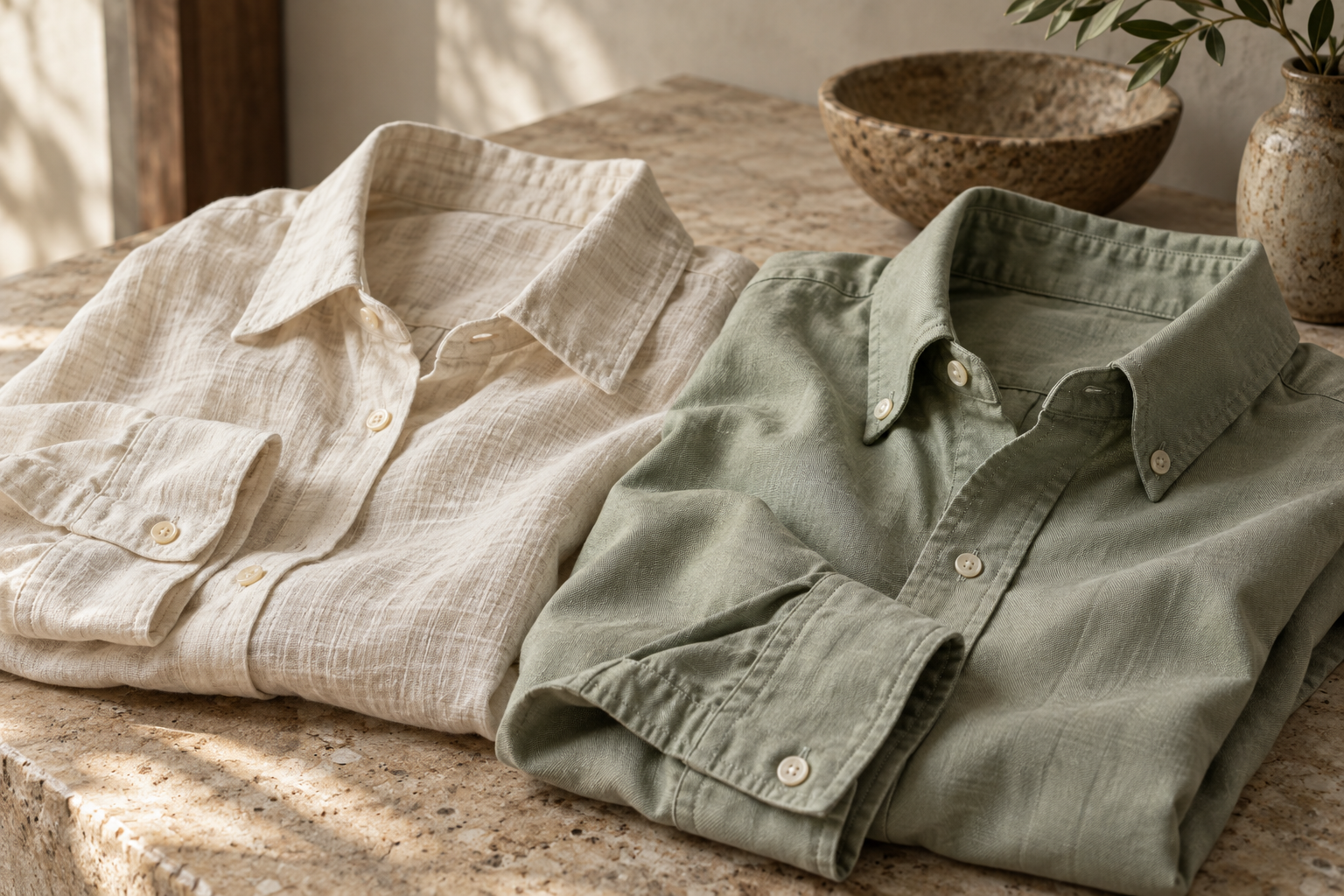
Navy knitted polo with a tipped collar, taupe trousers, dark loafers. A knitted or tipped polo reads intentional; a shiny ribbed sports polo with a chest logo does not. Sleeve ends at mid-bicep, collar stands on its own.
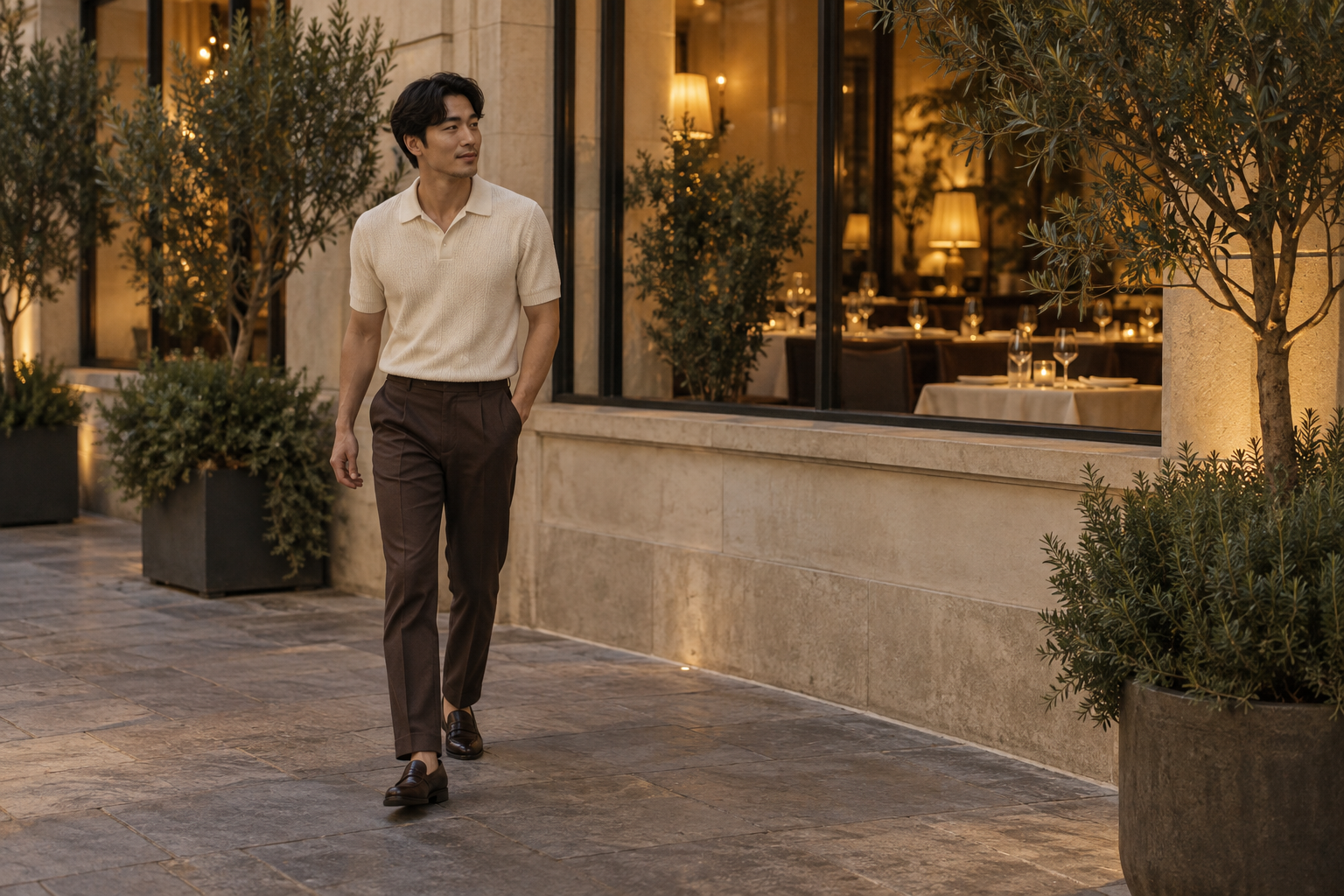
Merino knit-collar shirt in charcoal, dark jeans, Chelsea boots. The knit collar holds its shape with no jacket, which is why it is the insider move for dinners and dates when a blazer feels like too much.
Midweight white tee, clean neckline, no print — under an unstructured navy blazer, grey trousers, white sneakers. A tee passes only under a jacket or overshirt; on its own with smart trousers it under-dresses both.
What to Wear
Men's knitwear for smart casual: the merino crew as default, the roll-neck for winter dinners, the cardigan as blazer substitute, and the v-neck verdict.
What to Wear
No, smart casual does not require a blazer — but the top half needs structure. A setting table, the substitutes that work, and when a jacket is expected.
What to Wear
Chinos vs dress pants vs dark jeans for men: the formality ranking, a side-by-side comparison, fit rules, and the build order to buy in.