Occasion advice
Dress for the flight, pack for the arrival
The rule for any smart casual travel outfit is to dress for the flight and pack for the arrival: wear the bulkiest layers and shoes, carry the meeting-critical pieces in hand luggage. Done right, the same outfit looks intentional at departures and passes a client meeting eleven hours later. The one tension to resolve is comfort against smartness — and the fabrics, not the sacrifice, resolve it.
What makes ten hours bearable: the flight comfort layer
Fabric decides whether a smart travel outfit survives a long flight. Merino resists odour and regulates temperature, Tencel and stretch cotton blends move with you and refuse to crease — the full shortlist is in the fabrics guide. Anything that wrinkles into ruin or traps sweat is out, however good it looks on the hanger.
The layer system handles the swings: tee, mid-knit, overshirt or jacket. Cold cabin, hot jet bridge, arrival street — you are covered by shedding rather than by suffering, and the whole system costs one bag slot. The build is the same one used all winter in the layering system guide.
Shoes: slip-ons or lace-loosened leather sneakers speed up security, and compression socks are the unglamorous long-haul advice that genuinely works. The waist problem is the other quiet fix — belts come off at security and stiff waistbands dig for hours, so elastic-backed or side-adjuster trousers are the frequent-flyer secret.
Meeting on arrival: the business travel outfit
Two formulas cover every land-and-go situation. Outfit A — wear it through: dark stretch trousers, a merino-blend shirt, an unstructured blazer, leather sneakers or loafers. The jacket comes off in-flight, the shirt survives, and you walk out of arrivals meeting-ready.
Outfit B — the carry-on swap: fly in the comfortable version (tee, overshirt, sneakers) and change the top half in the arrivals bathroom. A shirt rolled rather than folded in the carry-on, swapped for the tee in five minutes, converts the whole outfit. If it creased anyway, the five-minute fixes are in the wrinkle rescue guide.
The jacket question: a knit or unstructured blazer survives a flight folded; a structured suit jacket does not. For true suit arrivals, carry the suit in a garment bag and fly casual — never wear the suit through security and expect it to look sharp at the other end.
- The five-minute arrivals reset: toothbrush, face wipes, deodorant, the shirt swap.
- Do them in order and the arrivals bathroom mirror returns a person who did not just fly for eleven hours.
- Keep the kit at the top of the carry-on — a reset you cannot reach is a reset that does not happen.
Outfits by flight type
The same principles, tuned per flight. The layer system is the constant; only the weights change.| Flight | Trousers | Top and layers | Shoes | Note |
|---|
| Short-haul (1-3h) | Dark stretch chinos | Tee or knit, overshirt | Leather sneakers | Zero compromises — the default outfit as is |
| Long-haul (8h+) | Looser stretch chinos or side-adjusters | Merino tee, mid-knit, overshirt that doubles as a pillow | Slip-on leather shoes, compression socks | The merino tee is the single best long-haul garment |
| Red-eye | Softest stretch trouser you own | Dark tee, knit, overshirt as blanket layer | Slip-ons | You will sleep against a window — dress for it |
| Budget carrier | Stretch chinos | Full three-layer system | Slip-ons | Cold cabins, no blankets — the layers are not optional |
Holiday and event travel: landing occasion-ready
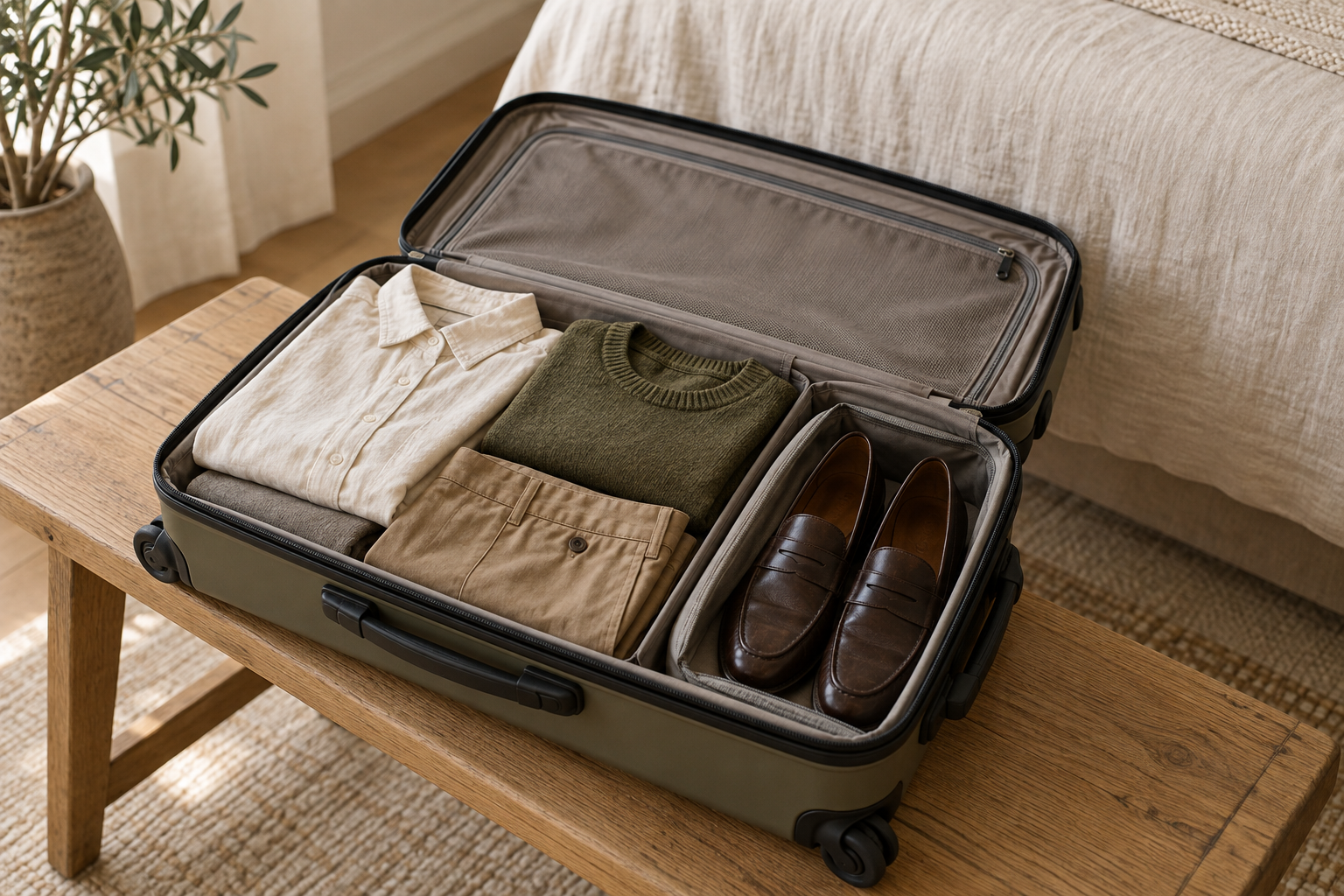
Flying to a wedding or event, wear the shoes and the jacket and pack the rest — shoes are the space-killer and the crease-victim, so they travel on your feet. The full one-bag method (three shirts, two knits, one blazer, two shoes) is laid out in the carry-on packing list.
Climate jumps need a peel-off plan: everything you land warm in must fit back into the carry-on, because leaving an 8-degree morning and landing in 28 degrees is a normal Tuesday in aviation. And at the airport-to-beach boundary, flip-flops may go on in the cabin, but keep loafers reachable — arrival towns judge shoes faster than airports do.
Travel shoes: the decision that restricts everything
- Smart leather sneakers — the undisputed travel shoe: smart enough for arrival, comfortable for the 3 to 6 kilometres an airport day involves.
- Suede loafers — the summer upgrade, right for warm arrivals and smart dinners.
- Chelsea boots — the winter pick, versatile on arrival but slow at security.
- Dress derbies — only if the arrival genuinely demands them.
Security flow favours slip-ons or quick-lace designs and metal-free construction, with hole-free socks because shoes come off. The two-shoe rule governs the packing: wear one, pack one, and choose the packed pair for the arrival context, not the flight. Whatever you choose, break it in before the trip — blisters at cruising altitude have no solution.
What not to wear — and the pocket plan
The kill list: flip-flops landside, belts with big buckles, jewellery-heavy looks at security, branded tracksuits — the exact thing you are trying not to look like — and complicated layering you will fumble with in the tray queue. Tight jeans earn their place on hour nine's regret list, and white sneakers will cross every airport floor on the way to looking grey.
The pocket plan speeds every queue: phone, watch and wallet in one jacket pocket, nothing in back pockets, minimal waistband contents. Airports are also where travel partners take the photos — the default outfit should look chosen, not endured.
Travel outfit questions
What should men wear to the airport? Dark stretch chinos, a merino or quality cotton top, an overshirt or unstructured blazer, and slip-on leather shoes — layers on, bulkiest items worn, nothing tight at the waist.
How do you look smart after a long flight? The arrivals reset: swap the tee for a rolled shirt, wipe down, deodorise, and wear fabrics that refuse to crease in the first place.
Can you wear a blazer on a plane? Yes, if it is unstructured or knitted — those survive folding. Structured suit jackets fly in a garment bag while you fly casual.
Are joggers OK for a flight? Tailored joggers pass in the cabin; they fail landside at any smart destination. Change or choose chinos if the arrival involves anyone you need to impress.