Grey tonal, done safely
Grey is the most wash-out-prone family, so it needs a hard texture contrast — charcoal flannel against light-grey marl — and a dark shoe to stop the outfit dissolving.
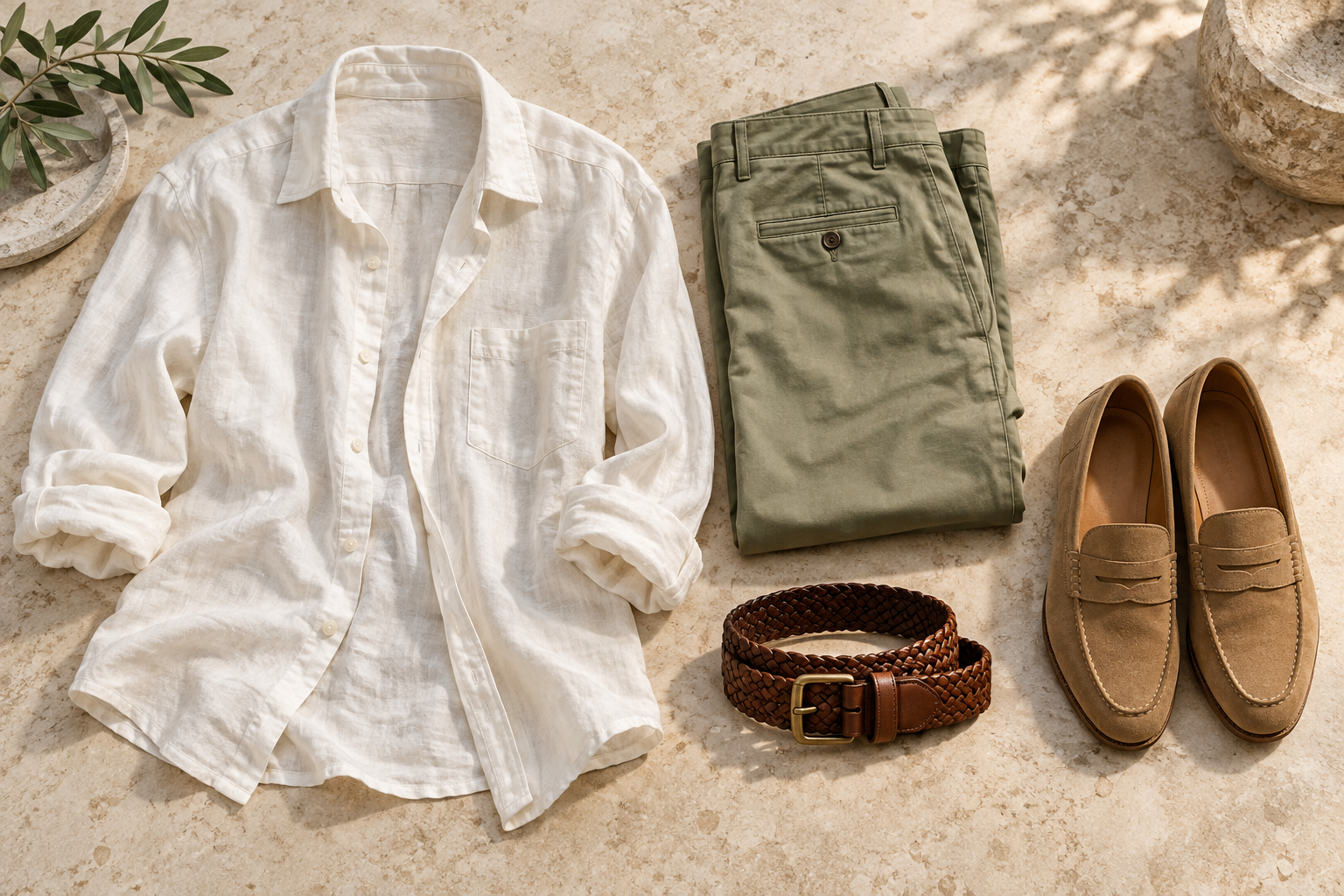
Colour method
Tonal means one colour family in varied shades and textures; monochrome means one single colour head to toe. Tonal is the version almost everyone should build — here are the five rules that keep it deliberate.
Begin hereOccasion advice
A tonal outfit removes every colour decision that could argue with itself, which is why it reads as one intentional block — and why a lazy version reads as a uniform. The difference between the two is shade variation and texture, not the colour you pick. This page gives you the rules, the canonical all-beige build, and the honest answer on elongation.
Checking beige undertones matters more than people expect: yellow-beiges and pink-beiges sit awkwardly next to each other, and daylight is the only honest test — check the combination near a window before committing.
Yes, with a mechanism rather than magic: an unbroken vertical colour line removes the horizontal cuts that chop a silhouette at waist and hip. You maximise it by matching top and bottom shades closely, keeping shoes in the same family, and keeping the break point low-contrast.
The honest caveat: elongation is not the same as flattering for everyone, and high contrast between your garment shades reintroduces the chop. The proportion context that decides which camp you fall into is covered in petite smart casual and short men's smart casual.
| Family | Easiest entry pieces | Main risk | Best season |
|---|---|---|---|
| Beige / camel | Camel trousers, cream knit, brown loafers | Same-weight fabrics read pyjama-adjacent | Autumn and spring |
| Navy | Light-blue shirt, mid-navy knit, dark trousers | Reading as a suit minus its jacket | All year |
| Grey | Charcoal flannel trousers, light-grey marl knit | Washed out without texture and a dark shoe | Autumn and winter |
| Olive | Olive overshirt, ecru tee, deep-olive chinos | Low — the most forgiving family to start with | Spring and autumn |
| White / cream | Ivory knit, ecru trousers, tan suede shoes | Highest maintenance — shows every mark and wear | Summer |
| Burgundy | Burgundy knit, darker oxblood trousers | Narrow shade range — texture carries it | Autumn and winter |
Audit one family at a time: pull everything you own in it, sort the pieces into knit, woven, suede, leather and coating, then build across at least three of those buckets. Pairings that always work: merino with flannel and suede; linen with cotton poplin and woven leather; cashmere with wool coating and polished leather. And one warning — never put two high-sheen fabrics, like satin and patent, in the same tonal outfit.
At the office, keep tonal to the senior-reading colours — navy, grey, camel — and add structure with a blazer; the workplace register is mapped in colour at work. At weddings and evenings, tonal is the understated-guest play, with one caution: all-navy guests should check the groomsmen are not in navy too. In heat, the light-tonal version is the trick that keeps the look alive through summer.
What is tonal dressing? One colour family in varied shades and textures — a cream knit, camel trousers and brown loafers is a tonal outfit in beige.
Does wearing one colour make you look taller or slimmer? The unbroken vertical line removes horizontal cuts, which reads taller; it is a real effect, but high shade contrast between garments cancels it.
Can you wear different shades of the same colour? Yes — that is exactly what tonal means, and it is the recommended version of the look.
How do you wear all beige without looking dull? Vary the shade by two steps, mix knit and woven textures, and add one dark anchor at the shoes.
BEFORE YOU CHOOSE
A cream merino knit over camel wide-leg trousers with dark-brown loafers and a near-black belt. Three shade-steps plus a dark anchor: the texture difference between knit and woven stops the look flattening.
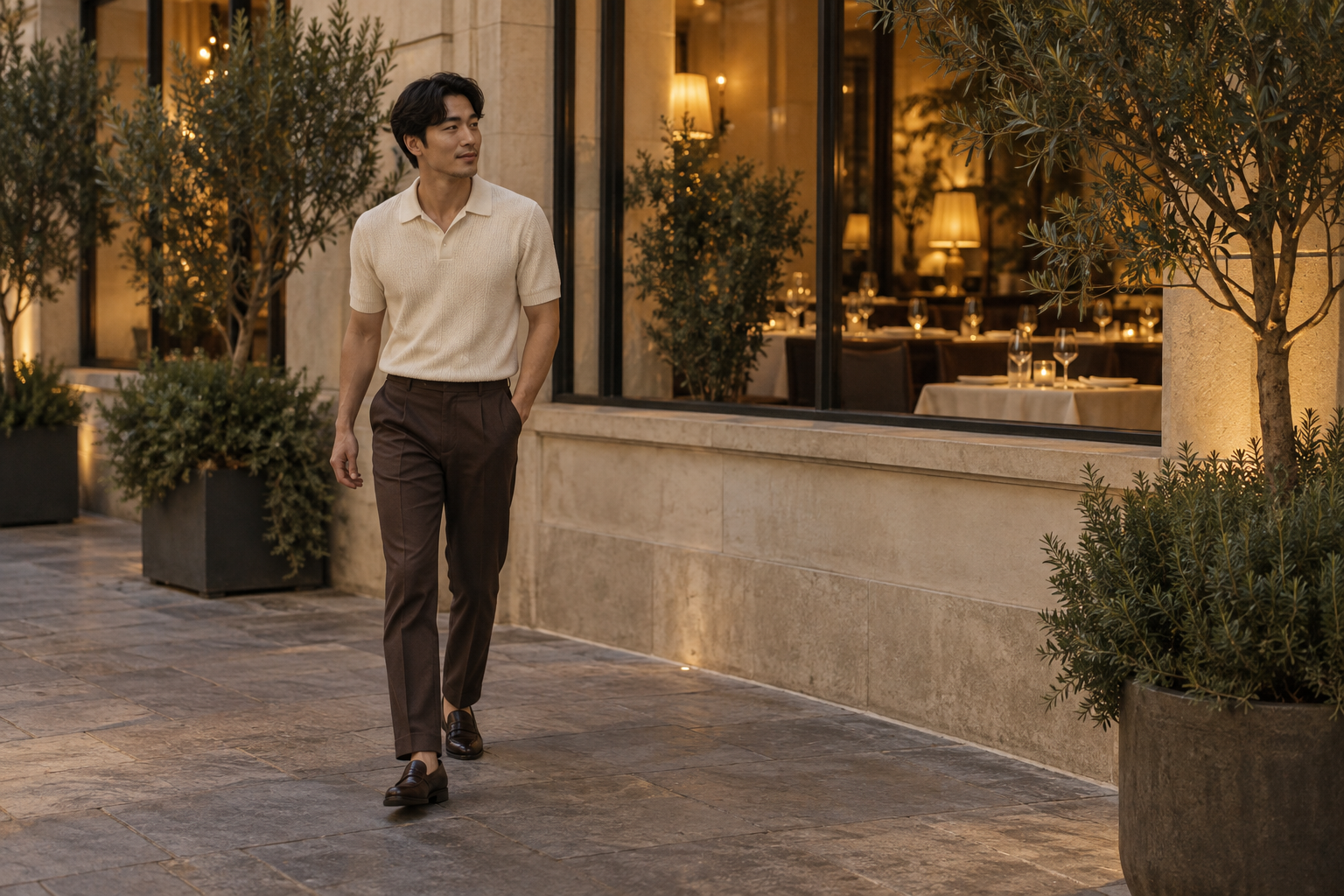
A light-blue shirt under a mid-navy fine knit with dark-navy trousers and black polished derby shoes. Breaking the jacket-trouser shade by using a knit keeps it reading intentional rather than a suit minus its jacket.
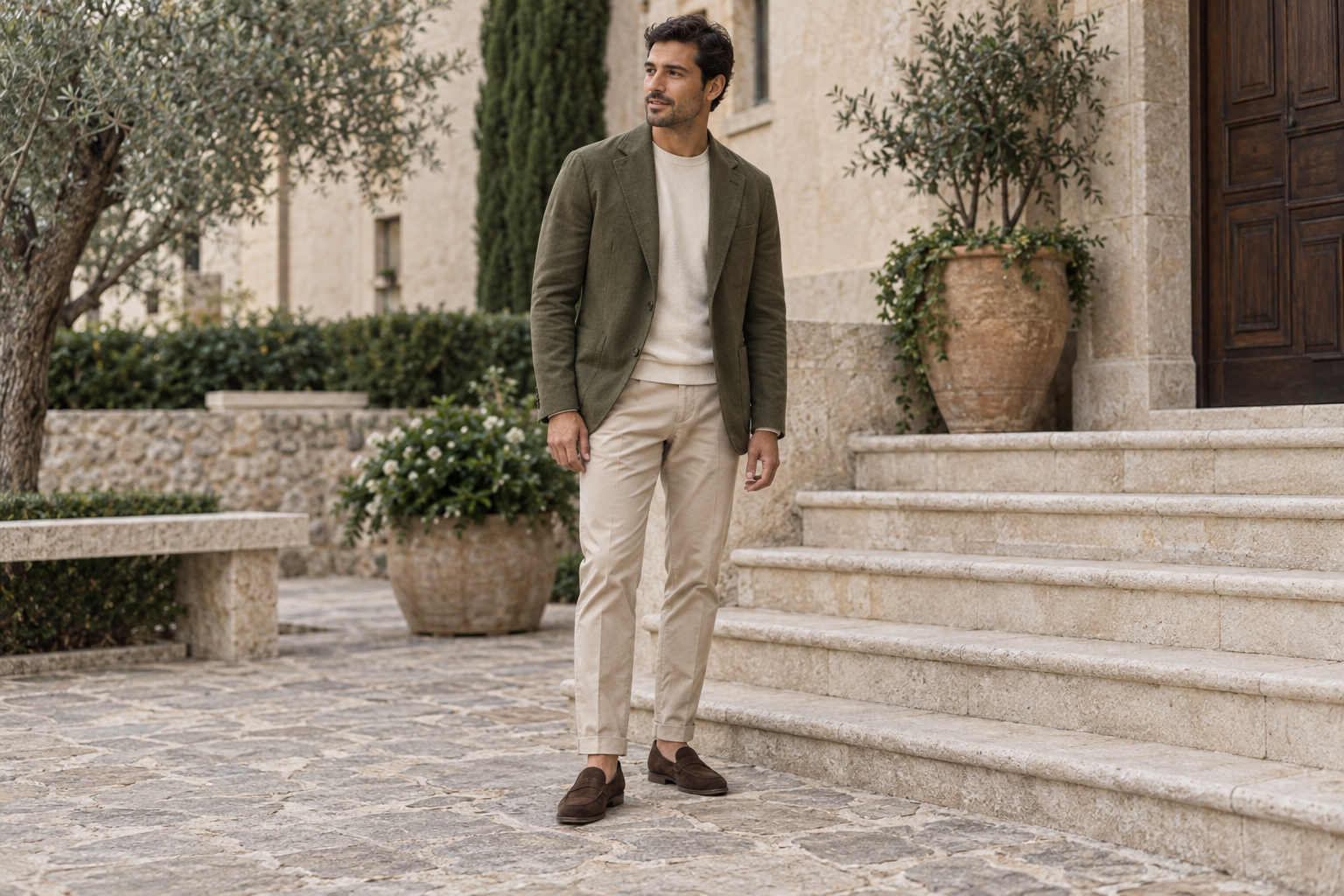
An ecru tee under an olive overshirt with deep-olive chinos and tan suede sneakers. Olive is the most forgiving family to attempt first, because its shades are naturally low-contrast and textured.
Grey is the most wash-out-prone family, so it needs a hard texture contrast — charcoal flannel against light-grey marl — and a dark shoe to stop the outfit dissolving.
All-black reads evening and edgy rather than office-appropriate; where it belongs, and how to keep it from flattening, is covered in black at smart casual.
The highest-impact and highest-maintenance family — beautiful in summer light, unforgiving about coffee and about wash care, so build it only if you will maintain it.
Light tonals in open-weave textures work with the heat instead of against it — the fabric choices in hot humid smart casual slot straight into this method.
What to Wear
How to mix patterns in clothes without noise: the three rules, checks with stripes, florals with stripes, and the builds that always pass.
What to Wear
Personal color analysis applied to a real smart casual wardrobe: the honest verdict, free DIY drape tests, and where colour effort actually shows.
What to Wear
Is black smart casual? Yes, with three conditions. Where black works, how all-black survives a dress code, black versus navy, and the wedding guest rules.