Yes — smart sits one notch above smart casual, and the gap is smaller than the panic suggests. Here is the test, the table, and how to dress for a smart invite without overdressing.
One notch, not a chasm: a jacket is expected at smart and optional at smart casual. The comparison table and the dress-for-the-room notes below settle the grey areas.
What smart actually means on an invitation
In UK usage, smart usually means no jeans, no trainers, a collared shirt expected, and a jacket often implied — which is exactly why the word causes so much confusion on forums, where people use smart and smart casual interchangeably and end up panicking about both.
In the US, smart rarely appears as a standalone code; Americans usually see smart casual instead. If you get a smart invite stateside, read it as dressier than business casual — a jacket and leather shoes, tie your call based on the venue.
Venue signals that harden smart toward tailoring: city restaurants, the races, awards dinners, religious services. Daytime, garden or pub settings soften it toward smart casual. For where each code sits overall, see the full smart casual explainer and the whole dress code library.
The formality ladder
Casual — whatever is comfortable and presentable; no expectations.
Smart casual — polish with relaxed pieces; blazer optional, dark jeans can work.
Smart — tailoring-level polish; jacket expected, tie optional but safe.
Business casual or informal — structured workwear without the full formality.
Formal — the top of the ladder; suit-and-tie or equivalent territory.
Smart sits closer to business attire than most people assume, which is why the suit-safety rule exists: you cannot overdose on tailoring with a smart invite, only on the tie. Compare it with its neighbours — smart casual versus casual, versus informal, and the dressier casual elegant.
Three smart outfits that will not read over-dressed
Suit minus tie — navy or charcoal suit, open-collar shirt, brown leather derbies. The safest smart formula there is.
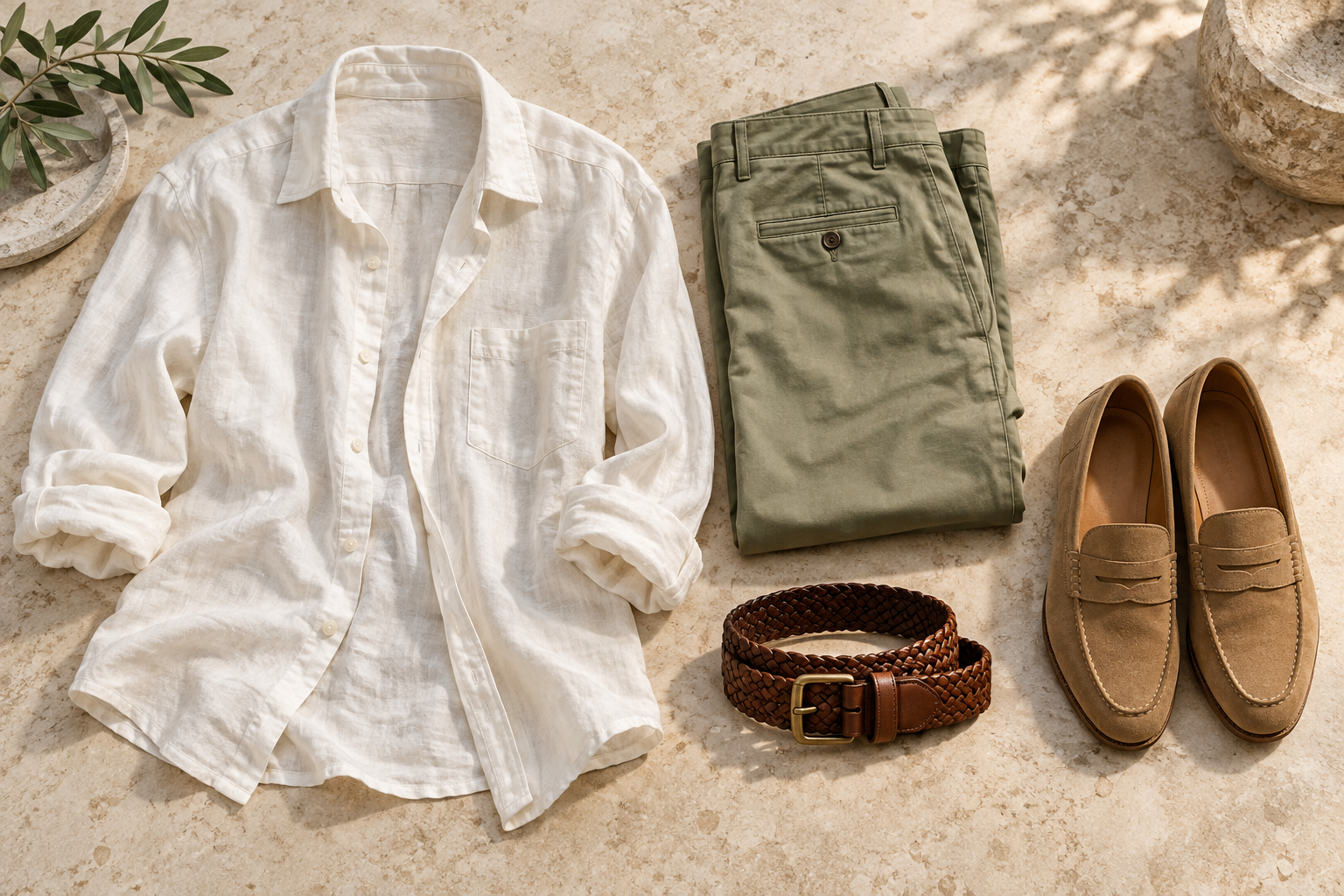
Blazer and trousers — unstructured navy blazer, contrasting grey tailored trousers, no tie, polished loafers.
Dark-denim escape hatch — rarely passes for smart; only over a blazer, an oxford shirt and leather shoes, and only where the host is informal. When the invitation wording is ambiguous, ask the host or default one notch up.
Women's equivalents on the same ladder: a tailored dress with a structured layer, or a blouse with tailored trousers and heeled or polished flat shoes — the same one-notch shift, different garments.
Common mistakes with a smart dress code
Full suit and tie in a blazer-level room — soften without changing clothes: tie off, jacket unbuttoned, shirt collar open.
Reading smart as smart casual and turning up in jeans — the most common failure with UK invites. When the two words are used interchangeably by hosts, the venue breaks the tie.
Grooming blind spots — scuffed shoes, an untidy beard or a worn belt break a smart outfit faster than any garment choice.
Smart vs smart casual: quick questions
Does smart mean a suit? No, but tailoring is always safe. A blazer with tailored trousers meets the code in most rooms.
Can I wear jeans to a smart dress code? Generally no. Dark tailored denim only where the host is clearly informal — and even then with a jacket and leather shoes.
Is smart more formal than smart casual? Yes, exactly one notch on the ladder — jacket expected versus optional is the cleanest way to see it.
Do women need a different answer? No — the ladder is the same. One rung down is a polished dress or blouse-and-trousers look; one rung up adds tailoring structure.
The takeaway
Smart is smart casual plus one formal element, and when you cannot tell which code the host means, dress one notch up — it is the only direction that never embarrasses. For literal wording to look for on invitations, see the explicit dress code rules guide.
THE SHORT ANSWER
Choose for the day ahead.
There is a difference, and it is exactly one notch. Smart expects tailoring-level polish — a jacket is expected and a tie is optional but always safe. Smart casual expects polish built from relaxed pieces, where a blazer is optional and dark jeans can work. The one-sentence test: take what you would wear to a smart-casual dinner and add one formal element — a jacket, a proper shirt, leather shoes — and you are dressed smart.
Sharp: clean shoes, tidy beard or shave, good belt
Neat and deliberate, softer edges allowed
What should guide your choice?
Jacket expected or optional
Jeans allowed or not
Tie territory or not
Footwear floor: leather required or sneakers pass
The right choice depends on the setting.
A UK wedding invitation says smart
Treat it as tailoring territory: suit or blazer with tailored trousers, collared shirt, leather shoes. On many UK invitations smart is used loosely and really means smart casual — check the venue. A hotel or marquee can soften the read; a city venue hardens it. If in doubt, the suit minus the tie covers both readings.
An awards dinner or city restaurant, dress code smart
These venues harden smart toward genuine tailoring. Wear the suit, or blazer and contrasting tailored trousers with a collared shirt and derbies. Skip jeans entirely — this is the room where the difference between the two codes is actually policed at the door.
A friend's party invite says smart
From a friend, smart often just means make an effort — no jeans-and-trainers default. A blazer over a good shirt with dark chinos and loafers reads right. You can usually dress down one notch here, but keep the jacket or the shirt-and-leather-shoes pairing so the downgrade looks deliberate.