How to Store Winter Clothes: Moths, Vacuum Bags and the Switchover
The damage you find at the six-month swap — moth holes, yellow marks, set creases — almost always happened in storage, not before it. Three rules fix most of it: everything clean, wool breathable, the room cool and dark.
Stop the switchover surprises: a storage system that returns clothes wearable
Storing seasonal clothing is where wardrobes quietly lose expensive pieces: moths find unwashed wool, damp turns to must, and compression sets creases that never fully leave. The fix is a short system, not a product shopping trip. Clean everything, give natural fibres air, and check the boxes twice a season. That is how to store winter clothes so they come back wearable in spring — the questions below cover the details.
Fold or hang: the storage decision by garment type
Almost all storage mistakes are one of two kinds: the garment that should have been folded was hung, or the one that should have been hung was crammed in a box. The rule follows the structure of the garment.
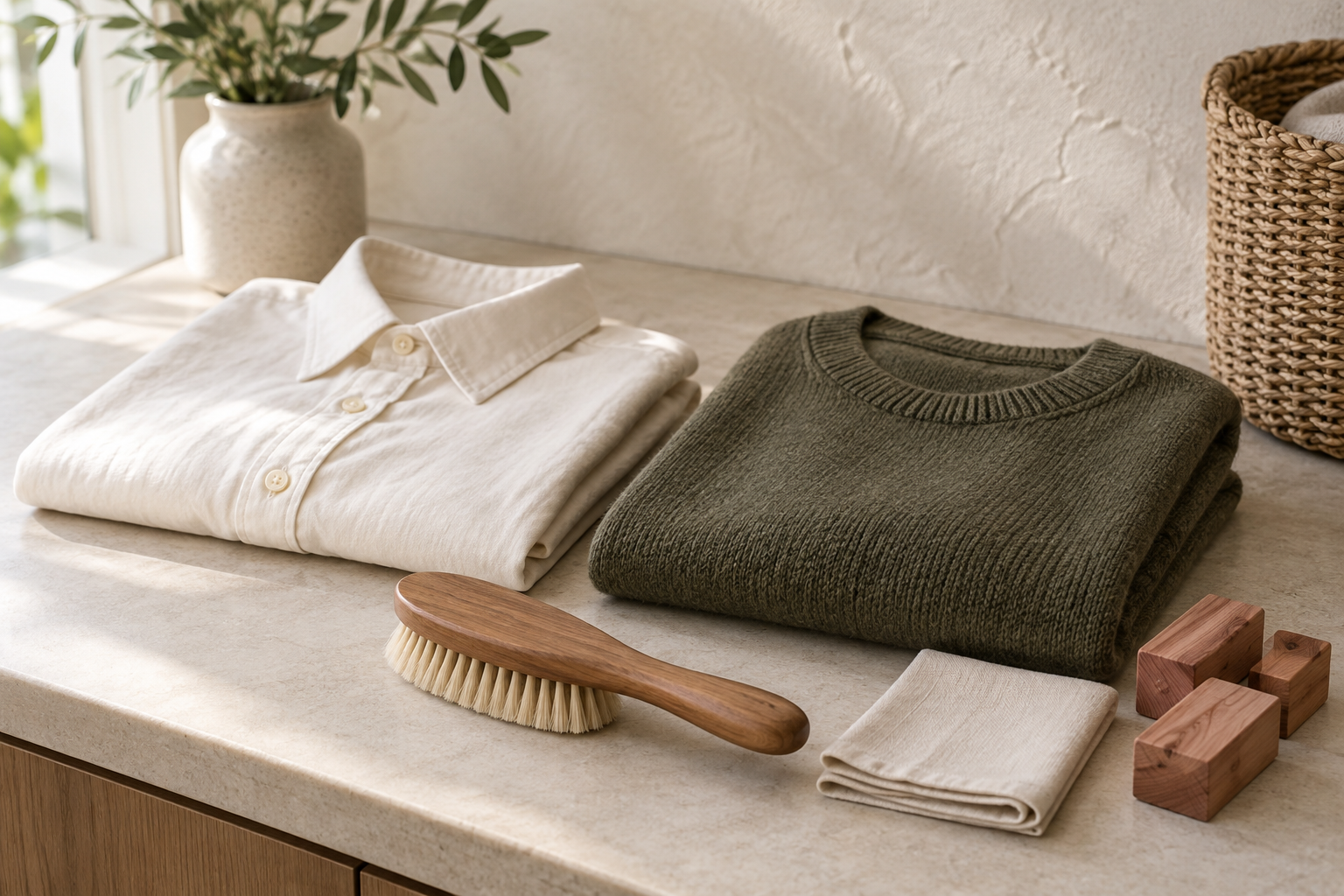
Fold: all knits, cashmere, merino, denim and most cotton — hangers stretch knit shoulders, and folding with tissue keeps sharp creases out of fine yarns.
Hang: wool coats, blazers and structured jackets on broad wooden hangers, buttoned once, in a breathable garment bag — never the dry-cleaner's plastic.
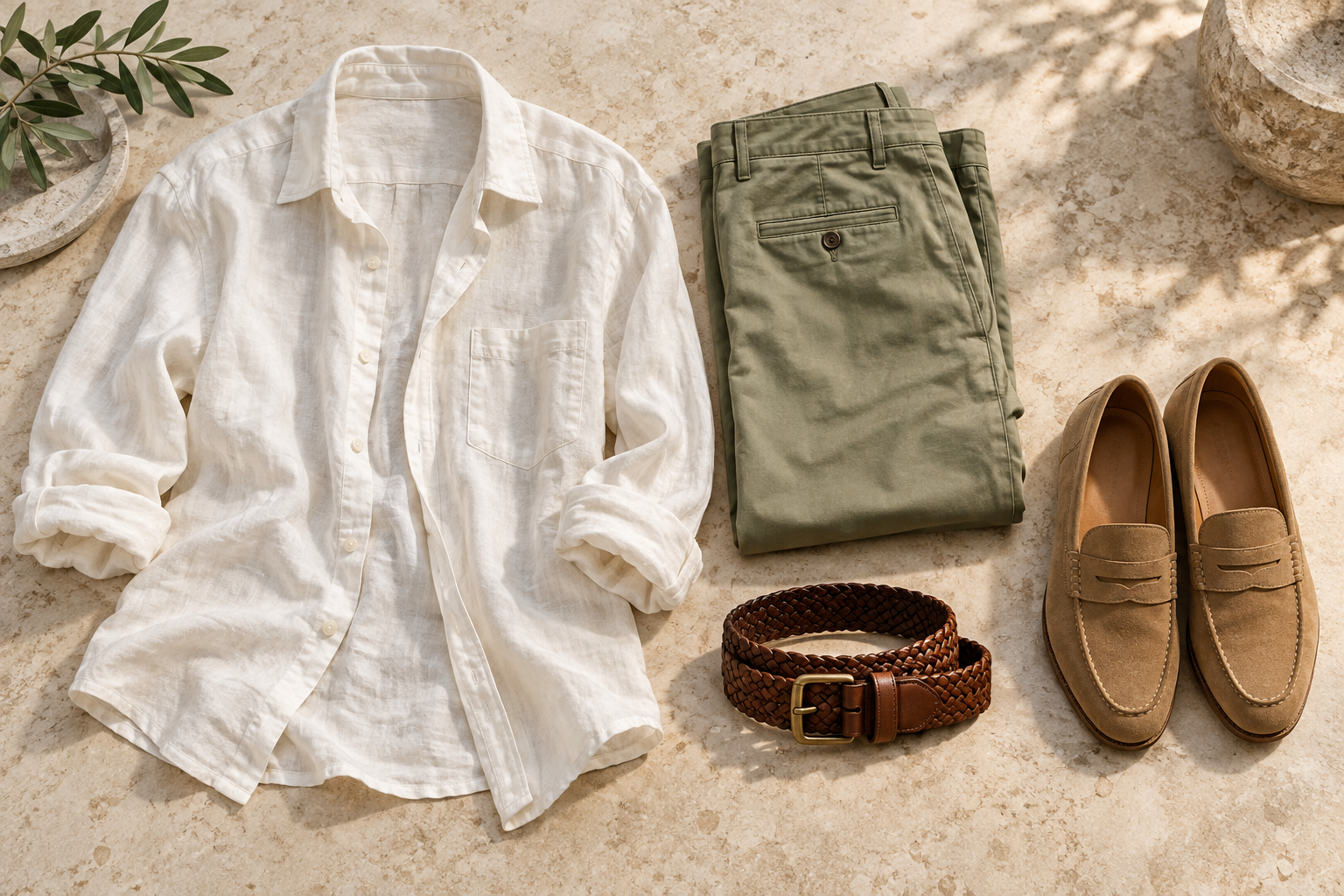
Loosely fold and refold: linen and summer weights — refold once mid-season so fold lines do not become permanent.
Clean, treed and bagged: shoes — the leather shoe care routine covers the treatment they need before a season in a dust bag.
Scarves, gloves and hats: clean, folded in a lidded box with cedar nearby — wool accessories are moth bait exactly like sweaters.
Where to store — and where not to
Cool interior closets, under-bed boxes in dry rooms, and lidded bins on shelving are all good homes. Attics, basements and garages swing between hot, cold and humid, attract pests, and undo everything the cleaning and bagging achieved.
Avoid damp exterior walls, radiators and direct sunlight, which fades colours through fabric and even through bag seams. In a small flat, a decluttered closet beats clever overflow storage: the pieces you keep in rotation are the ones that stay in condition.
Garment-specific storage notes. Every row assumes the item is clean and fully dry first.
Garment
Prep
Store how
Watch for
Wool coats
Dry-clean, brush
Broad hanger, breathable bag, cedar nearby
Shoulder bumps from thin hangers
Knits and merino
Wash, dry flat
Folded in sealed cotton bags or bins
Grazing marks — check monthly
Cashmere
Wash or dry-clean
Folded with tissue, nothing on top
Moths — the most targeted fibre
Linen
Launder, iron optional
Loosely folded, refold mid-season
Permanent crease lines
Shoes
Clean, condition, treed
Dust bags in their boxes, lid off if damp-prone
Dried-out leather, misshapen toes
Down jackets
Clean, fully dry
Lofted on a hanger or in a large breathable bag
Crushed loft from compression
The mid-season check: ten minutes a month
Through the warm months, open each bag or bin monthly and look for grazing marks, fine webbing, a musty smell or any sign of moisture. Catching larvae early is the difference between one sweater and a whole shelf.
Sand or re-oil cedar blocks at the same cadence, and add a silica gel pack to sealed bins in humid climates. If you find activity, freeze-treat the affected pieces, clean every garment in the box, and wipe the cavity before anything returns. Natural-fibre upkeep continues year-round — the wool and merino care guide and cashmere care at home cover the washing side, and linen washing and storage picks up the summer swap.
Storage questions
How do you store winter clothes? Wash or dry-clean every piece first, fold knits into breathable cotton bags or lidded bins, hang coats on broad wooden hangers in breathable garment bags, and keep everything in a cool, dry, dark closet.
Are vacuum bags good for storing clothes? For synthetics, cotton and down-free puffers, yes. For wool, cashmere and anything with loft, no — the compression crushes fibres and sets creases that may never relax, so give natural fibres breathable storage instead.
How do you prevent moths in stored clothes? Clean every wool item before it goes away, seal knits in zippered cotton bags or lidded bins, add cedar or lavender as a deterrent, and check the boxes monthly through the warm season.
Should sweaters be hung or folded for storage? Folded, always — hangers stretch knit shoulders out of shape. Only structured pieces like wool coats and blazers belong on hangers in storage.
How often should you check stored clothes? A ten-minute look each month through the warm months — grazing marks, webbing, must or moisture caught early cost one sweater; caught late, a whole shelf.
Open the symptom that matches. Start there.
Moth holes in wool and cashmere
Possible cause: Clothes moth larvae eat keratin and are drawn to the sweat and food traces left on unworn garments. One contaminated sweater in a bin can seed the whole shelf.
Try first: Launder or dry-clean every wool piece before it goes away, seal knits in zippered cotton bags or lidded bins, and add cedar or lavender as a deterrent. Inspect monthly in warm months for grazing marks and webbing.
Yellow stains and set-in odours
Possible cause: Body oils and invisible food residue oxidised over months in storage, turning into permanent yellowing and a musty or sour smell.
Try first: This is the reason rule one exists: clean before storing, every time, even on items worn once. For pieces already stained, treat and wash now — time in the box only sets the stain further.
Deep creases and crushed loft
Possible cause: Knits, down and anything lofty were vacuum-compressed or stacked under heavy items, flattening fibres for months.
Try first: Retire the vacuum bag for natural fibres. Fold knits loosely in breathable storage with nothing heavy on top; down and wool may take weeks of airing to recover, and some creases in dense wool never fully relax.
Musty smell and damp patches
Possible cause: Garments went away even slightly damp, or airtight plastic trapped humidity against the fabric in a warm spot.
Try first: Air everything thoroughly and only store bone-dry. Swap sealed plastic for breathable bags or ventilated lidded bins, move the boxes off damp exterior walls, and add silica gel if your climate is humid.
Different causes need different fixes.
Nearly all storage damage comes from three sources: soil left on fabric, no air, and the wrong room. Moth larvae need keratin plus the traces of sweat and food that unwashed clothes carry; compression and sealed plastic remove the loft and airflow natural fibres rely on; and attics, garages and sunlit spots swing between hot, cold and humid in ways no product can offset. The room is the real variable — cool, dry and dark beats any cedar ball or storage bin.
Make one small change.
If you have just found damage: isolate affected wool pieces in a sealed bag and freeze them for at least a week at standard freezer temperature to kill larvae and eggs, then clean the wardrobe cavity and every garment in it before anything goes back.
Work on the part that needs it.
Clean first, then store breathable
Every garment gets washed or dry-cleaned before storage — soil attracts moths and oxidises into yellow stains. Then wool and knits fold into breathable storage: cotton zip bags, acid-free tissue, or lidded bins with some airflow. Never store anything even slightly damp.
The vacuum-bag verdict
Fine for synthetics and cotton: vacuum bags safely shrink puffers, tees and linens to a fraction of their size. Wrong for wool, down and anything with loft: compression crushes the fibres and sets deep creases that can take months to recover, if they ever do. If space is tight, vacuum the synthetics and give the wool the shelf.
Moth prevention as a stack, not a single product
Clean garments remove what attracts larvae, sealed bags and bins deny access, and cedar or lavender add a deterrent on top. Cedar works only while it smells — sand the blocks or re-oil them each season, and remember it repels rather than kills. A ten-minute check of the boxes each month through the warm season closes the loop.
The twice-yearly switchover, in one sitting
Pull everything out rather than swapping partially — the partial swap is the one that never ends. Clean anything soiled now, decide repair, donate or discard honestly, store the outgoing season by the rules above, and air, press and de-pill the incoming one before it rejoins rotation. Ninety minutes, twice a year.
When to stop adjusting.
Some storage problems should end a garment's stay rather than extend it: moth holes that go through the fabric, yellowing that survives a proper wash, and any mustiness that remains after airing and cleaning all mean repair-or-retire decisions. A heavy wool coat can sometimes be repaired by a good alterations shop; a holed cashmere sweater usually cannot. Discard infested pieces rather than returning them to a clean wardrobe — a full wardrobe audit makes those calls systematic at every switchover.