Cashmere is not too delicate to wash — it is too delicate to wash carelessly. Here is the hand-wash method that keeps fibres soft, the pilling fix, and the storage routine that beats moths.
The fear is backwards: gentle hand-washing is actually better for cashmere than dry-cleaning, because solvent washing can dull and stiffen the fibres over repeated cycles. The method is short — cool water, cashmere or wool shampoo, no wringing, dry flat — and the disasters people dread, from shrinkage to moths, all have known fixes. Start with your specific problem below, or read the routine once and never worry again.
Why home washing beats the dry cleaner for cashmere
Cashmere is the fine undercoat of a goat — in effect, very soft hair. Hair does not mind water; it minds heat, twisting and rough treatment, which is exactly what a washing machine's agitation and a solvent bath both impose in different ways. Repeated dry-cleaning tends to leave knits looking duller and feeling stiffer, while a gentle hand wash keeps the fibres relaxed and soft.
That does not make dry-cleaning wrong for everything — structured wool tailoring benefits from it. But for a knit with no structure to protect, water and a few minutes of care at home is the better routine and the cheaper one.
The hand-wash method in full
Turn the sweater inside out so the outer face is protected from friction in the water.
Fill a basin with tepid water and a cap of cashmere shampoo — supermarket wool shampoo works too; the expensive bottle is not the active ingredient.
Soak five to fifteen minutes. Gently squeeze the suds through the fabric; never rub, scrub or twist.
Rinse in water of the same temperature until it runs clear — a sudden temperature change is what shocks the fibres.
Press the water out with your hands, no wringing, then roll the garment in a dry towel and press again.
Dry flat on a rack or towel, reshaped to its measurements, away from radiators and sunlight. Expect a day or two; flip partway through.
Each never-rule maps to a real failure mode: heat plus agitation shrink and felt the fibre, and wringing stretches the loops open. If a sweater comes off the towel dried stiff, a brief steam or a gentle re-soak relaxes it again before the final flat-dry.
Pilling: why it happens and the fix
Pilling looks like damage but is mostly shedding — short loose fibres balling up wherever the fabric rubs against straps, belts, desk edges and seatbelts. A new cashmere pill-heavy first year is normal and calms after several washes as the loose fibres leave. Prevention is rest days between wears, awareness of strap friction, and, at purchase time, longer-fibre cashmere, which the cashmere buying guide explains how to spot.
The fix is a cashmere comb — the same method as the knitwear pilling fix — on a dry, flat-laid garment: light strokes, one direction, gentle tension. Electric shavers and aggressive razors remove fibre along with pills and thin the fabric over time.
The minimal care kit
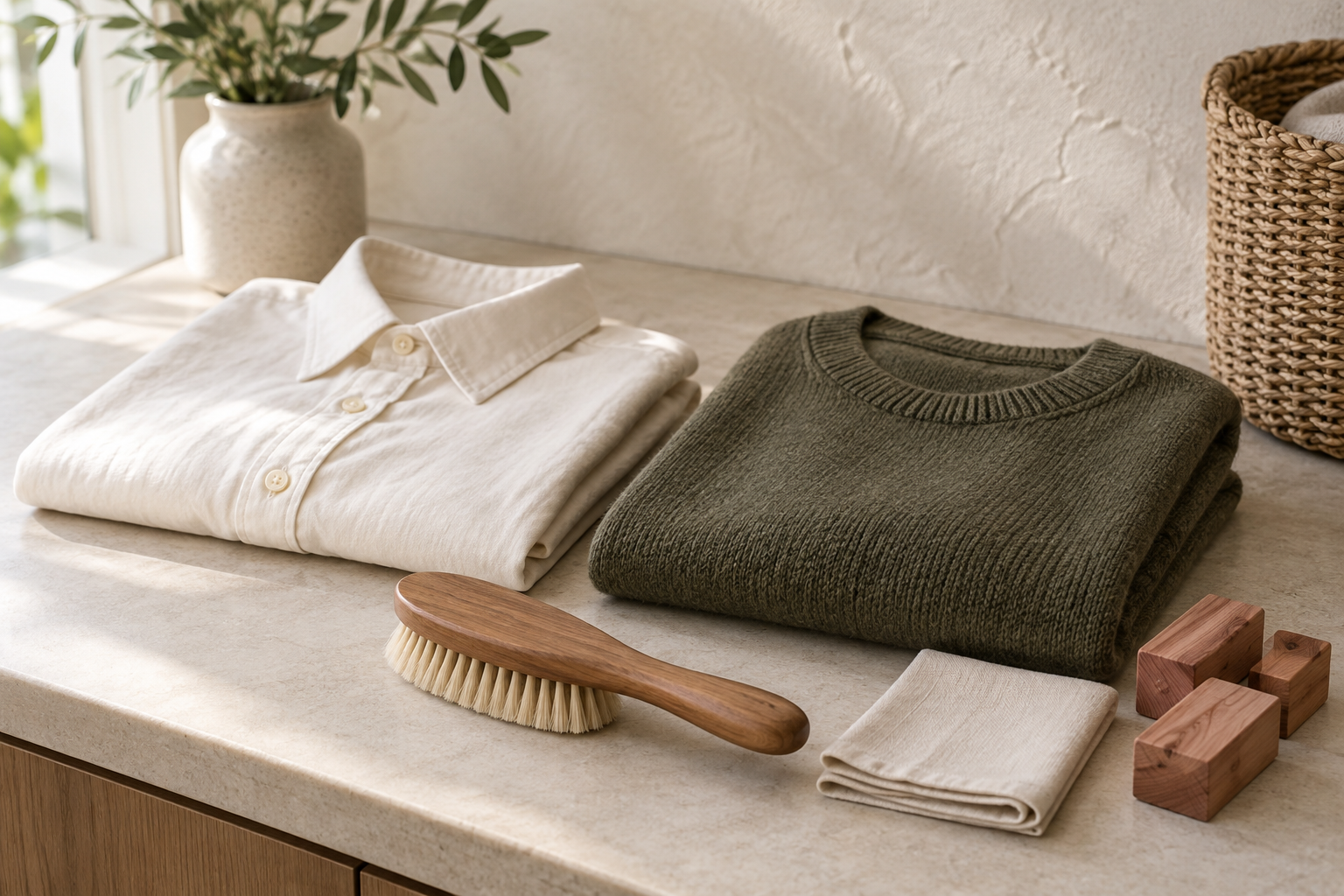
Five items cover every routine in this guide
Item
What it does
Cheapest acceptable version
Skip?
Cashmere or wool shampoo
Cleans without stripping the fibre
Any supermarket wool wash
Do not skip — regular detergent is too harsh
Mesh wash bags
Protect knits in a machine cycle
A pillowcase tied shut
Do not skip if you machine wash
Cashmere comb
Removes pills without cutting loops
A basic fine comb used very lightly
Do not skip — it is the pilling fix
Drying rack or spare towels
Enables flat drying
Any flat surface plus towels
Do not skip — hangers ruin shoulders
Cedar blocks or lavender
Discourages moths in storage
Cedar offcuts or dried lavender bags
Optional for in-rotation knits
Cashmere care questions
How often should you wash cashmere? Every four to six wears, or when it smells or looks tired. Air it overnight between wears instead of washing after every use.
Can cashmere go in the dryer? Never. Heat felts the fibres and shrinkage from a tumble dryer is rarely reversible — flat-dry only.
Does cashmere pill more when new? Yes. The first year is the worst because the shortest loose fibres escape first; it calms after several washes and combings.
How do you store cashmere for summer? Wash it first, fold it into breathable bags or bins with cedar, and keep it somewhere cool and dark. Storing dirty knits is what invites moths.
Is dry cleaning bad for cashmere? Repeated solvent cleaning can dull and stiffen the fibres, which is why gentle home washing is the preferred routine for knits.
For the neighbouring fabrics, the wool and merino care guide follows the same logic with a few tolerance differences, the merino wool guide covers the budget-friendlier cousin, and the care hub holds the rest of the routine guides. Off-season storage follows the same rules year-round: clean, folded, breathable, cedar close by.
Open the symptom that matches. Start there.
It shrank in the wash
Possible cause: Heat or agitation made the fibres contract and felt together — usually a warm wash, a spin cycle, or a moment in the dryer.
Try first: Soak the sweater in lukewarm water with a little hair conditioner or wool shampoo for 30 minutes to relax the fibres, then gently stretch it back to shape and pin it to measurements on a towel to dry. This rescue works best on recent shrinkage with light felting; badly felted fabric will not fully return.
Stretched-out elbows, cuffs or shoulders
Possible cause: Gravity and wear pulled the loops open — hanging the sweater, bagging it at the elbow, or repeatedly leaning on the elbows.
Try first: Dampen the area with steam and press it back into shape with your hands, then dry flat. If a shape is gone for good, deliberate re-felting or repurposing is more realistic than more stretching.
Pilling all over the front and sleeves
Possible cause: Short loose fibres ball up where the fabric rubs — bag straps, seatbelts, cross-body straps, desk edges. It is worst in year one and calms after several washes.
Try first: Lay the garment flat and dry, then work a cashmere comb over it with light strokes in one direction. Never shave it aggressively — blades cut loops and thin the fabric.
Yellowing or a musty smell after storage
Possible cause: The knit was stored with invisible soil or sweat on it, folded in plastic, or kept somewhere warm and damp.
Try first: Air it overnight, then re-wash with the gentle method. If yellowing is set after a gentle wash, it is usually permanent — the fix is prevention, which means washing before every off-season storage.
Different causes need different fixes.
Almost every cashmere disaster traces back to two properties of the fibre: it is hair, so heat and agitation make it contract and tangle permanently, and it is soft, so friction lifts the short fibres into pills. That is why the rules cluster the way they do — cool water, no wringing, flat drying, and resting between wears all protect the same fragile structure. Dry-cleaning solvents add their own dulling on top, which is why home washing, done gently, is the preferred route.
Make one small change.
If you are standing over a wet sweater right now: do not wring it, do not hang it. Press the water out gently, roll it in a dry towel, then lay it flat to dry, reshaped to its real size.
Work on the part that needs it.
The hand-wash method, step by step
Turn the sweater inside out. Fill a basin with tepid water — never warm — and add a cap of cashmere or wool shampoo. Soak five to fifteen minutes with gentle squeezes only, then rinse in water of the same temperature. Press the water out without twisting, roll the garment in a dry towel to absorb more, and dry flat, reshaped, away from heat and sun. Wash roughly every four to six wears, or when it looks or smells tired — over-washing wears the fibres faster than wearing does.
Machine washing: when you can risk it
If the label says machine-washable, or you accept the risk on a piece you do not love: cold wool or delicate cycle, the sweater in a mesh bag, minimal spin, and no fabric softener. The honest record is that readers who skipped the mesh bag or the cold setting got shrinkage and pilling spikes — the mitigations are exactly those two settings. Never: tumble dryer, hot wash, chlorine bleach.
Storage that defeats moths
Between wears, fold on a shelf and let the knit air overnight after wearing — never compressed under piles. Off-season, wash first, because soil attracts moths, then fold into breathable cotton bags or sealed bins with cedar or lavender, in a cool dark place. Inspect folded knits monthly in season; freeze-treating a suspect garment for a couple of weeks kills larvae before they spread.
When to stop adjusting.
Some outcomes are past home repair: deep felting from a hot wash, moth holes, and snags that have pulled into ladders. Snags themselves are fixable — do not cut the loop; pull it through to the inside with a crochet hook or needle. Holes go to an invisible-mending or darning service, or become a deliberate decorative mend. Knowing where the line is protects the rest of the sweater from well-meant damage.
How to care for wool and merino: rescue a shrunken or pilled sweater, wash less and air more, hand-wash without disaster, and stop moths before they start.
How to wash linen without shrinking it: cool gentle cycles, the shake-and-smooth dry, fast damp pressing, stain first aid, and storage that beats wrinkles.