The three-piece move
A waistcoat is the classic winter warmth play — it adds a layer and a notch of formality at once, and it means the outfit survives the coat check without a knitwear compromise.
Occasion guide
A winter wedding asks you to solve two problems at once: look wedding-formal indoors and survive the church queue, car park and photos outside. The outfit logic barely changes — the fabric weight, the colours and the coat do.
Begin hereOccasion advice
Winter changes four things about a wedding guest outfit: heavier fabric, deeper colour, footwear that handles wet ground, and a coat you plan as carefully as the suit. Everything else — the two-problem brief of dressing for the ceremony and the cold — is logistics, and logistics have answers.
The one-line rule: winter wedding smart casual means the same suit rules as any season, in winter weight and with a proper coat. Do embrace richer colours in small doses — burgundy, forest, chocolate. Do not wear the summer suit plus a coat, and do not let the cold talk you into replacing the jacket with a knit at a formal venue.
The single best answer is a dark overcoat or topcoat, one size up from your jacket, hem at or just above the knee. That length covers the suit jacket without crushing it, and the extra chest and shoulder room means it drapes instead of straining. Shorter coats press the jacket's shoulders down and wrinkle the set you paid for.
Acceptable alternatives: a wool peacoat for less formal weddings, and a dressy quilted jacket only at rustic or barn venues. What fails: puffers and technical parkas over a suit, and no coat at all. Remember the photo reality — you will be photographed in the coat before anyone sees the suit, so choose one you would happily wear in the picture. The full buying criteria live in the overcoat and topcoat guide.
A flannel suit is the winter wedding workhorse because flannel does two jobs at once: the brushed surface reads intentional rather than flat, and its matte finish photographs well in low winter light where shinier worsteds glare. Mid-grey and navy are the two colours that work at every venue type.
On colour: go darker and deeper than you would in summer — charcoal, mid-grey, navy, sapphire — and add accent colour in one place, like a burgundy tie or a forest pocket square, without going full Christmas. Skip the pale summer shades: sand and ice blue sit badly next to a room full of winter palettes. If the wider season wardrobe is the question, the men's autumn and winter smart casual guide covers it.
Both work, and the venue's pavements decide. Polished leather Chelsea or lace-up boots with a slight heel handle wet ground and read formal enough for any ceremony. Oxfords or derbies are correct if the day is paved door-to-door. The boot criteria: sleek profile — not work-boot — in dark brown or black, leather or good suede with protectant already applied.
On a genuinely wet or snowy day, boots with a rubber or commando sole are the play, and you can bring dress shoes for the swap. One hard rule either way: dark merino socks, never white athletic ones. Cold ankles in thin summer socks is a real complaint, and it is the cheapest problem on this page to solve. Suede owners should read the suede care routine before the day — the spray goes on nights before, not in the car park.
For rustic venues, a fine-gauge merino crew or v-neck under the jacket is acceptable and warm. For formal venues, keep shirt plus optional waistcoat. The thermal strategy works if it is invisible: thin, dark, long-sleeve base layers under a shirt, with a fit check that the sleeves do not bunch. What to avoid: chunky knitwear under a tailored jacket — it collapses the shoulder line and bunches the sleeve — and chunky scarves worn indoors.
Guests stand outside for fifteen to thirty minutes across arrival, confetti and group photos — plan for that window, not just the indoor day. The kit list: the proper coat, gloves you can pocket, a warm layer underneath, and dry-sole footwear. Bring one dark umbrella; suede and heavy rain do not mix without spray, and wet-wool smell follows you down the aisle.
Can you wear boots to a winter wedding? Yes — sleek leather Chelsea or lace-up boots in dark brown or black pass at every venue type. Work-boot silhouettes are the version that fails.
What coat do you wear over a suit to a wedding? A dark wool overcoat or topcoat, one size up, hem at or just above the knee. It covers the jacket without crushing it and photographs well.
Is a turtleneck acceptable for a wedding guest? At a modern city evening reception, yes — a fine merino roll-neck under a charcoal suit reads current. Never at church ceremonies or traditional venues.
Do I need a tie for a winter wedding? The venue test decides: skipping it is more acceptable than in summer at rustic venues and less acceptable at formal ones. What colour suit for a December wedding? Charcoal, mid-grey or navy, with one deeper accent. The summer counterpart to all of this is in the men's summer wedding outfit guide.
BEFORE YOU CHOOSE

Navy flannel suit, white twill shirt, burgundy knitted tie, polished dark brown derbies, charcoal overcoat. Classic guest territory: the flannel keeps the suit from reading corporate, and the tie earns its place in a formal room.
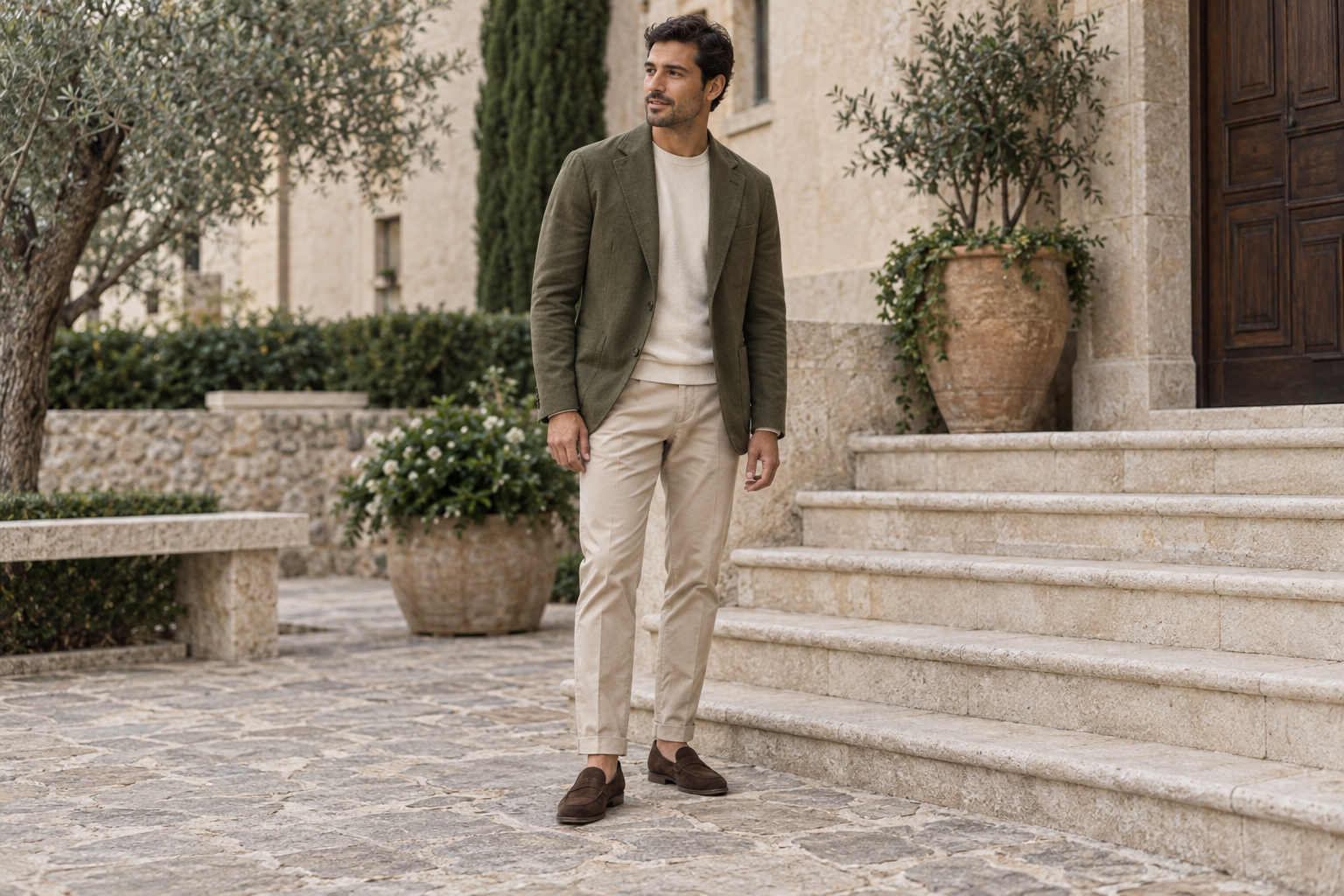
Mid-grey tweed or donegal jacket with darker flannel trousers, a brushed flannel shirt in a muted tone, suede Chelsea boots with protectant applied, wool peacoat. Rustic venues let texture lead — this outfit leans into it.
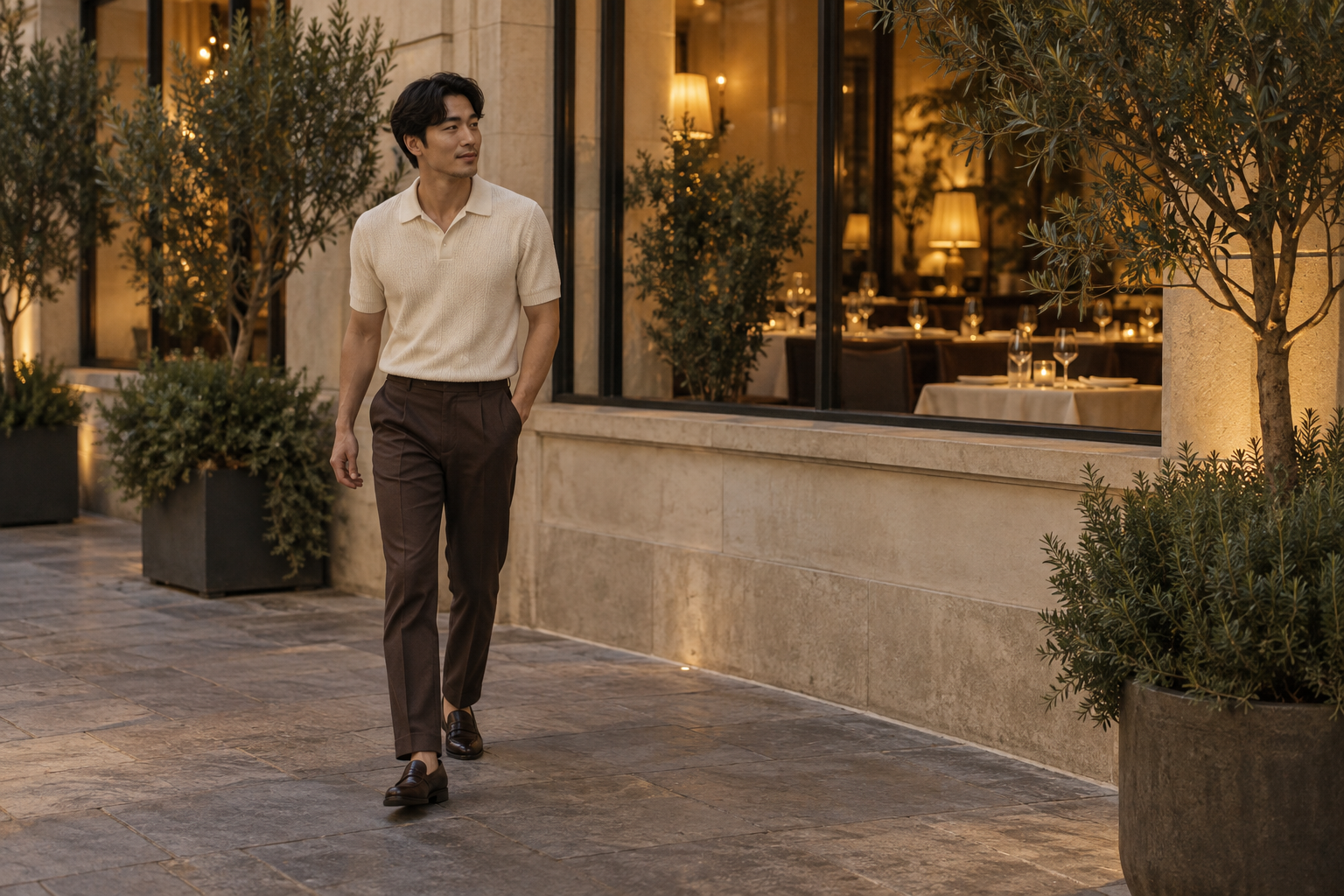
Charcoal suit, fine merino roll-neck or shirt worn without a tie, black leather boots, black topcoat. The modern-guest version: minimal, sharp, and warm enough for a night that starts at dusk and stays outside for photos.
A waistcoat is the classic winter warmth play — it adds a layer and a notch of formality at once, and it means the outfit survives the coat check without a knitwear compromise.
Tweed and donegal are correct at country houses and barns and too rustic for a hotel ballroom. Test the venue, not the trend: if the wedding is in a field or a converted barn, texture is a compliment.
Skipping the tie is more acceptable in winter and at rustic venues than at formal ones. Keep the shirt structured — a twill or oxford with the top button open, never a t-shirt shape.
Most men wear a wedding suit once a year. If the flannel suit would be a one-wear purchase, renting a winter-weight suit for the day is a legitimate answer — the logic is in the clothing rental guide.
What to Wear
What men wear to a summer smart casual wedding: suit or separates, fabrics that survive heat, grass-safe shoes, and the no-tie look done right.
What to Wear
What men wear to a smart casual dinner: the floor and the ceiling, whether jeans or a jacket pass, four outfit formulas and a 60-second restaurant check.
What to Wear
What men should wear to a smart casual interview: the one-notch rule, an industry-by-industry table, three outfit builds, and the honest verdict on suits.