What to Wear
Resort Smart Casual: What to Pack for Dress-Code Dinners
Resort smart casual decoded: what casual elegant means at hotels and cruises, packing lists for warm dinners, and the outfit fails that get turned away.
Colour by season
This is about season-of-the-year palettes, not personal colour analysis: which outfit colours read right in October and which read right in June. Warm, deep and textured for autumn winter; light, cool and washed for spring summer — with neutrals carrying you year-round.
Begin hereInspiration
Each look below is a complete smart casual outfit with its colour logic stated, so you can substitute equivalent pieces you already own. Filter by season, then use the palette tables to re-season anything in your wardrobe without buying a new one.
Autumn winter colours work because of the light: low sun and grey skies wash out pale shades, while deep tones hold their contrast against the environment. Spring summer reverses it — bright sun flatters light, cool colours, and heavy dark cloth reads severe. Texture is the multiplier: the same rust that reads right in flannel reads wrong in linen, because fabric weight and colour depth have to agree.
| Season | Named palette | Where the colour goes |
|---|---|---|
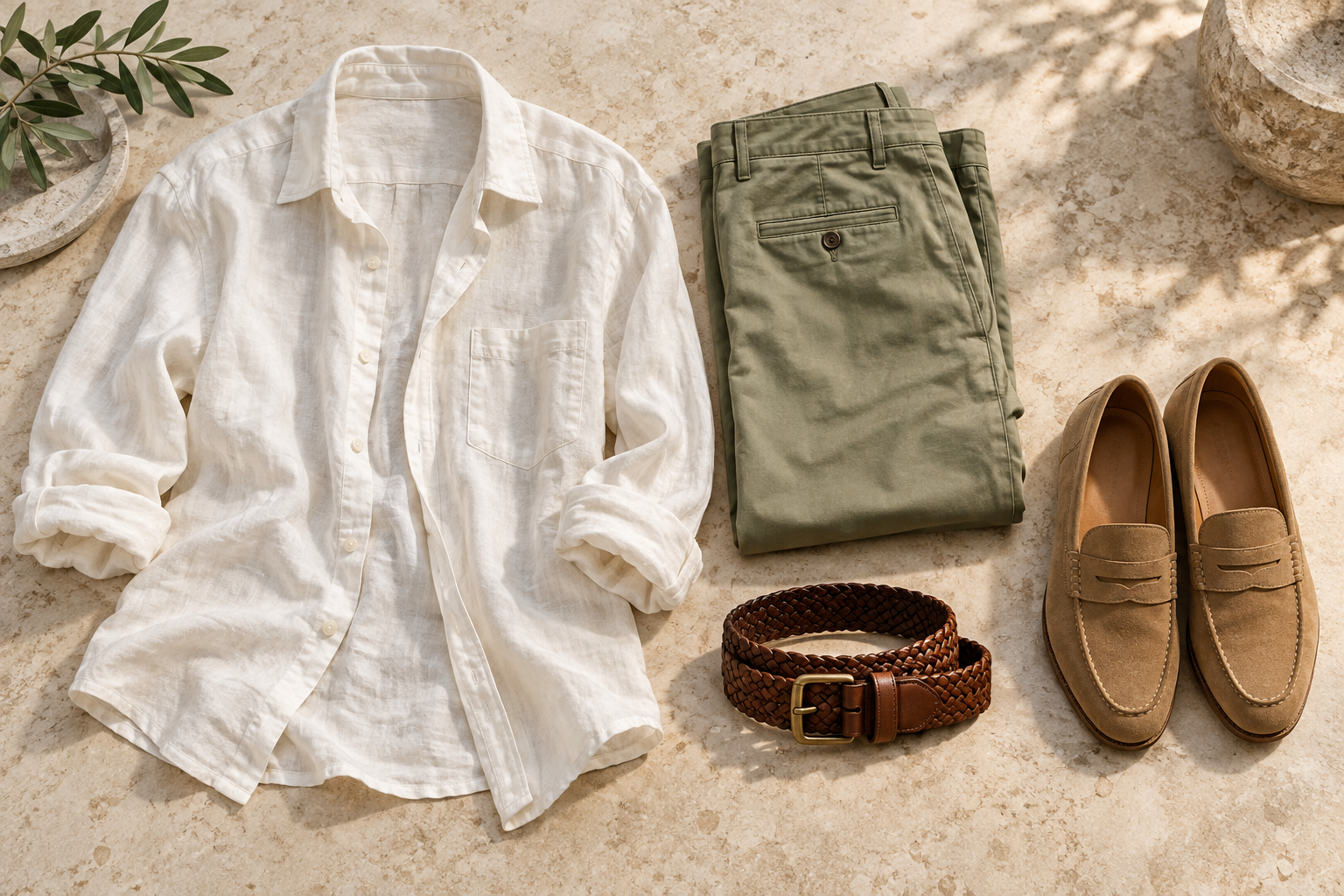
| Autumn winter | Rust, olive, burgundy, camel, forest green, chocolate, charcoal, navy | Knits, scarves and trousers; one bright accent against neutrals |
| Spring summer | White, stone, sand, light blue, sage, soft pink, ecru | Shirts and lighter trousers; anchored by one mid-tone |
| Year-round neutrals | Navy, charcoal, camel, white, olive | Trousers, outerwear and shirts — the pieces that carry every season |
| Transition overlap | Light blue and sage arriving in spring; olive and camel lingering into autumn | Accessories first — the cheapest way to move a palette across weeks |
The contrast trap is the season's biggest mistake: head-to-toe pastel reads clinical on most people. Anchor every light outfit with one mid-tone — navy, tan or chocolate — and the palette snaps into place. Linen looks intentional in stone and white; the same cloth in charcoal looks severe, which the linen fabric guide explains in full. One practical note: light colours can show sweat less but show grime more, so the fabrics that hide sweat guide is worth a read before a hot commute.
Navy, charcoal, camel, white and olive work in every month because fabric weight, not colour, re-seasons them. Build the core in these five and every seasonal purchase becomes an accent — fewer, cheaper buys. The pairing table shows the trick: camel plus burgundy in January, the same camel plus white in June.
What colours should you wear in autumn? The autumn winter palette — rust, olive, burgundy, camel and charcoal — placed in knits and accessories against neutrals.
Can you wear white in winter? Yes, when the fabric is heavy or textured. The convention is about fabric weight, not the colour itself.
What are winter colours for clothes? Deep tones that hold contrast in grey winter light: burgundy, forest, chocolate, charcoal and the darker neutrals.
How do I add colour to a neutral wardrobe? The one-bright-accent rule: a mustard scarf or burgundy beanie against neutrals re-seasons an outfit without buying a statement garment — the colour combinations guide has more pairing logic, and the transition season guide shows when to make the swap.
6 looks to explore

Charcoal wool trousers, a rust merino crew neck and a camel overcoat. The deep trousers hold the ground, rust sits near the face where it flatters in low light, and camel lifts the whole outfit without going formal.
A burgundy or forest-green knit over a flannel shirt, dark indigo jeans and dark chelsea boots. Texture does half the work — flannel and wool make mid-tones read autumn the same colour in silk never could.
A light-blue oxford shirt, stone chinos and white leather sneakers or loafers. Cool pale colours on top, a warm neutral below — the one-mid-tone-away-from-washed-out rule in practice.
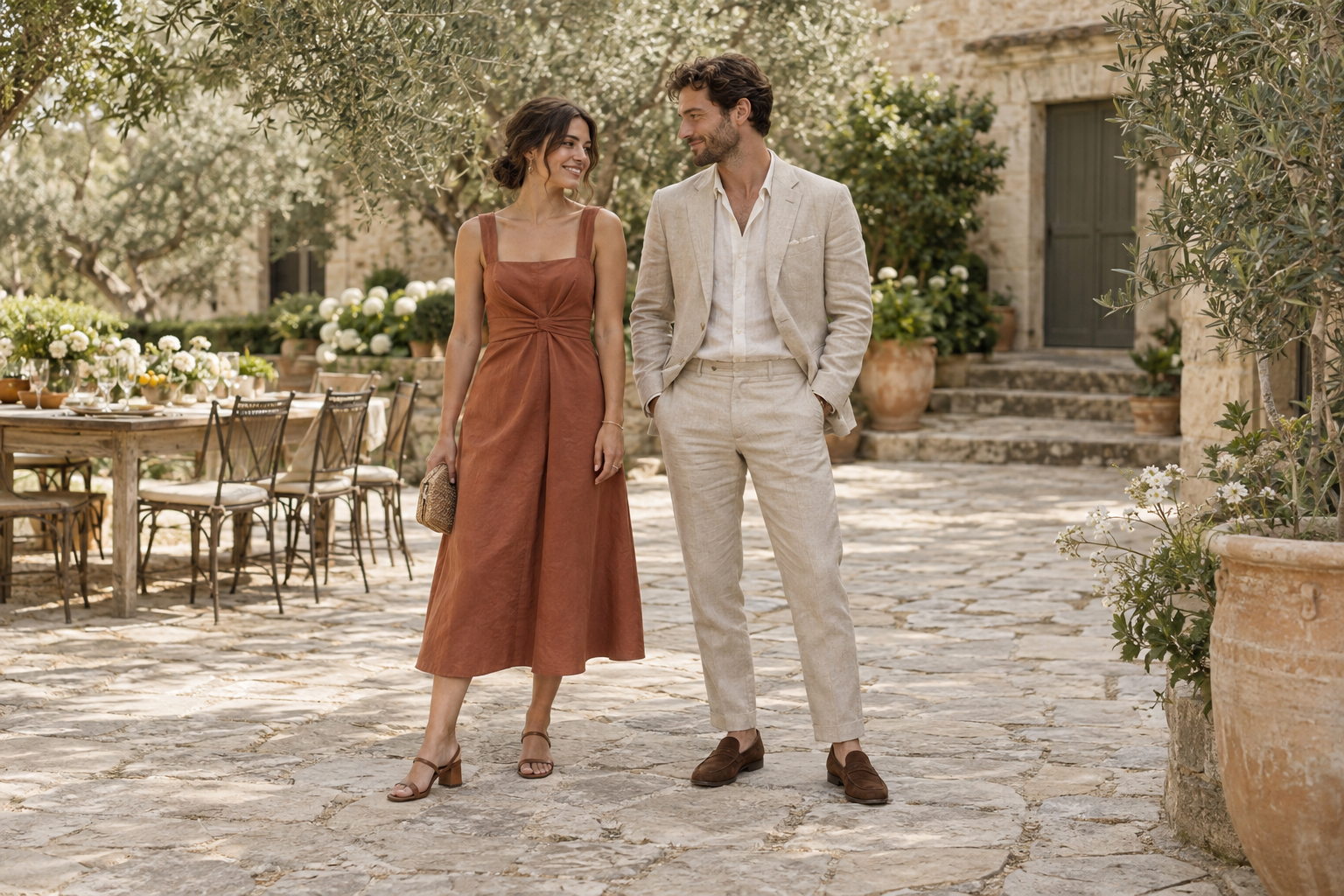
A sand or stone linen shirt with navy trousers and brown loafers. This is the safest warm-weather smart casual combination there is: the navy anchor keeps the pale linen intentional instead of clinical.
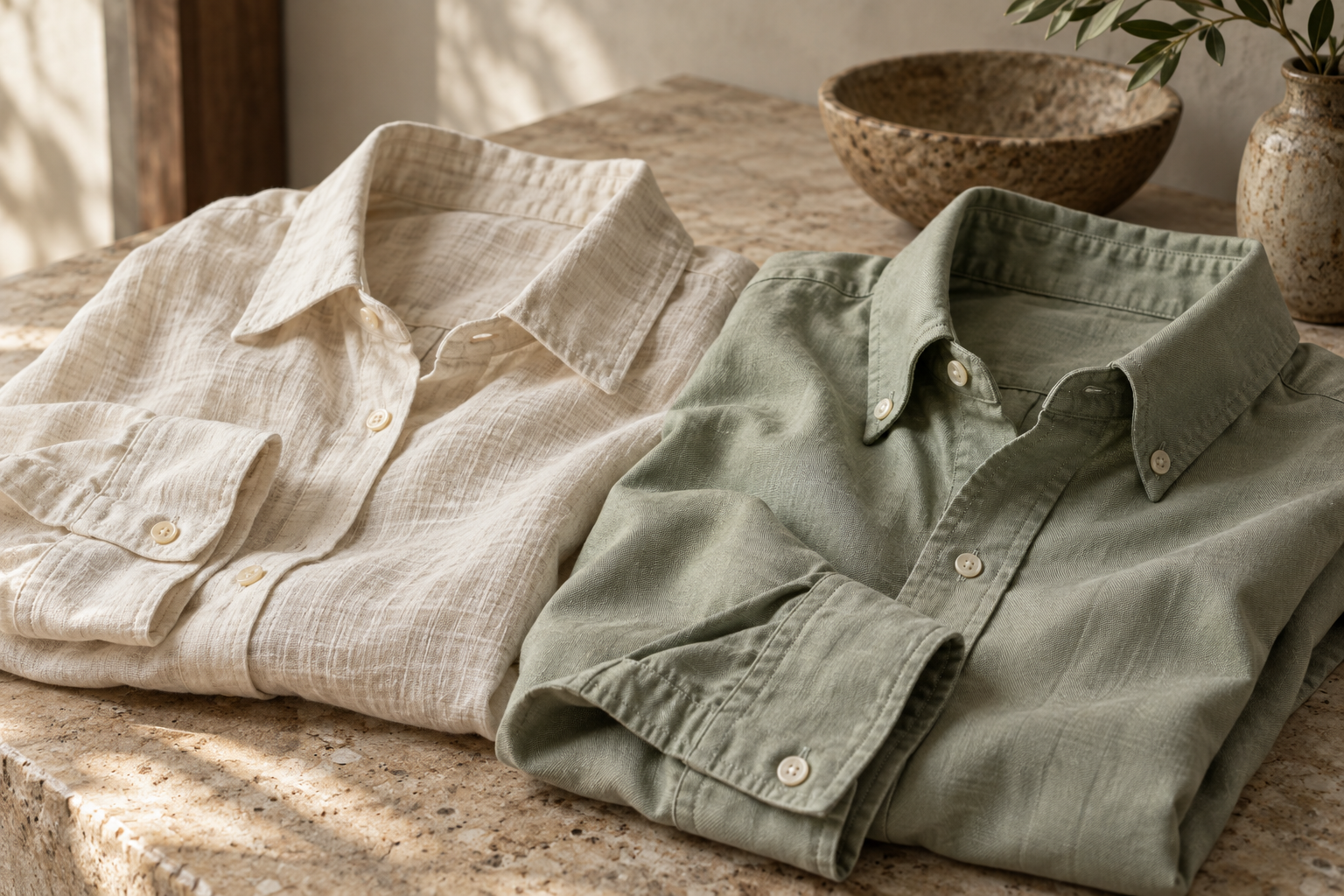
Navy trousers, a white shirt and an olive overshirt. Three of the five seasonless neutrals in one outfit — the same pieces re-season by fabric weight alone: heavy cotton in January, light poplin in June.
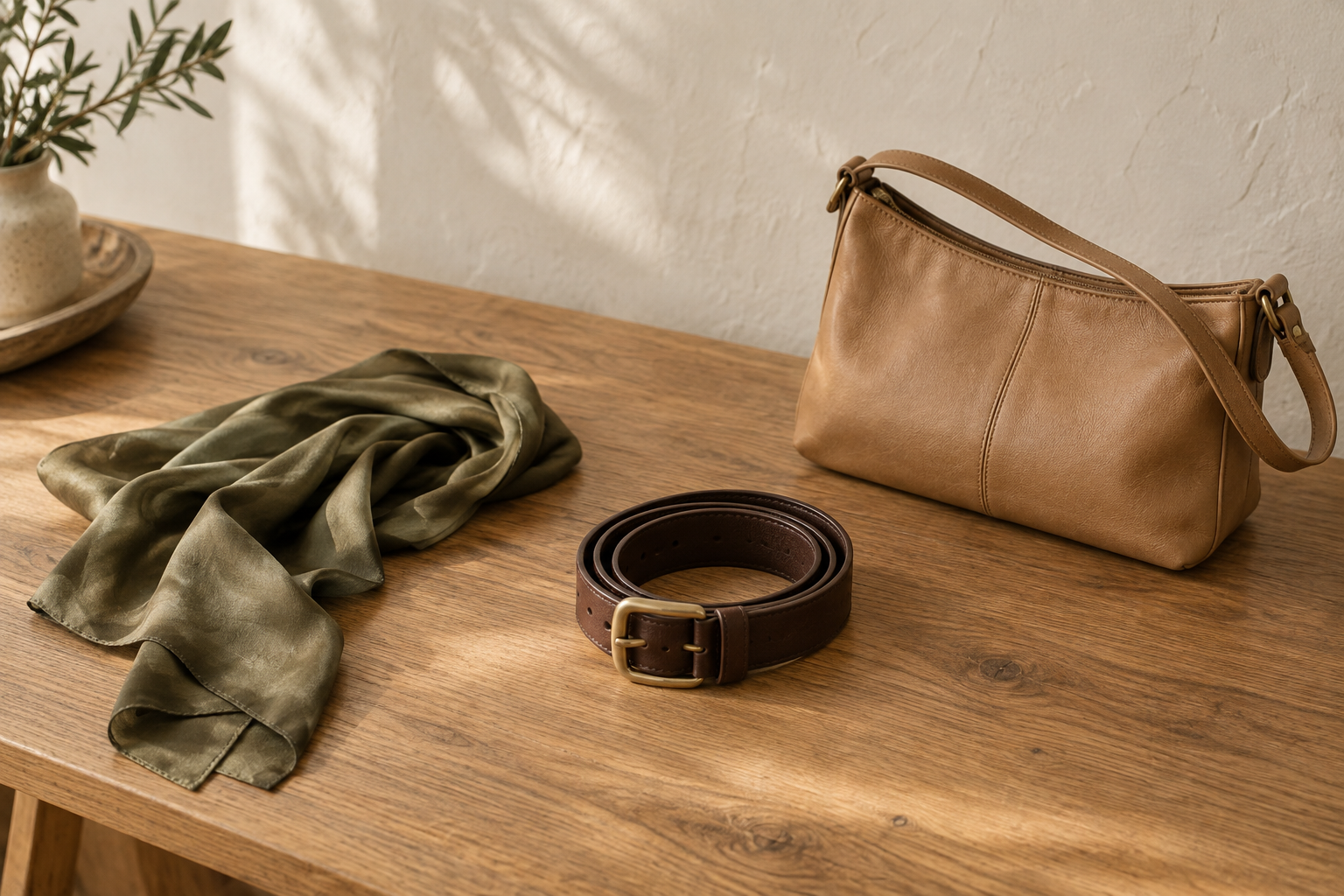
Grey trousers, white shirt, navy blazer — with the accent accessory deciding the season: a burgundy scarf and dark boots for autumn, a tan belt and lighter shoes for spring. The two-colour swap trick, no new clothes required.
What to Wear
Resort smart casual decoded: what casual elegant means at hotels and cruises, packing lists for warm dinners, and the outfit fails that get turned away.
What to Wear
Winter shoes for the office that survive ice, salt and slush: the two-pair commute strategy, boot styles that pass at work, salt-stain prevention.
What to Wear
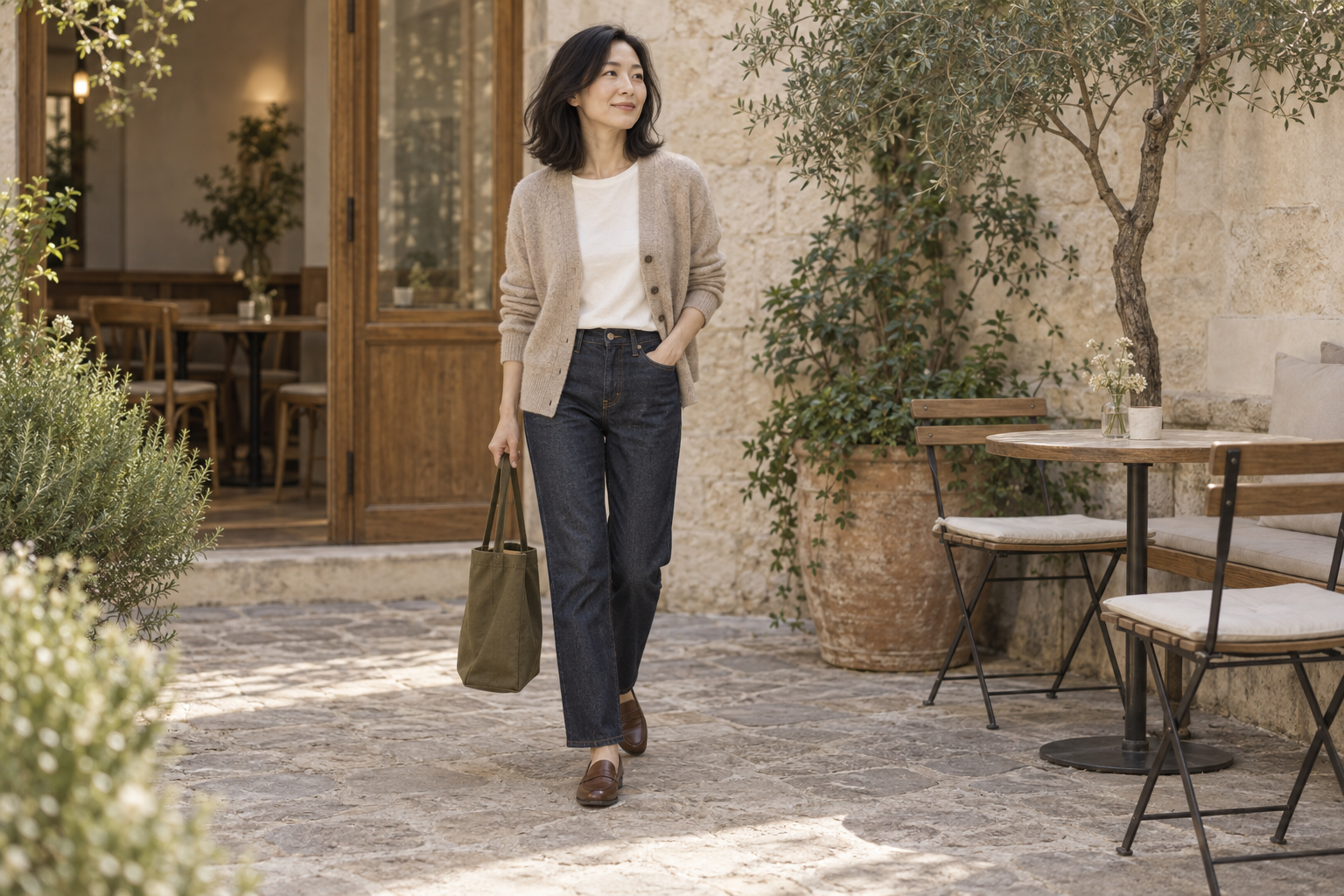
How to accessorize smart casual for women: the three rules, the bag ladder, jewellery quantity, scarf and belt calls, and a 10-piece capsule checklist.