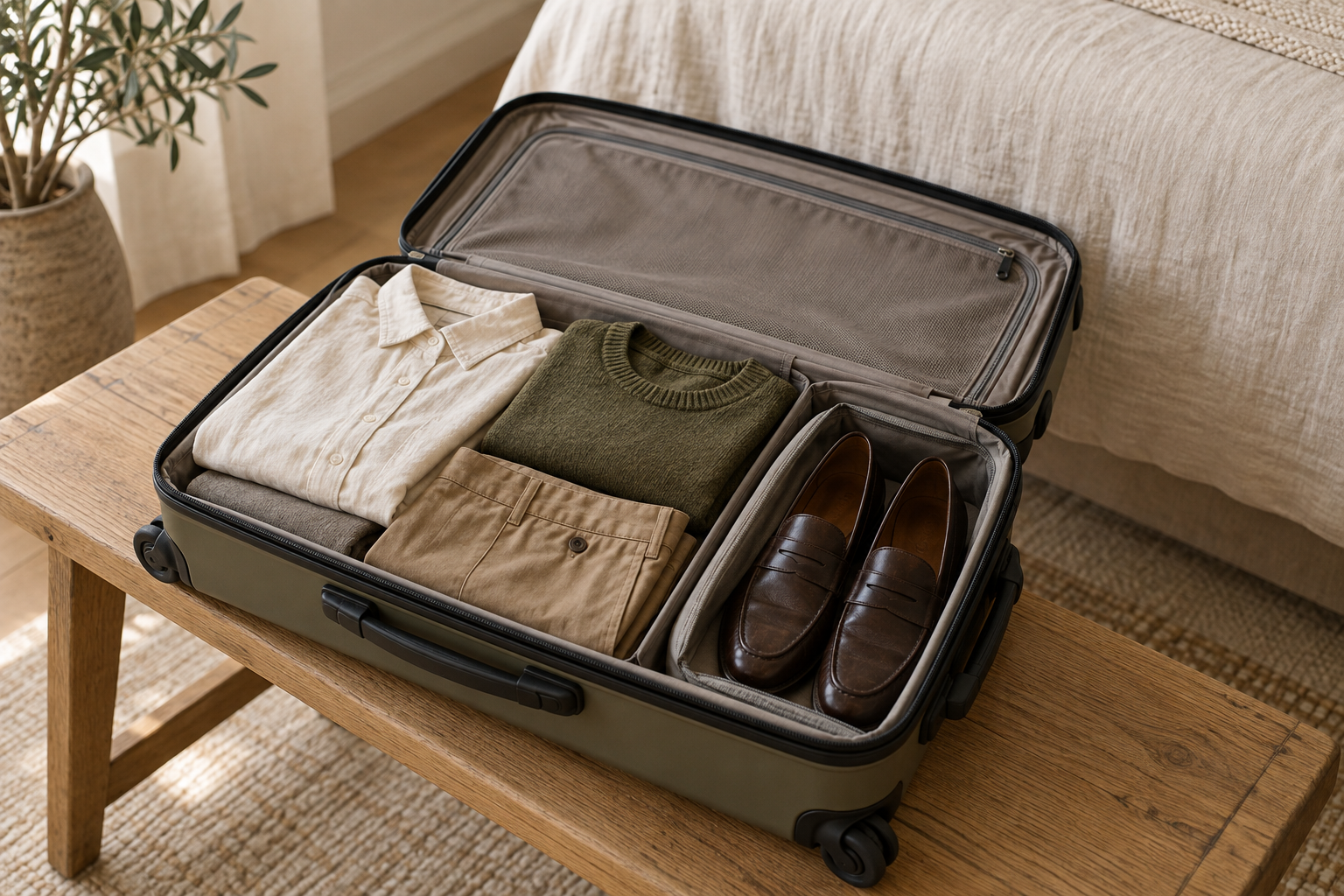
What to Wear
Smart Casual Packing List: One Carry-On, Five Days
A smart casual packing list for one carry-on: the exact item counts for a 5-day trip, roll vs fold, wrinkle strategy, and the repeat-wear rotation.
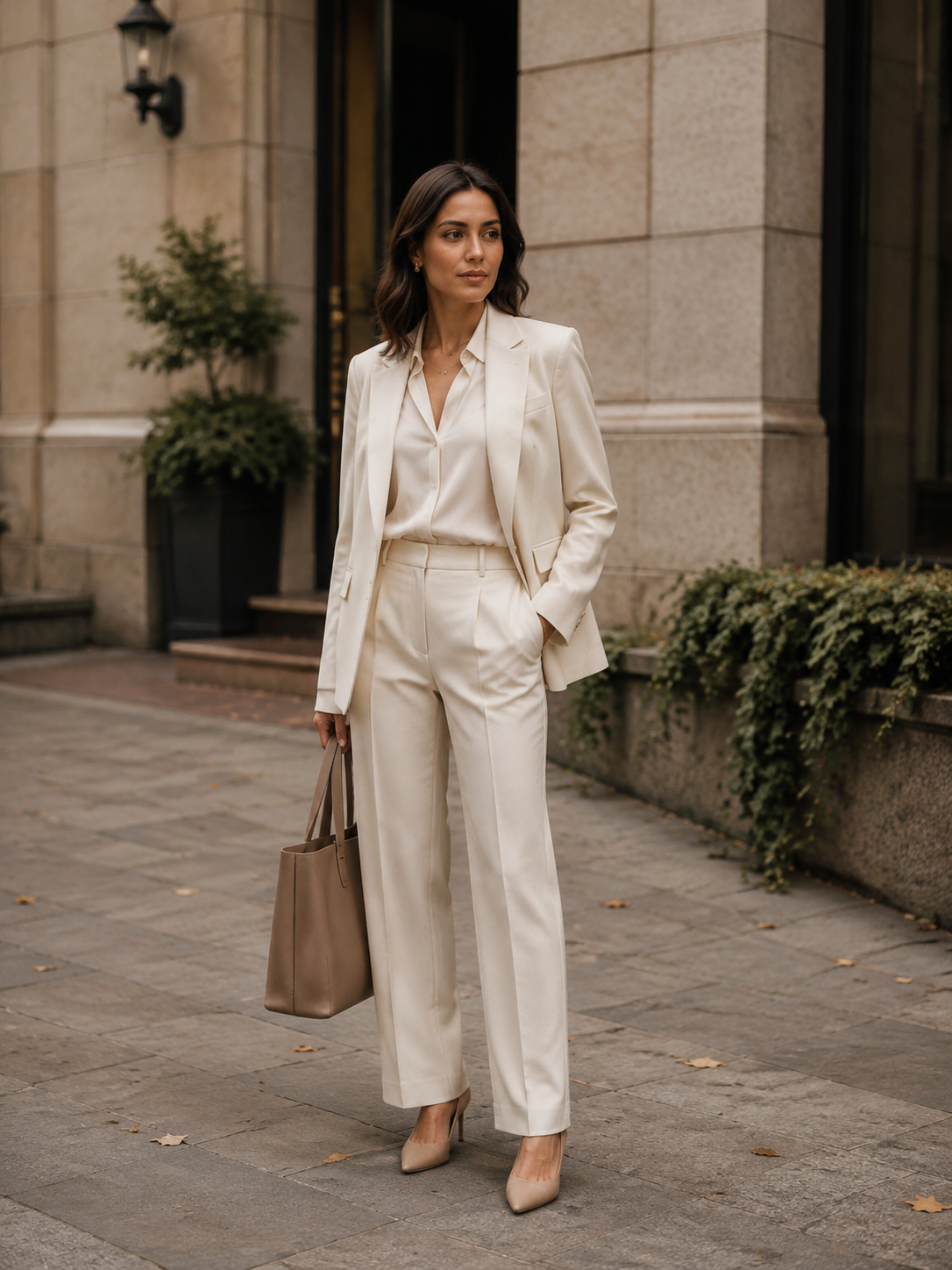
Outfit math, proven
Ten garments can cover a Monday-to-Friday work week with five genuinely different outfits — no item worn unconventionally, one palette, zero morning panic. This is the exact list, the five formulas, and the rule that makes the math work with your own closet.
Begin hereInspiration
The 10 items, 5 outfits idea only works if every top pairs with every bottom — that one check, done before anything is bought or worn, turns two bottoms and four tops into eight base combinations before layers and shoes even enter. Below are the ten pieces, the five curated days drawn from them, and the swaps that make each day read different.
The women's version swaps the slots, not the logic: a midi skirt or wide-leg trousers for one bottom, a jersey dress as a bottom-plus-top in one piece, and the same knit-jacket-shoe frame. The slot structure is the takeaway — the men's capsule wardrobe and the women's capsule wardrobe are the full 20- and 25-piece versions this week is cut from.
Two bottoms times four tops is eight base outfits before the knit and blazer layer on — count those and the combinations clear twenty. Five are shown because five is a work week; the rest are insurance. This is the interchangeability principle in action: bigger closets usually mean fewer wearable combinations, because most pieces only pair with two or three others. The full explainer covers the 4+ pairing rule as a buying test — if a candidate piece does not make four outfits with what you own, it does not come home.
| Slot | This page | Hot-climate swap | Budget-tier swap |
|---|---|---|---|
| Bottom 1 | Grey tailored trousers | Linen-blend trousers | Unhemmed chinos from a high-street chain |
| Bottom 2 | Dark straight jeans | Chino shorts (Friday only) | Dark rinse jeans, any brand that fits |
| Tops | Shirts and a tee | Short-sleeve linen shirt | Two-for-one oxfords from Uniqlo or similar |
| Layer | Merino crew-neck | Unlined overshirt | Crew-neck sweatshirt, dark, plain |
| Jacket | Navy blazer | Skip — knit carries the formality | Second-hand navy blazer |
| Shoes | Loafers and white sneakers | Suede loafers and canvas sneakers | Clean minimal trainers from a high-street chain |
For hot offices and summers, the short-sleeve and linen swaps above follow the same logic as the hot-humid smart casual guide: fewer, lighter layers, same register. And before buying any of the ten, count what you already own that fills a slot — most people are two or three items from a working week, not ten.
Can you really make a week of outfits from 10 items? Yes — the pairing rule does the work: two bottoms times four tops is eight combinations, and layers and shoes extend them past twenty.
What 10 items should I pick? Two same-register bottoms, four tops in one palette, one knit, one blazer, two middle-register shoes — the slot table above substitutes freely.
How do you make outfits look different with the same clothes? Layer under the knit versus standalone, change the shoes, and switch tuck states — those three levers make the same top read new.
Is 10 items too few for work? No — trousers and jackets honestly re-wear for days and tops carry the daily rotation; a wash cycle every weekend keeps the same ten running indefinitely.
6 looks to explore

Navy blazer, white shirt, grey tailored trousers, black leather loafers. The strongest combination leads the week because meeting-day formality is set here — the blazer reads considered, and everything after it borrows its credibility.
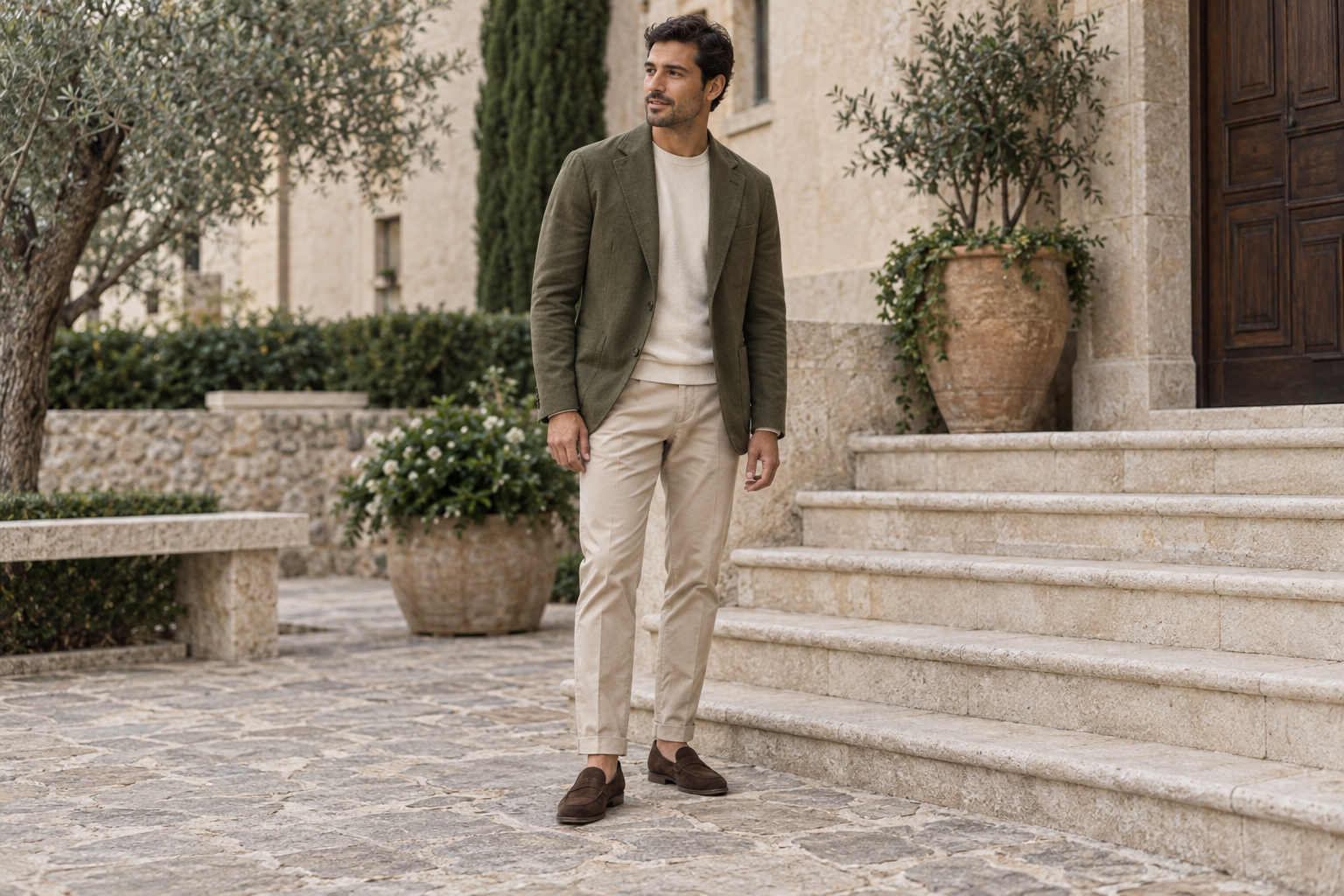
Same grey trousers, merino crew-neck over the white shirt, brown suede chelsea boots. The layering trick does the differentiating — the shirt's collar and cuff showing under the knit makes yesterday's shirt read as a new outfit.

Dark straight jeans, the light-blue shirt standalone with sleeves rolled, navy blazer back on, loafers again. The blazer is what keeps jeans on the right side of smart casual — the same jeans without it would be a different dress code.
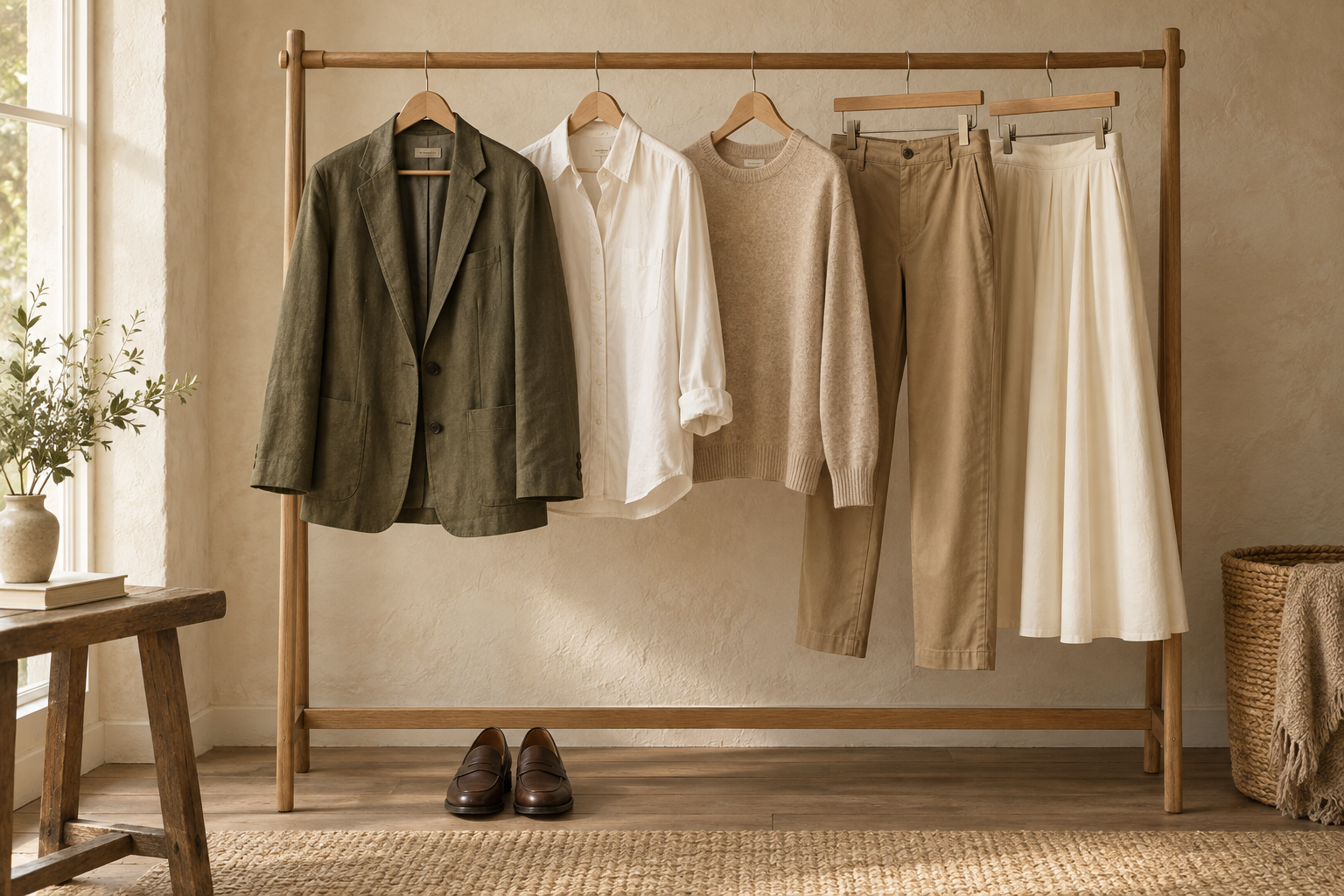
Chinos, the merino crew standalone, white leather sneakers. Formality dials down a rung but stays smart casual because the knit is structured enough and the trousers are tailored — no gym-adjacent pieces anywhere in the ten.
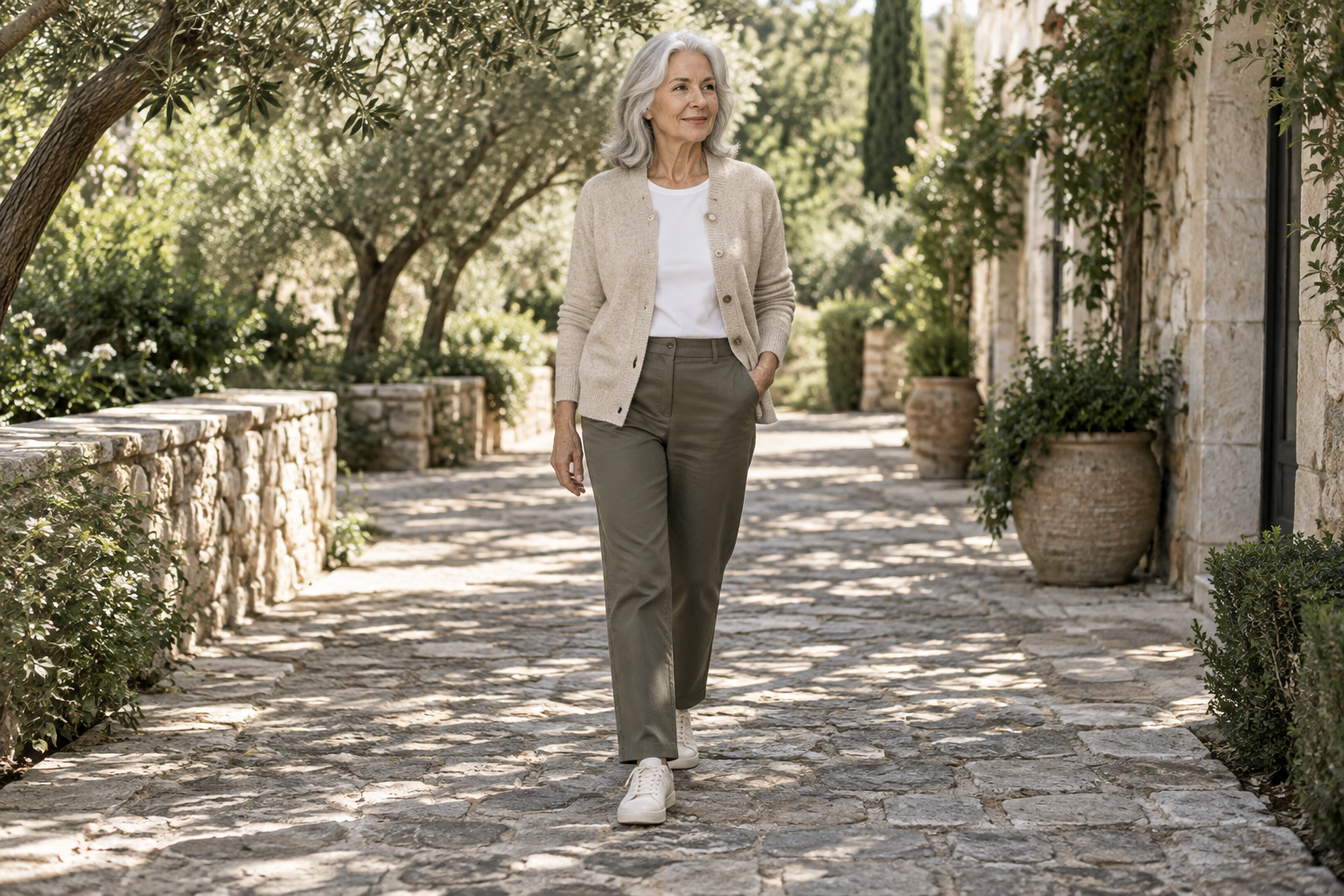
Dark jeans, the striped shirt open over a plain tee, chelsea boots. The Friday logic: one relaxed piece, kept deliberate — the open shirt layered over the tee reads styled rather than casual because the palette never breaks.
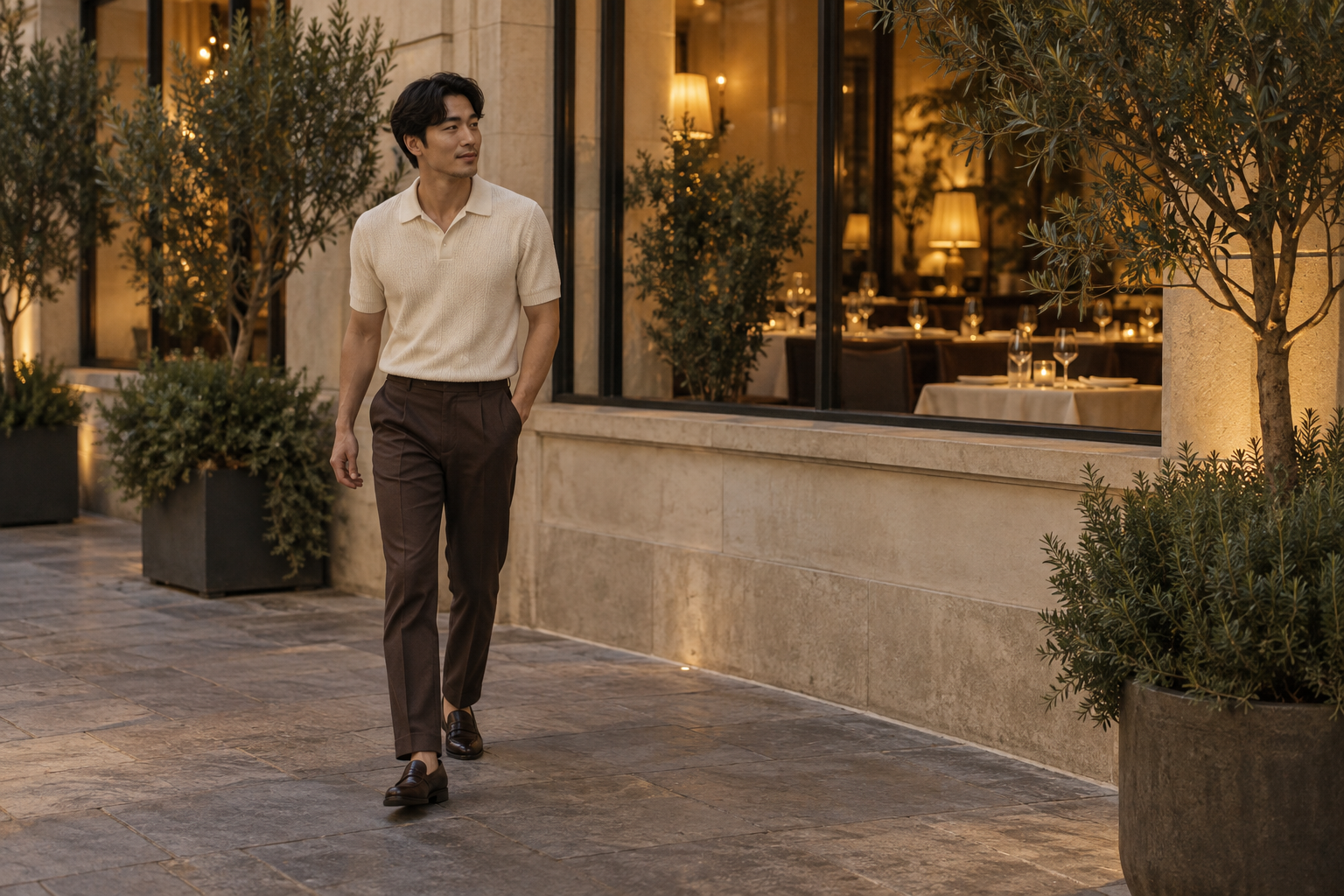
Whatever the day's outfit is, add the blazer, swap to the loafers, and the look lifts to dinner without a change of clothes. This is the hidden point of the jacket in the ten: it is the formality dial, and it converts four of the five outfits to evening in one move.
What to Wear
A smart casual packing list for one carry-on: the exact item counts for a 5-day trip, roll vs fold, wrinkle strategy, and the repeat-wear rotation.
What to Wear
A smart casual wardrobe from scratch: the 12-item starter checklist, the exact buy order, the five fit checks, and three realistic build timelines.
What to Wear
How many outfits can 10 items really make? The honest combination math, the colour and context corrections, and the pairing-width test for your closet.