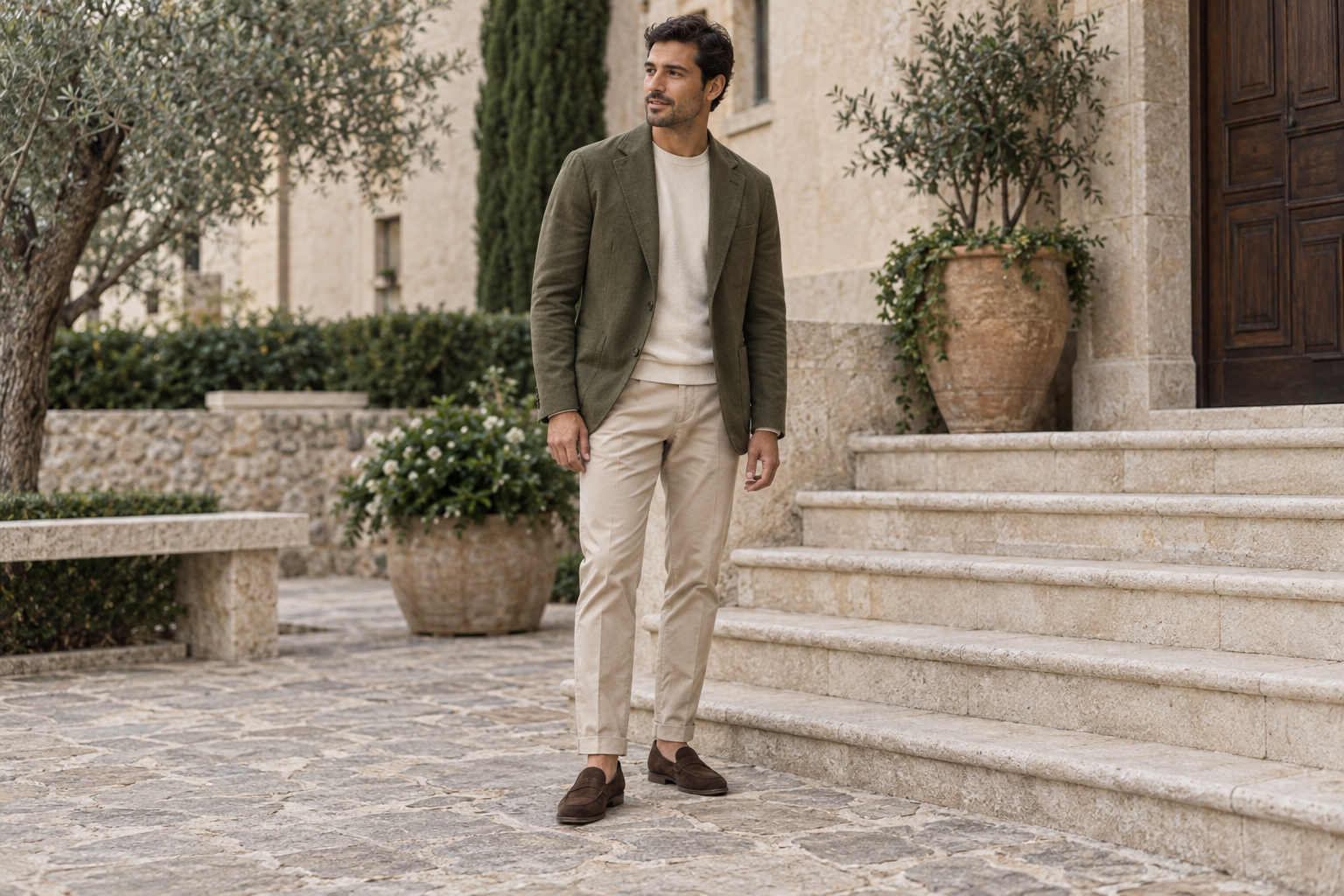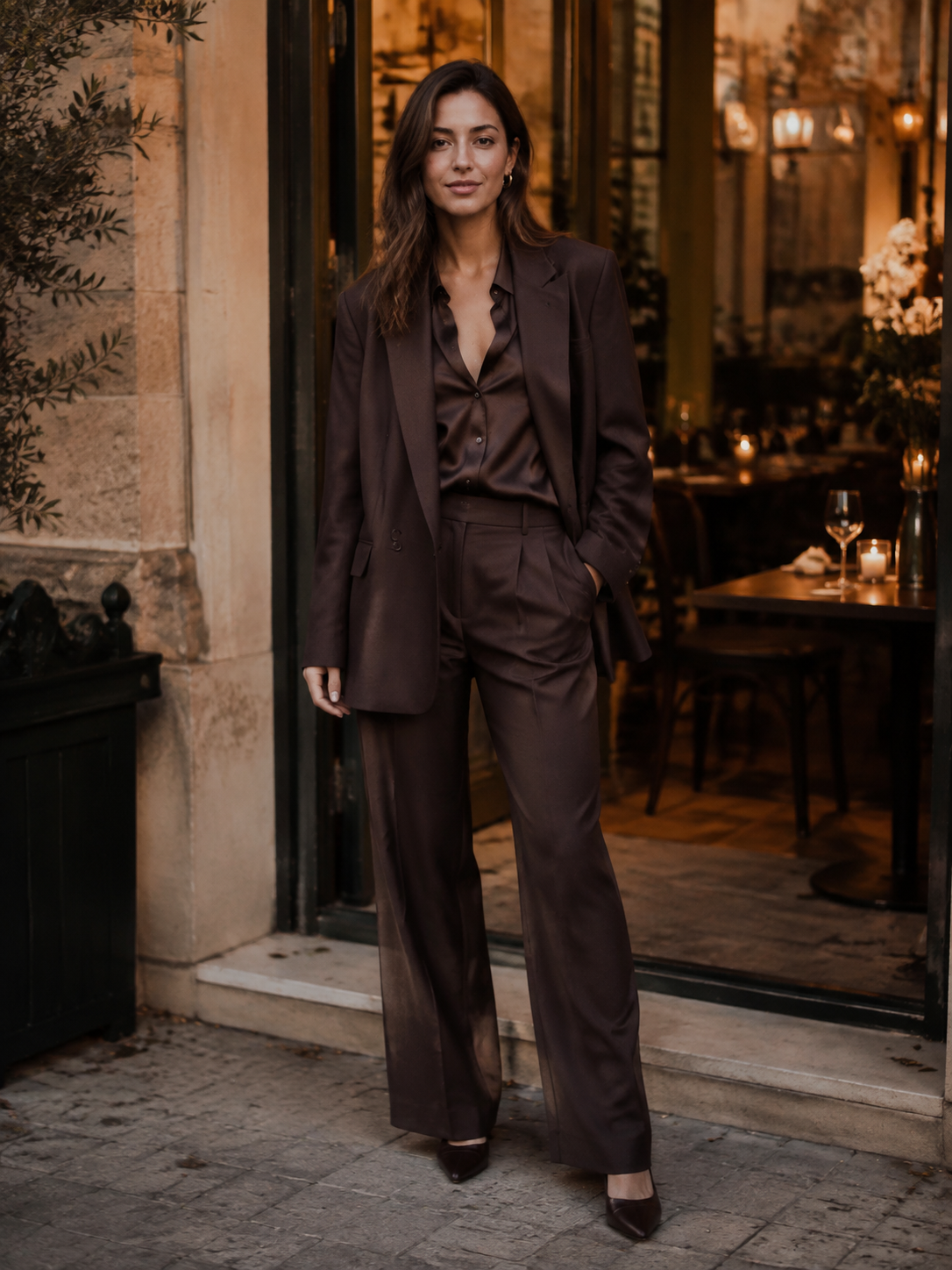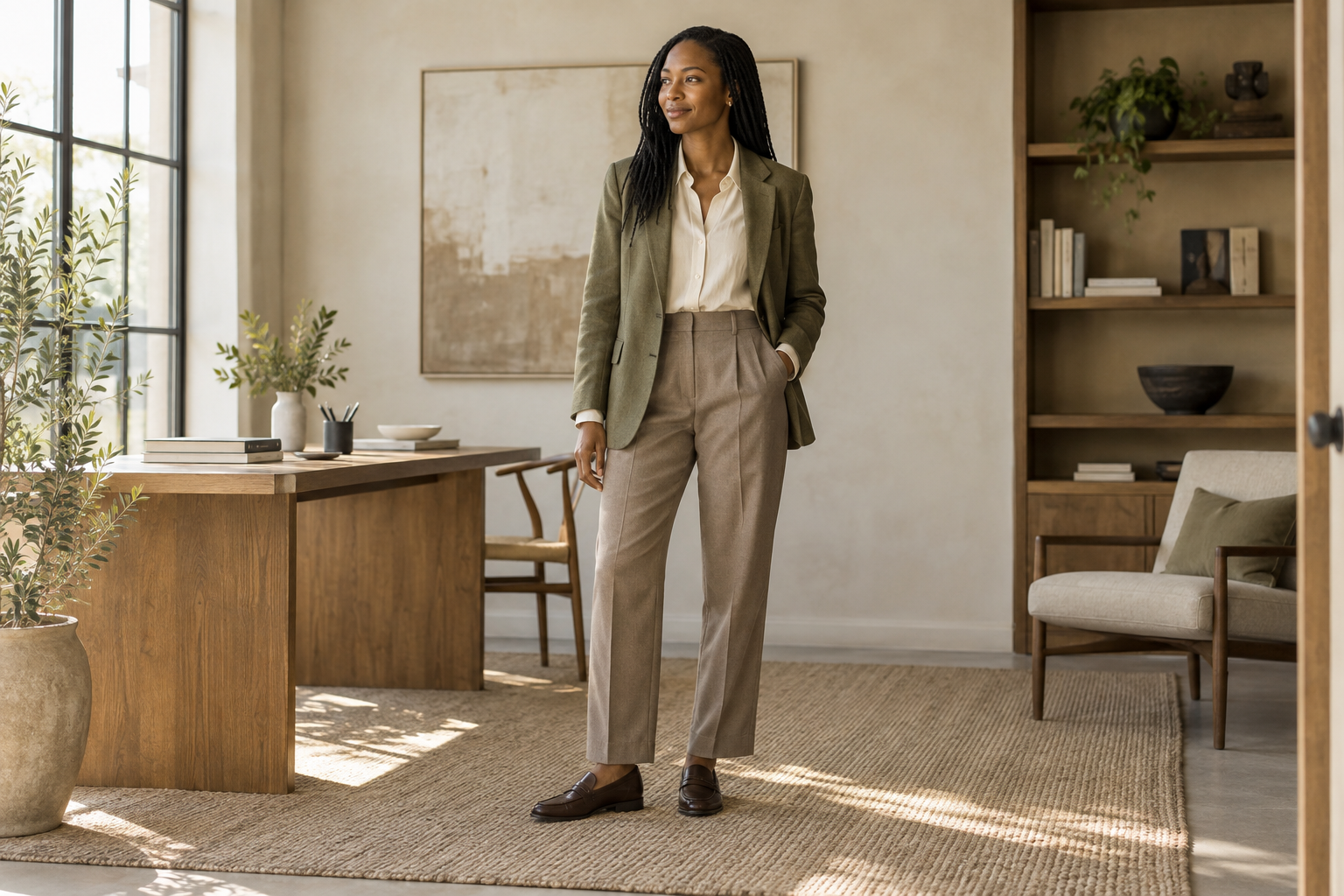
A clothing campaign can offer outfit ideas while still trying to sell clothes. The useful part of Brooks Brothers' Make It Yours premise is that it invites comparison: how familiar pieces change when different people pair them. You can run that exercise on a jacket or shirt you already own. What the campaign does not establish is that its products are necessary or better than alternatives — that part is marketing.
01 / THE DEVELOPMENT
The idea in focus.
02 / OUR INTERPRETATION
What it means in practice.
Treat the campaign as a worked demonstration of a dressing principle rather than a new rule. A smart casual outfit holds together when one element keeps its structure — usually the jacket, the shoe, or the shirting — and the rest is allowed to soften. The campaign's wearers all protected the classic piece and played with its context, which is a repeatable move: your navy blazer over a grey oxford works with white sneakers and unwashed denim precisely because the blazer and shirt were never relaxed in the first place. Marketing frames this as the brand being flexible; in practice, the discipline lives with the dresser.
The lesson from the unstaged looks is not that anything goes. It is that a classic garment earns its flexibility: an uncompromised blazer can carry shorts or sneakers, but a diluted one cannot carry anything.
What the campaign actually asked people to do
The two trade reports agree on the mechanics. The cast pulled their own looks from the men's and women's Spring collections with no stylist directing them, and the published results bent a classic toward the person wearing it rather than reproducing the archive.
The published looks included blazers worn with shorts and sneakers, shirting deliberately undone, pajama-style sets worn outdoors, and menswear pieces worked into womenswear. Every look kept a recognisable Brooks Brothers garment at its centre. That is the pattern worth extracting, because it survives even after you discount the marketing.
Reading a campaign honestly: who is claiming what
This is a brand campaign, covered by trade press, designed to reach new and younger customers. Campaigns are arguments, not evidence — and the business context makes the argument's purpose explicit. Attribution keeps it honest.
| Claim | Attributed to | What it supports |
|---|---|---|
| The cast picked their own looks from the men's and women's Spring collections | Creative director Michael Bastian, quoted by MR Magazine | The campaign's self-styling premise — a description of the shoot, not proof of everyday wearability |
| The women's business is about 12% of revenue, but one in three shoppers are women | CEO Ken Ohashi, quoted by Variety | The campaign's commercial motive: growing a women's business the CEO sees as an opportunity |
| The classics are versatile enough to survive the wearer's personality | The campaign's own framing | A marketing claim. The styling behaviour it documents is real; the conclusion that you need these products is not established |
A campaign with no stylist is documentary evidence of how people really wear the clothes.
It is evidence of what six stylish people chose when invited to choose. That is a genuine signal — self-styled looks matched what has been happening on streets and in offices for several seasons — but it is a cast, curated and published by the brand, not a survey.
The two documented combinations, and why they hold together
Two pairings appear in both reports: blazers with shorts, and suits with sneakers. Analysing them does not require garment access, because the interesting variable is not the cloth — it is where the formality sits. In both cases the structure stayed in the tailoring and the relaxation happened everywhere else.
| Combination | The anchor piece | What relaxed around it |
|---|---|---|
| Blazer with shorts and sneakers | A proper blazer — uncompromised cut and cloth | The leg (shorts) and the shoe (sneaker) drop the formality |
| Suit with sneakers | Pressed, correctly hanging suit trousers and jacket | The shoe goes casual; nothing else about the suit gives way |
| The general rule both obey | One formal anchor kept honest | Everything else moves one or two steps down |
The failure mode is the mirror image. When the anchor piece is watered down — a soft, unstructured jacket over an already-casual short — the same pairing collapses, because nothing in the outfit is holding the form. Keep the one formal element honest and the contrast does the work.
Run the exercise on clothes you already own
Nothing in this analysis requires buying anything from the campaign. The transferable part is the exercise the cast performed: take one uncompromised classic and restyle its context. Two translations cover most wardrobes.
Pick your anchor
Choose the most uncompromised classic you own — a real blazer, a crisp oxford, proper leather shoes. It should pass the heritage test: cut, cloth and fit you would defend in any company.
Drop the context two steps
Pair it with the most casual piece that still fits the setting: shorts, clean sneakers, unwashed denim. The anchor carries the outfit precisely because it was never relaxed.
Explain it in one sentence
Borrow the self-styling test the campaign implies: if you cannot say why the outfit works in one sentence about the anchor piece, it is not assembled yet. Adjust and repeat.
Before wearing the pairing out, check:
- The anchor piece is pressed, intact and fits correctly — the contrast only reads if the formal half is genuine.
- The casual half is deliberate: clean sneakers, an intentional short, denim without distressing.
- The setting suits the drop — a blazer with shorts works harder at a summer evening gathering than in a formal office.
- You would keep the outfit on if the anchor piece's formality were pointed out to you — discomfort is a sign the context dropped too far.
When the setting favors the original outfit instead
Restyling is an option, not an obligation. Some settings reward the suit worn the way the label intended, and knowing which is which is most of dressing well.
- Formal offices, ceremonies and anything with a dress code stated in writing: the original, uncompromised outfit is the correct reading, and dropping it reads as misjudgement rather than personality.
- Settings where you are the most junior person in the room: borrow the anchor-and-relax formula conservatively — the sneaker, not the shorts.
- Photographed occasions: the campaign's pairings photograph well precisely because the anchor is strong; if the setting is memorable, err toward the original outfit and relax only the shoe.
FROM THE STORY TO YOUR WARDROBE
Take the useful part.
Sources & further context.
- Brooks Brothers Casts Bevy of Big Names for Make It Yours Campaign — MR Magazine, 4 March 2026
By Brett Edward Stout; publication date verified on-page. Supports the event date, the cast, the photographer, and Michael Bastian's self-styling quote.
- Leslie Bibb, Alex Edelman Star in New Brooks Brothers Campaign — Variety, 5 March 2026
By Marc Malkin; publication date verified on-page. Independently confirms the cast and photographer and supports CEO Ken Ohashi's comments on the women's business (about 12% of revenue; one in three shoppers women).