Problem-solving
Restore the white pair, then keep it out of the deep clean
White leather sneakers go grey from city grime, not from any single disaster — which is good news, because grime lifts easily if you catch it early. The realistic standard for a pair worn with tailoring is not mirror-clean; it is evenly clean, conditioned and unmarked at a glance. That standard is reachable with a fifteen-minute clean and two small habits.
How do you clean white leather sneakers without ruining them?
Gently and dry-first. Remove the laces, brush off loose dirt, then wipe with a damp cloth and mild soap or a dedicated cleaner, working light to dark pressure on scuffs. Dry at room temperature with air moving, away from radiators and sunlight, then re-lace. That sequence fixes grime, light scuffs and dullness — the everyday wear layer.
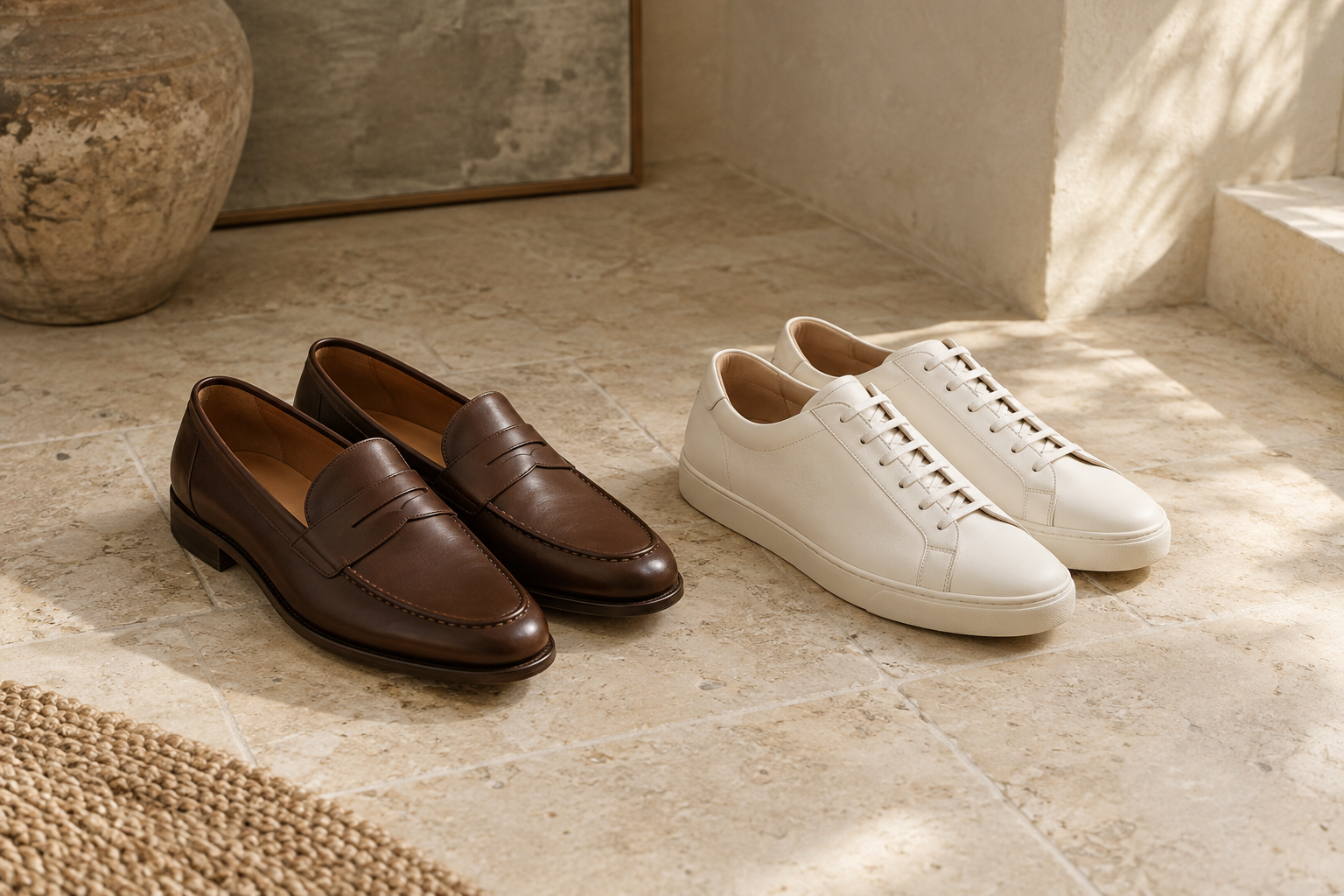
Name the limits honestly: this will not fix deep yellowing, sole separation or gouged leather. A battered pair can look dramatically better without looking new, and evenly-clean-with-patina still passes with a blazer. If you are choosing the pair itself first, the minimal sneakers with tailoring guide minimal sneakers with tailoring covers what works.
How do I stop my sneakers creasing?
You cannot fully stop it — leather creases at the flex point by design. You can slow it: keep the leather conditioned so it stays supple, insert shoe trees or stuff the toe box between wears, and buy the correct size, because a shoe that is too big folds more with every step.
Crease guards and collector gadgets exist, but for a smart casual wearer they are mostly skippable — plain cedar shoe trees or a stuffed toe box are the simple version that works. A light, even crease pattern reads as a worn-in shoe; deep dry creases read as neglect.
Rain, white leather and the wet season
White leather shows water marks faster than any other colour, so spray a light protectant on the uppers before the wet season and blot rain off when you get home, drying naturally. The full spray protocol lives in the waterproofing guide waterproofing smart shoes.
If the pair does get soaked: paper-stuff the toes and let them dry slowly at room temperature, never on a radiator. Better yet, decide before winter which pair gets sacrificed to weather and keep the white leather pair for dry days — the blazer-with-sneakers look blazer with sneakers only works when the sneakers are clean, so protect the pair that does the tailoring duty.
What a clean fixes and what it cannot. Test any product on a hidden spot first.| Problem | Fixable? | Method | If it fails |
|---|
| Grey grime and dullness | Yes | Damp cloth with mild soap, air dry | Repeat once; then dedicated cleaner |
| Light scuffs | Mostly | Melamine sponge light to dark, then condition | White cream polish to even out |
| Yellowed midsoles | Sometimes | Clean, then indirect sunlight, dark storage | Paint-style products — risky, can look worse |
| Toe-box creases | No | Slow them: conditioning, trees, correct size | Accept light creasing; replace if gaping |
| Cracked midsole, gouged leather | No | Not worth home repair | Replace the pair |
Sneaker care questions
Can you put leather sneakers in the washing machine? No. The machine breaks down the glue and strips the finish — leather pairs wipe clean instead.
How do you get yellow stains off white sneakers? Clean the midsoles, then leave them in indirect daylight for a few hours and store them dark afterwards. Set-in oxidation may not fully lift.
How long should white sneakers last? With a rotation and weekly wipes, a decent pair handles years of wear; the replace test is when a full clean no longer restores presentability. Conditioning fundamentals are in the leather shoe care guide leather shoe care basics, and a quick rescue route for one-off marks is in the clean white sneakers guide clean white sneakers.
Open the symptom that matches. Start there.
The pair looks grey and dull
Possible cause: A thin layer of city dust and grime built up over wears — it dulls the leather long before it looks obviously dirty.
Try first: Remove the laces, brush off dry dirt, then wipe the whole upper with a damp cloth and a little mild soap or a dedicated cleaner. Dry at room temperature, never on a radiator, then re-lace.
Scuffs and dark marks on the uppers
Possible cause: Contact with kerbs, doors and shoe scuffs left marks on the finish, some of which have dried in.
Try first: Work a melamine sponge or dedicated sneaker cleaner on the marks, light pressure first, stepping up only if needed. Feed the leather afterwards with conditioner or a white cream polish to even the colour out.
Yellowed soles and midsoles
Possible cause: Ultraviolet light and oxidation have aged the rubber, made worse by heat drying and some harsh cleaners.
Try first: Clean the midsoles, then leave the shoes in indirect daylight for a few hours — sunlight visibly brightens rubber midsoles. Store them in the dark afterwards. Heavy, long-set yellowing needs paint-style midsole products, which can look worse than the yellow if done badly.
Deep creases across the toe box
Possible cause: The leather folded at the flex point every step — often made worse by a too-large size or dry, unconditioned leather.
Try first: Creases cannot be erased, only slowed. Condition the leather to keep it supple, use shoe trees or a stuffed toe box between wears, and check the fit: a shoe that is too big creases more.