Shirts & Tops
How an Untucked Shirt Should Fit
A practical fit guide for untucked shirts: hem length, shoulder seam, sleeve length and room to move, with simple checks for each.
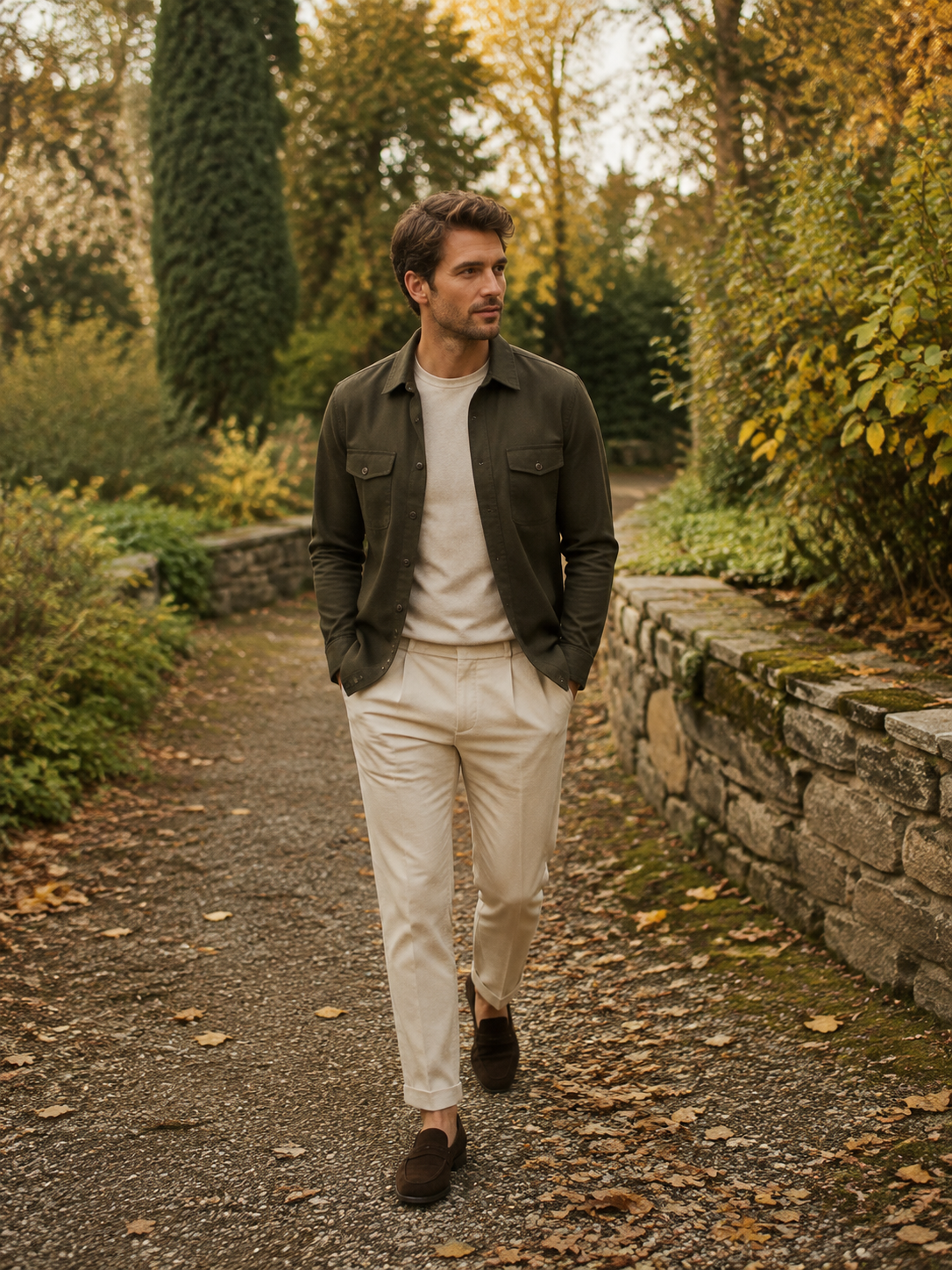
How to
A method for choosing a smart casual t-shirt: setting check, garment inspection, try-on tests and honest care-label expectations, ending in a keep, buy or return decision.
Begin hereHow-to
Choose a smart casual T-shirt by checking the setting first, then the actual garment's fit, condition and care needs. Try it with the trousers and layer you intend to wear. A plain tee is an easy starting point, but neckline, length and color should suit your preferences rather than a single fixed rule.
Choosing well starts with the room, because a perfect t-shirt still fails in a setting that does not allow one. Some offices accept a plain tee under a blazer; others expect a collared shirt and nothing changes that on the day. When you are unsure, one plain, well-fitting tee in a quiet color under a structured layer is the widest-accepted version of the idea.
Before shopping, establish:
A heavier, denser t-shirt is always the better-made one.
Weight is a fabric spec, not a quality verdict. Very light jersey can be fine knit that drapes well but shows through; heavy cotton can be stiff and slow to dry. What matters is opacity in daylight, even seams, a neckline that recovers its shape and care needs you can live with — check those directly instead of judging by hand-feel alone.
Three inspections filter most t-shirts in under a minute. Hold the fabric single-layer against light: some show-through is normal in fine jersey, but you should be able to judge whether it is too sheer for the layering you plan. Turn it partly inside out: even, straight seams and a neckline ribbing that snaps back after a stretch are the honest quality signals. Then check the condition on the rail — pilling or stretched collars on new stock predict a short life.
A static mirror pose hides everything that matters. Sit down, reach forward and raise your arms: the hem should stay over the waistband and the neckline should not gape. Then test both wear modes you intend — tucked, it needs enough length to stay put seated; untucked, the hem should end near the middle of the fly rather than at mid-thigh. If you plan to drop the shoulder seam deliberately for a relaxed cut, that is a style choice to make on purpose, not a fit fault — just check the sleeve opening still looks intentional under a layer.
| Choice | Pairs easily with | What to weigh up |
|---|---|---|
| White or navy | Nearly all tailoring, dark denim, chinos; easiest under a blazer | White shows wear and requires the opacity check more than any other color |
| Grey or black | Most wardrobes; grey softens tailoring, black sharpens dark denim | Black can fade with washing — follow the care label rather than guessing |
| A color you love | Works when it repeats a color already in your trousers, layers or accessories | Bright colors are not wrong — they just do more of the outfit's talking, so build the rest quietly |
Keep or buy when
Return or walk away when
Keep exploring
A plain-language guide to the wash symbols you will meet on the label.
Layering specifics if the tee's main job is under a jacket.
A t-shirt that passes the setting check, stays opaque and in place through sitting, reaching and layering, pairs with at least three outfits you already own, and whose care instructions you can genuinely follow.
Check the dress code or ask, rather than assuming. If the answer is uncertain, plan the tee as a layer piece under a blazer or overshirt, which is the most widely accepted version.
Check: You can name the venue or workplace and what it permits before evaluating any garment.
Hold the fabric single-layer against daylight and judge the show-through against your planned wear. Check that seams are even and the collar ribbing snaps back after a gentle stretch. Weight alone proves nothing — a light fine-knit and a heavy jersey both succeed or fail on these direct checks.
Check: You have judged opacity in real light and the collar returns to shape after stretching.
Sit, reach forward and raise your arms in the fitting room. The hem should stay over the waistband and the neckline should stay put. Move wrong nowhere else in the outfit and the tee will not fix it.
Check: A full sit-and-reach leaves the hem and neckline exactly where you want them.
Tucked, there should be enough body length to stay put while seated. Untucked, the hem should end around the middle of the trouser fly — long enough to stay put, short enough not to pool. If you only ever wear it one way, test only that way.
Check: Your preferred wear mode survives five minutes of sitting and standing.
Picture the tee with your two most-worn trousers and your usual layer. White and navy are the easiest under tailoring; grey and black cover most other cases; a brighter color works when the rest of the outfit stays quiet. No color is banned — brighter ones simply carry more of the outfit.
Check: At least three real pairings from your wardrobe work without effort.
Follow the label's instructions rather than folklore, and accept that you cannot know a specific shirt's shrinkage before washing — fabrics and finishes differ, and some are pre-washed for stability. Buy the fit that works now, then recheck it after the first wash and dry.
Check: You can state the care routine from the label and are willing to follow it.
Some change after the first wash is possible in cotton, and the honest position is that you cannot predict it from the rail — compare the shirt against the fit checks from steps three and four after washing and drying per the label. If the fit no longer passes, that is a data point for the next purchase rather than something stretching will fix.
The fabric is sheerer than the layering needs. Add a fine crew-neck layer between, or reserve that tee for solo warm-weather wear and choose a denser knit for under tailoring.
The tee is rarely the problem; the company it keeps is. Swap joggers or distressed denim for straight trousers or dark, clean denim and add a leather shoe or a structured layer — the same shirt usually crosses the line.
Shirts & Tops
A practical fit guide for untucked shirts: hem length, shoulder seam, sleeve length and room to move, with simple checks for each.
Shirts & Tops
How to test a white shirt for opacity before and after buying: weave density, fabric weight, weave types, underlayers, fit, and the daylight window test.
Clothing & Shoes
How to choose shirts and tops for smart casual: fabric construction, opacity, fit and layering — with detailed guides on fit and linen vs cotton.